Legen Julia, Schmitz-Linneweber Christian
Institut of Biology, Department of the Life Sciences, Humboldt-Universität Berlin, Philippstraße 11-13, Grüne Amöbe, 10115 Berlin, Germany.
Int J Mol Sci. 2017 Aug 31;18(9):1881. doi: 10.3390/ijms18091881.
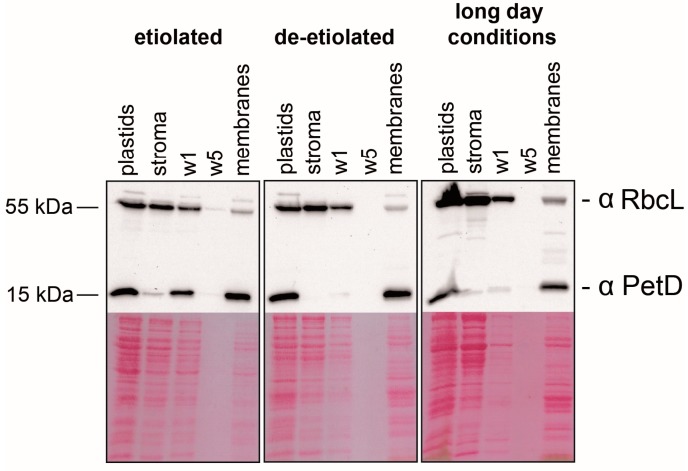
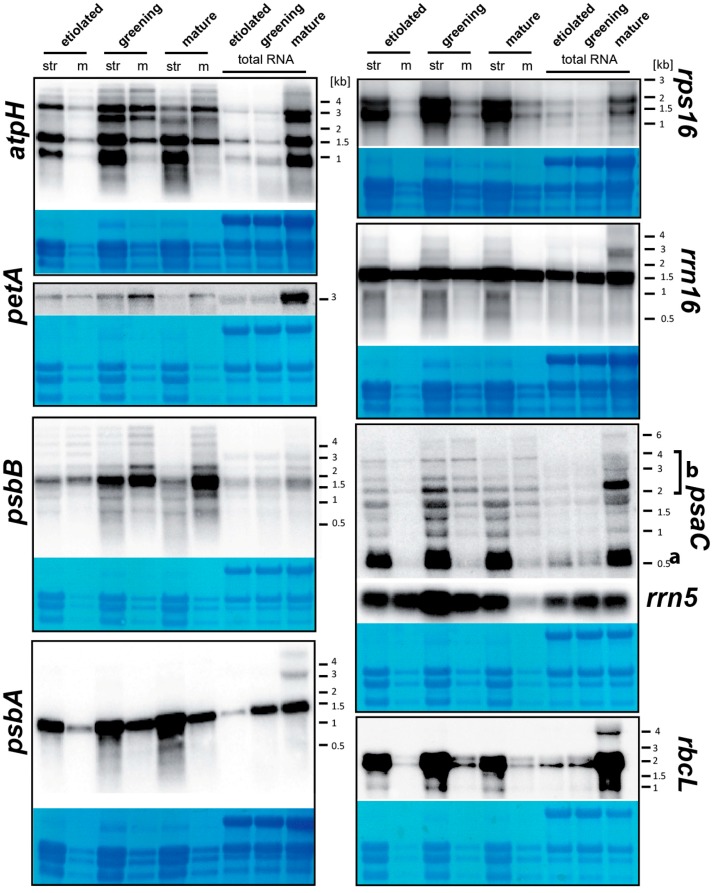
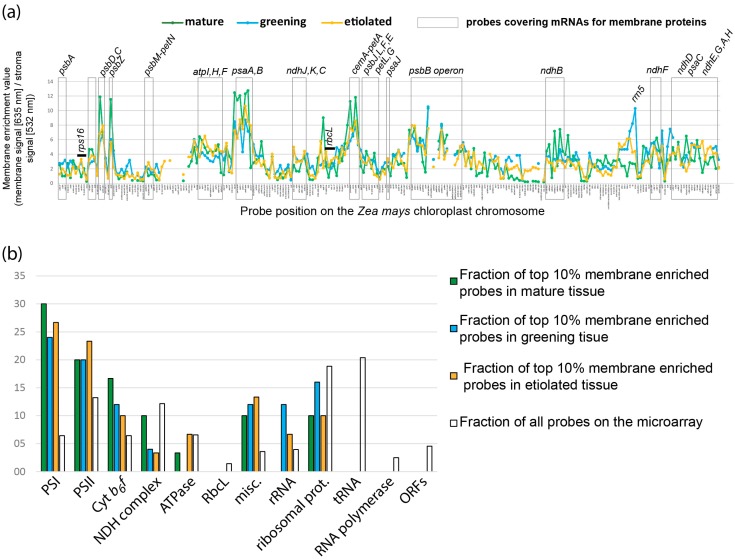
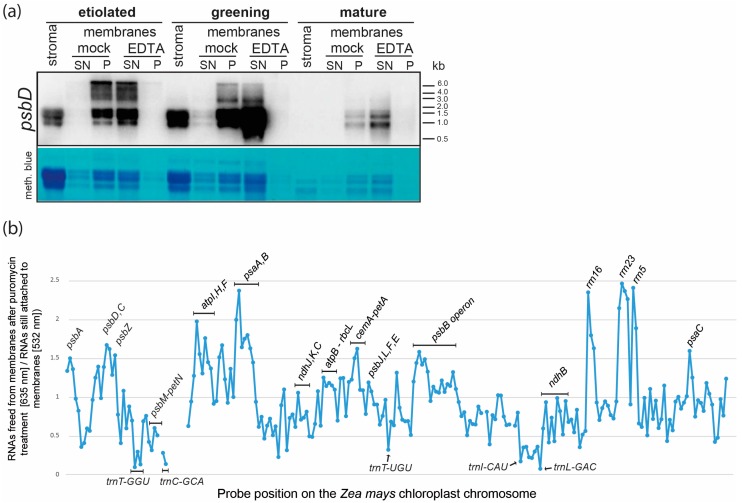
Chloroplast genes are transcribed as polycistronic precursor RNAs that give rise to a multitude of processing products down to monocistronic forms. Translation of these mRNAs is realized by bacterial type 70S ribosomes. A larger fraction of these ribosomes is attached to chloroplast membranes. This study analyzed transcriptome-wide distribution of plastid mRNAs between soluble and membrane fractions of purified plastids using microarray analyses and validating RNA gel blot hybridizations. To determine the impact of light on mRNA localization, we used etioplasts, greening plastids and mature chloroplasts from as a source for membrane and soluble extracts. The results show that the three plastid types display an almost identical distribution of RNAs between the two organellar fractions, which is confirmed by quantitative RNA gel blot analyses. Furthermore, they reveal that different RNAs processed from polycistronic precursors show transcript-autonomous distribution between stroma and membrane fractions. Disruption of ribosomes leads to release of mRNAs from membranes, demonstrating that attachment is likely a direct consequence of translation. We conclude that plastid mRNA distribution is a stable feature of different plastid types, setting up rapid chloroplast translation in any plastid type.
叶绿体基因转录形成多顺反子前体RNA,这些前体RNA会产生多种加工产物,直至单顺反子形式。这些mRNA的翻译由细菌型70S核糖体完成。这些核糖体中有较大一部分附着在叶绿体膜上。本研究使用微阵列分析并通过RNA凝胶印迹杂交验证,分析了纯化叶绿体的可溶性和膜部分之间质体mRNA的全转录组分布。为了确定光照对mRNA定位的影响,我们使用黄化质体、正在绿化的质体和成熟叶绿体作为膜提取物和可溶性提取物的来源。结果表明,这三种质体类型在两个细胞器部分之间显示出几乎相同的RNA分布,定量RNA凝胶印迹分析证实了这一点。此外,研究还揭示,从多顺反子前体加工而来的不同RNA在基质和膜部分之间呈现转录本自主分布。核糖体的破坏导致mRNA从膜上释放,表明附着可能是翻译的直接结果。我们得出结论,质体mRNA分布是不同质体类型的一个稳定特征,可在任何质体类型中实现快速的叶绿体翻译。