Kearney Anna, Daykin Anne, Shaw Alison R G, Lane Athene J, Blazeby Jane M, Clarke Mike, Williamson Paula, Gamble Carrol
North West Hub for Trials Methodology Research/Clinical Trial Research Centre, Biostatistics, University of Liverpool, Institute of Child Health, Alder Hey NHS Trust, Liverpool, L12 2AP, UK.
ConDuCT-II Hub for Trials Methodology Research, University of Bristol, Canynge Hall, 39 Whatley Road, Bristol, BS8 2PS, UK.
Trials. 2017 Aug 31;18(1):406. doi: 10.1186/s13063-017-2132-z.
The failure to retain patients or collect primary-outcome data is a common challenge for trials and reduces the statistical power and potentially introduces bias into the analysis. Identifying strategies to minimise missing data was the second highest methodological research priority in a Delphi survey of the Directors of UK Clinical Trial Units (CTUs) and is important to minimise waste in research. Our aim was to assess the current retention practices within the UK and priorities for future research to evaluate the effectiveness of strategies to reduce attrition.
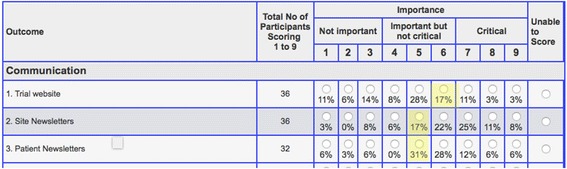
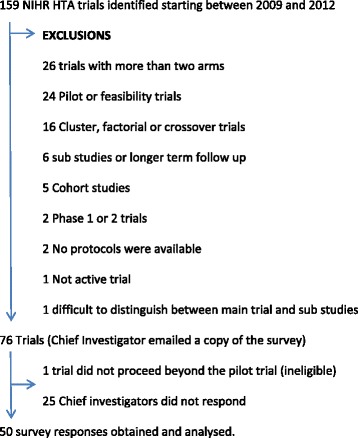
Seventy-five chief investigators of NIHR Health Technology Assessment (HTA)-funded trials starting between 2009 and 2012 were surveyed to elicit their awareness about causes of missing data within their trial and recommended practices for improving retention. Forty-seven CTUs registered within the UKCRC network were surveyed separately to identify approaches and strategies being used to mitigate missing data across trials. Responses from the current practice surveys were used to inform a subsequent two-round Delphi survey with registered CTUs. A consensus list of retention research strategies was produced and ranked by priority.
Fifty out of seventy-five (67%) chief investigators and 33/47 (70%) registered CTUs completed the current practice surveys. Seventy-eight percent of trialists were aware of retention challenges and implemented strategies at trial design. Patient-initiated withdrawal was the most common cause of missing data. Registered CTUs routinely used newsletters, timeline of participant visits, and telephone reminders to mitigate missing data. Whilst 36 out of 59 strategies presented had been formally or informally evaluated, some frequently used strategies, such as site initiation training, have had no research to inform practice. Thirty-five registered CTUs (74%) participated in the Delphi survey. Research into the effectiveness of site initiation training, frequency of patient contact during a trial, the use of routinely collected data, the frequency and timing of reminders, triggered site training and the time needed to complete questionnaires was deemed critical. Research into the effectiveness of Christmas cards for site staff was not of critical importance.
The surveys of current practices demonstrates that a variety of strategies are being used to mitigate missing data but with little evidence to support their use. Six retention strategies were deemed critically important within the Delphi survey and should be a primary focus of future retention research.
在试验中,患者失访或无法收集主要结局数据是一个常见的挑战,这会降低统计效力,并可能在分析中引入偏差。在对英国临床试验单位(CTU)负责人进行的德尔菲调查中,确定将缺失数据降至最低的策略是第二高的方法学研究重点,对于减少研究浪费非常重要。我们的目的是评估英国目前的保留做法以及未来研究的重点,以评估减少损耗策略的有效性。
对2009年至2012年期间启动的75项由英国国家卫生研究院健康技术评估(HTA)资助的试验的首席研究员进行了调查,以了解他们对试验中数据缺失原因的认识以及提高保留率的推荐做法。对在英国临床研究协作网(UKCRC)网络中注册的47个CTU分别进行了调查,以确定用于减少各试验中缺失数据的方法和策略。当前实践调查的结果被用于为随后对注册CTU进行的两轮德尔菲调查提供信息。制定了一份保留研究策略的共识清单,并按优先级排序。
75名首席研究员中有50名(67%)和47个注册CTU中的33个(70%)完成了当前实践调查。78%的试验者意识到保留方面的挑战,并在试验设计时实施了策略。患者主动退出是数据缺失最常见的原因。注册CTU通常使用时事通讯、参与者访视时间表和电话提醒来减少缺失数据。虽然所提出的59项策略中有36项已得到正式或非正式评估,但一些常用策略,如机构启动培训,尚无研究为实践提供参考。35个注册CTU(74%)参与了德尔菲调查。对机构启动培训的有效性、试验期间与患者联系的频率、常规收集数据的使用、提醒的频率和时间、触发式机构培训以及完成问卷所需时间的研究被认为至关重要。对给机构工作人员的圣诞贺卡有效性的研究并非至关重要。
当前实践调查表明,正在使用各种策略来减少缺失数据,但几乎没有证据支持这些策略的使用。在德尔菲调查中,六项保留策略被认为至关重要,应成为未来保留研究的主要重点。