Hannam K, Hartley A, Clark E M, Aihie Sayer A, Tobias J H, Gregson C L
Musculoskeletal Research Unit,Translational Health Sciences, Bristol Medical School, University of Bristol, Bristol, UK.
J Musculoskelet Neuronal Interact. 2017 Sep 1;17(3):246-257.
To determine the feasibility and acceptability of using peak power and force, measured by jumping mechanography (JM), to detect early age-related features of sarcopenia in older women.
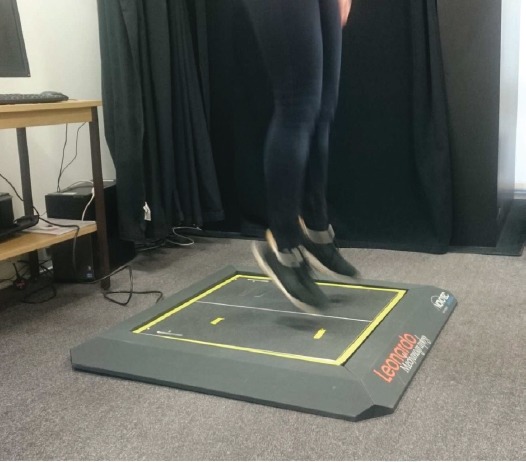
Community-dwelling women aged 71-87 years were recruited into this cross-sectional study. Physical function tests comprised the short physical performance battery (SPPB), grip strength and, if SPPB score≥6, JM. JM measured peak weight-adjusted power and force from two-footed jumps and one-legged hops respectively. Questionnaires assessed acceptability.
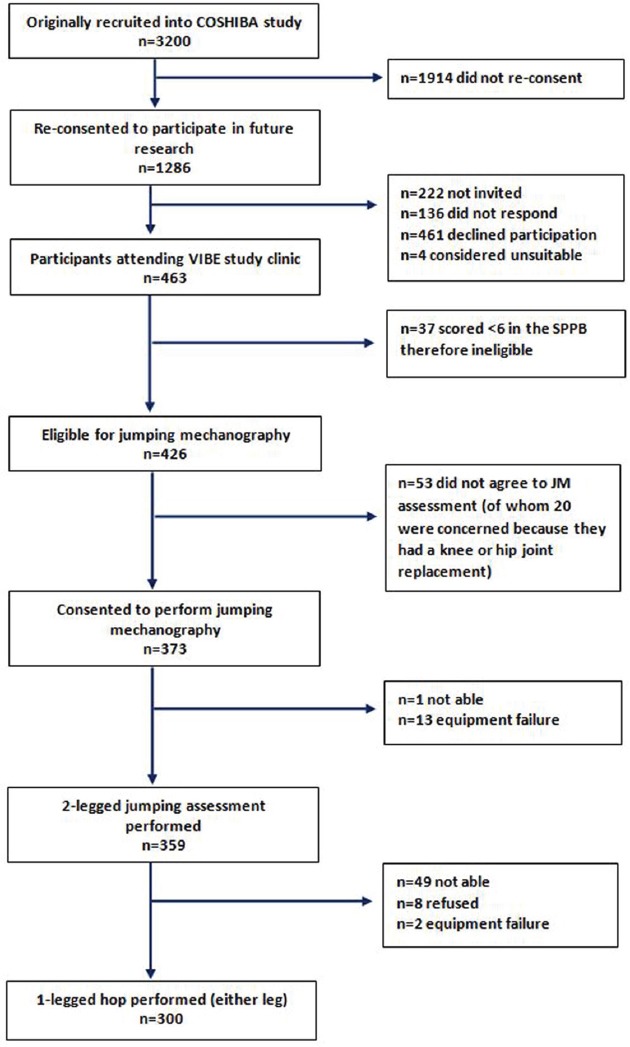
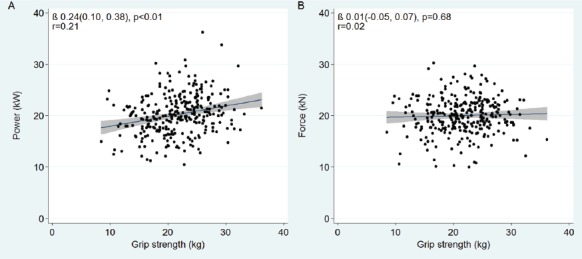
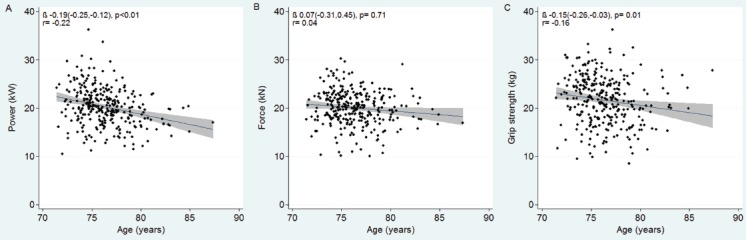
463 women were recruited; 37(8%) with SPPB⟨6 were ineligible for JM. Of 426 remaining, 359(84%) were able to perform ≥1 valid two-footed jump, 300(70%) completed ≥1 valid one-legged hop. No adverse events occurred. Only 14% reported discomfort. Discomfort related to JM performance, with inverse associations with both power and force (p⟨0.01). Peak power and force respectively explained 8% and 10% of variance in SPPB score (13% combined); only peak power explained additional variance in grip strength (17%).
Peak power and force explained a significant, but limited, proportion of variance in SPPB and grip strength. JM represents a safe and acceptable clinical tool for evaluating lower-limb muscle power and force in older women, detecting distinct components of muscle function, and possibly sarcopenia, compared to those evaluated by more established measures.
通过跳跃力学描记法(JM)测量峰值功率和力量,以确定其用于检测老年女性肌肉减少症早期年龄相关特征的可行性和可接受性。
招募71 - 87岁的社区居住女性参与这项横断面研究。身体功能测试包括简短体能测试电池(SPPB)、握力,如果SPPB评分≥6,则进行JM测试。JM分别测量双脚跳和单腿跳的峰值体重调整功率和力量。通过问卷评估可接受性。
共招募463名女性;37名(8%)SPPB评分⟨6的女性不符合JM测试条件。在其余426名女性中,359名(84%)能够完成≥1次有效的双脚跳,300名(70%)完成≥1次有效的单腿跳。未发生不良事件。只有14%的人报告有不适感。不适感与JM测试表现有关,与功率和力量均呈负相关(p⟨0.01)。峰值功率和力量分别解释了SPPB评分中8%和10%的变异(合计13%);只有峰值功率解释了握力的额外变异(17%)。
峰值功率和力量在SPPB和握力变异中解释了显著但有限的比例。与更成熟的测量方法相比,JM是一种安全且可接受的临床工具,用于评估老年女性下肢肌肉功率和力量,检测肌肉功能的不同组成部分,以及可能的肌肉减少症。