Key laboratory of Living Donor Liver Transplantation, National Health and Family Planning Commision, Department of Liver Transplantation Center, The first Affiliated Hospital of Nanjing Medical University, 300 Guangzhou Road, Nanjing, 210029, People's Republic of China.
Department of Anesthesiology, First Affiliated Hospital of Nanjing Medical University, 300 Guangzhou Road, Nanjing, 210029, People's Republic of China.
Sci Rep. 2017 Aug 31;7(1):10114. doi: 10.1038/s41598-017-10693-4.
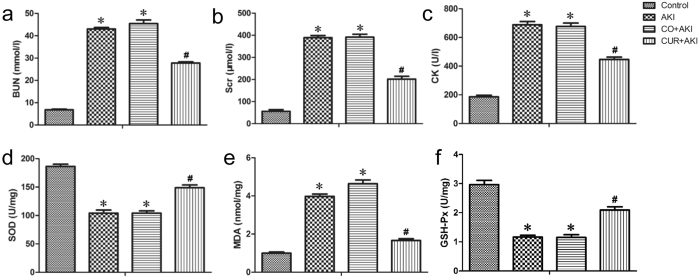
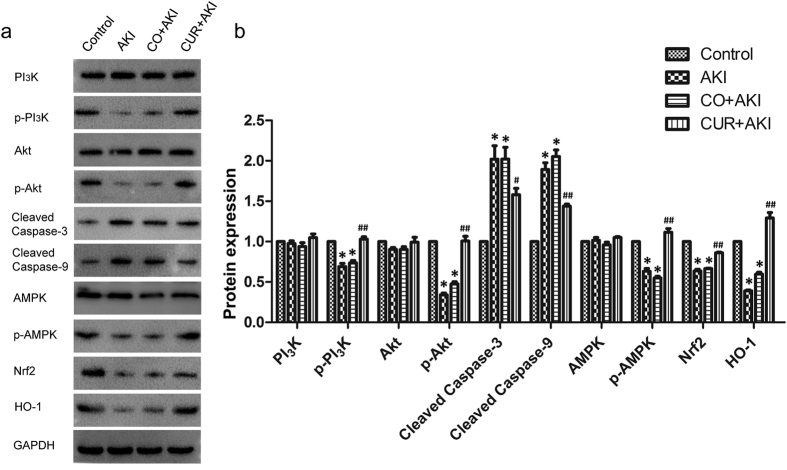
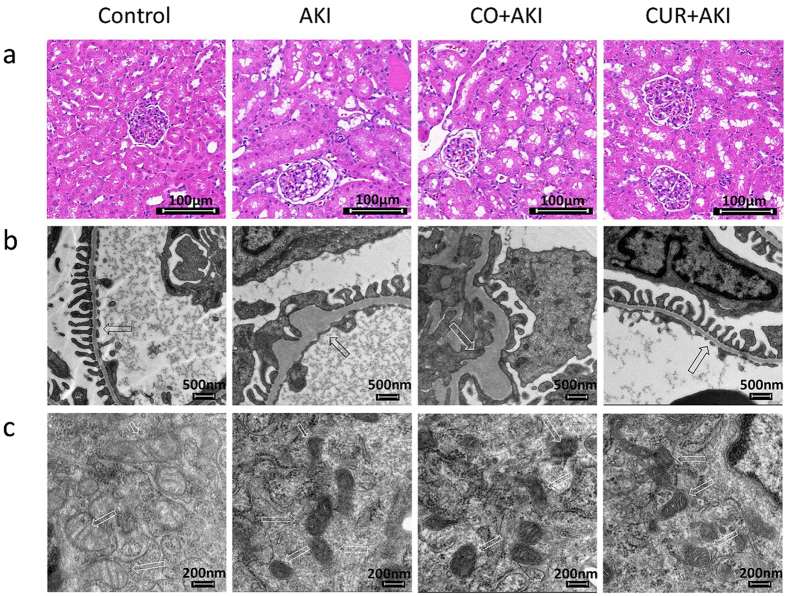
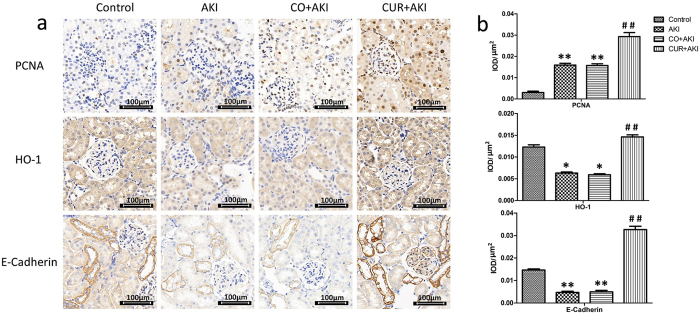
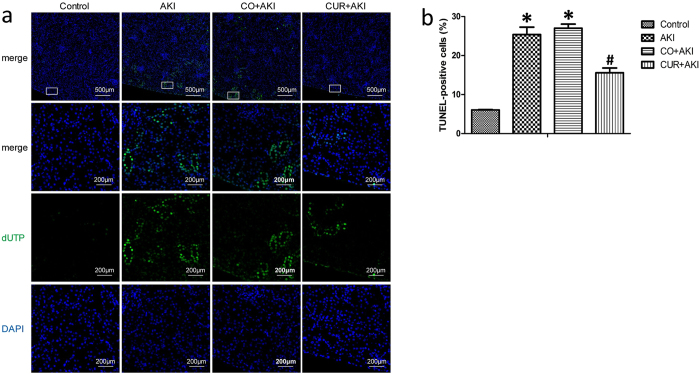
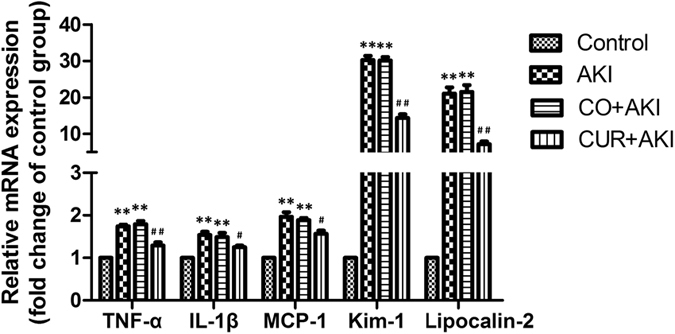
The aim of this study was to investigate the protective role and underlying mechanisms of curcumin on glycerol-induced acute kidney injury (AKI) in rats. Glycerol (10 ml/kg BW, 50% v/v in sterile saline, i.m.) was used to induce AKI, followed by curcumin (200 mg/kg/day, p.o.) administration for 3 days. To confirm renal damage and the effects of curcumin on AKI, serum BUN, Scr, and CK as well as renal SOD, MDA, GSH-Px were measured. Additionally, morphological changes were identified by H&E staining and transmission electron microscopy. The expression of several factors including chemotactic factor MCP-1, proinflammatory cytokines including TNF-α and IL-6, as well as the kidney injury markers, as Kim-1 and Lipocalin-2 were also assessed using q-PCR. Finally, cell apoptosis in renal tissue was detected using in situ TUNEL apoptosis fluorescence staining and expression of proteins associated with apoptotic, oxidative stress and lipid oxidative related signaling pathways were detected using immunohistochemical staining and western blot. The results showed that curcumin exerts renoprotective effects by inhibiting oxidative stress in rhabdomyolysis-induced AKI through regulation of the AMPK and Nrf2/HO-1 signaling pathways, and also ameliorated RM-associated renal injury and cell apoptosis by activating the PI3K/Akt pathway.
本研究旨在探讨姜黄素对甘油诱导的大鼠急性肾损伤(AKI)的保护作用及其潜在机制。采用甘油(10ml/kgBW,50%v/v 无菌生理盐水,肌内注射)诱导 AKI,随后给予姜黄素(200mg/kg/天,口服)治疗 3 天。为了确认肾损伤和姜黄素对 AKI 的作用,测定了血清 BUN、Scr 和 CK 以及肾 SOD、MDA、GSH-Px。此外,通过 H&E 染色和透射电镜观察形态学变化。还使用 q-PCR 评估了几种因子的表达,包括趋化因子 MCP-1、促炎细胞因子 TNF-α和 IL-6,以及肾损伤标志物 Kim-1 和 Lipocalin-2。最后,通过原位 TUNEL 凋亡荧光染色检测肾组织细胞凋亡,并通过免疫组化染色和 Western blot 检测与凋亡、氧化应激和脂质氧化相关信号通路相关的蛋白表达。结果表明,姜黄素通过调节 AMPK 和 Nrf2/HO-1 信号通路抑制肌溶解诱导的 AKI 中的氧化应激,发挥肾保护作用,还通过激活 PI3K/Akt 通路改善 RM 相关的肾损伤和细胞凋亡。