Su Runping, Yang Li, Wang Yue, Yu Shanshan, Guo Yu, Deng Jiayu, Zhao Qianqian, Jin Xiangqun
Department of Pharmaceutics, School of Pharmacy.
Key Laboratory of Zoonosis Research, Ministry of Education, Institute of Zoonosis, College of Veterinary Medicine, Jilin University, Changchun, China.
Int J Nanomedicine. 2017 Jul 21;12:5203-5221. doi: 10.2147/IJN.S139975. eCollection 2017.
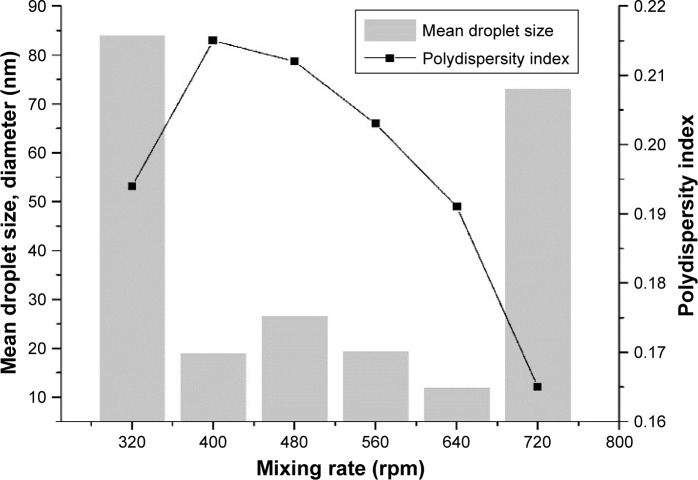
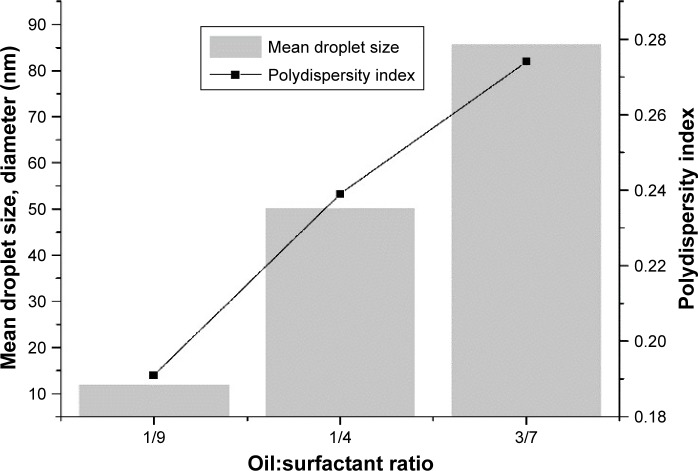
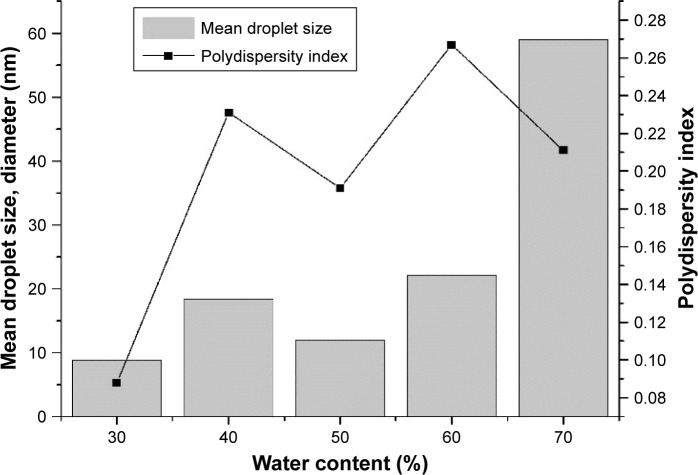
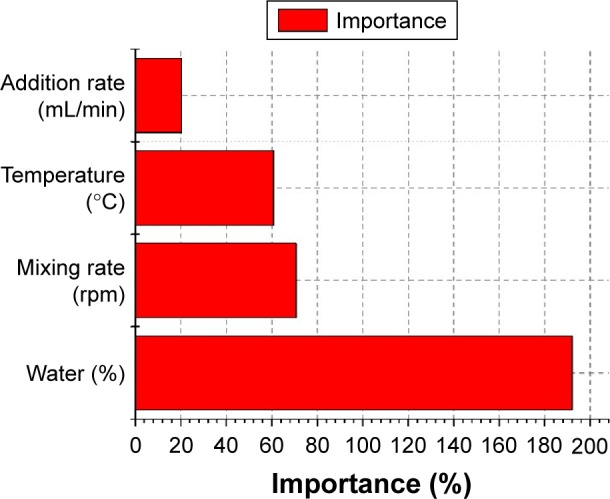
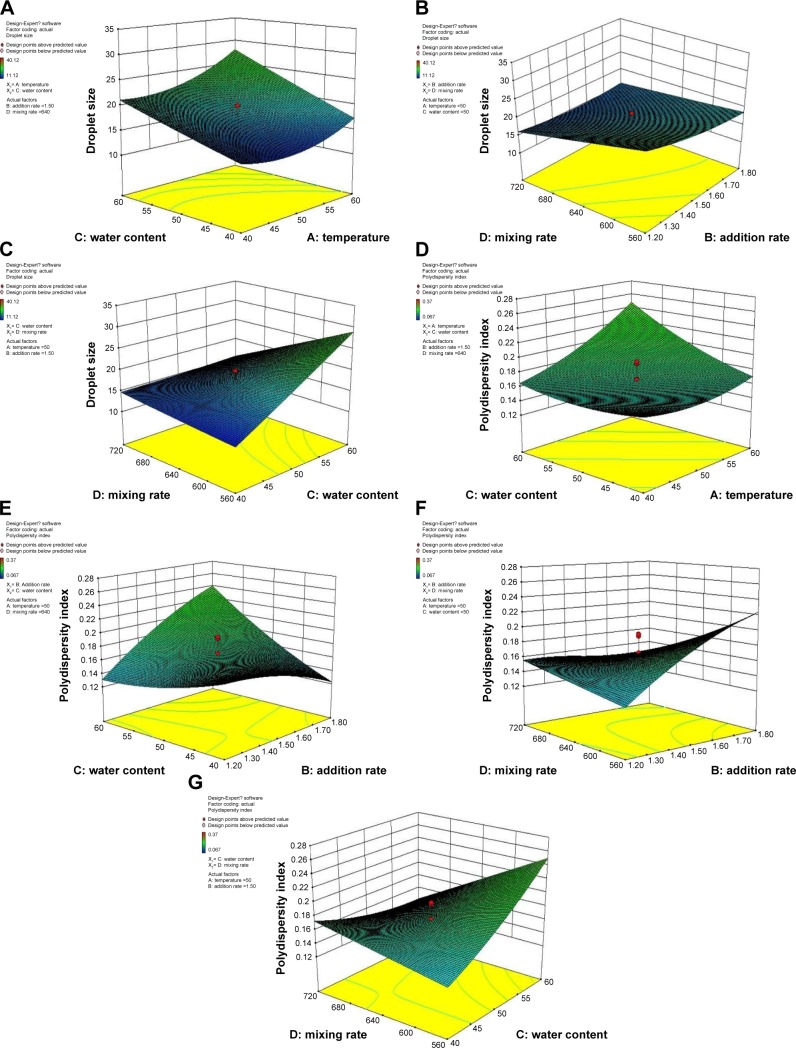
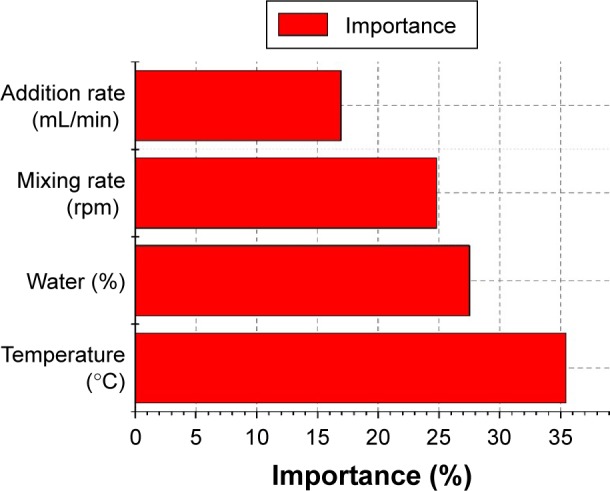
This research aimed to develop and optimize a nanoemulsion-based formulation containing ceramide IIIB using phase-inversion composition for transdermal delivery. The effects of ethanol, propylene glycol (PG), and glycerol in octyldodecanol and Tween 80 systems on the size of the nanoemulsion region in the phase diagrams were investigated using water titration. Subsequently, ceramide IIIB loading was kept constant (0.05 wt%), and the proposed formulation and conditions were optimized via preliminary screening and experimental design. Factors such as octyldodecanol/(Tween 80:glycerol) weight ratio, water content, temperature, addition rate, and mixing rate were investigated in the preliminary screening experiment. Response surface methodology was employed to study the effect of water content (30%-70%, w/w), mixing rate (400-720 rpm), temperature (20°C-60°C), and addition rate (0.3-1.8 mL/min) on droplet size and polydispersity index. The mathematical model showed that the optimum formulation and conditions for preparation of ceramide IIIB nanoemulsion with desirable criteria were a temperature of 41.49°C, addition rate of 1.74 mL/min, water content of 55.08 wt%, and mixing rate of 720 rpm. Under optimum formulation conditions, the corresponding predicted response values for droplet size and polydispersity index were 15.51 nm and 0.12, respectively, which showed excellent agreement with the actual values (15.8 nm and 0.108, respectively), with no significant (>0.05) differences.
本研究旨在开发并优化一种基于纳米乳液的制剂,该制剂含有神经酰胺IIIB,采用相转变组成法用于经皮给药。使用水滴定法研究了乙醇、丙二醇(PG)和甘油在辛基十二醇和吐温80体系中对相图中纳米乳液区域大小的影响。随后,将神经酰胺IIIB的负载量保持恒定(0.05 wt%),并通过初步筛选和实验设计对所提出的制剂和条件进行优化。在初步筛选实验中研究了诸如辛基十二醇/(吐温80:甘油)重量比、含水量、温度、添加速率和混合速率等因素。采用响应面法研究含水量(30%-70%,w/w)、混合速率(400-720 rpm)、温度(20°C-60°C)和添加速率(0.3-1.8 mL/min)对液滴大小和多分散指数的影响。数学模型表明,制备具有理想标准的神经酰胺IIIB纳米乳液的最佳制剂和条件为温度41.49°C、添加速率1.74 mL/min、含水量55.08 wt%和混合速率720 rpm。在最佳制剂条件下,液滴大小和多分散指数的相应预测响应值分别为15.51 nm和0.12,与实际值(分别为15.8 nm和0.108)显示出极好的一致性,无显著(>0.05)差异。