Hamasaki Hidetaka, Hamasaki Yasuteru
Hamasaki Clinic, Kagoshima, Japan.
Front Endocrinol (Lausanne). 2017 Aug 15;8:203. doi: 10.3389/fendo.2017.00203. eCollection 2017.
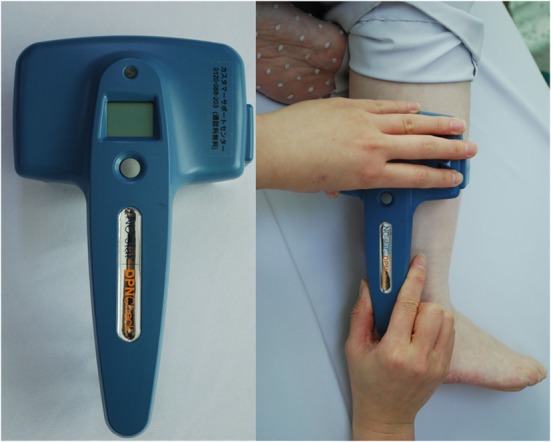
Currently, no international diagnostic criteria for diabetic neuropathy (DN) have been established. Recently, a novel point-of-care sural nerve conduction device has been developed. We aimed to investigate associations between DN and clinical parameters related to the development and progression of DN by using this novel device.
We conducted a retrospective observational study in patients with diabetes whose sural nerve functions were measured using DPN Check between January 2015 and October 2016. Multiple and logistic regression analyses were conducted to assess the associations of sural nerve conduction velocity (SNCV) and amplitude (SNAP) with clinical parameters related to DN.
A total of 740 patients were enrolled in this study. At baseline, 211 patients were diagnosed with DN by using DPN Check. The sensitivity, specificity, and positive likelihood ratio of DPN Check compared with ankle reflex as reference were 81%, 46%, and 1.5, respectively. Of these, 182 patients were followed up for approximately 1 year to measure changes in SNCV and SNAP. Both SNCV and SNAP were inversely associated with duration of diabetes, plasma glucose levels, and hemoglobin A1c levels at baseline, whereas these were positively associated with ankle-brachial index. Logistic regression analysis revealed that poor glycemic control was associated with increased risk of reduction in both SNCV [odds ratio = 1.570; 95% confidence interval (CI) = 1.298-1.898; < 0.001] and SNAP (odds ratio = 1.408; 95% CI = 1.143-1.735; = 0.001), and longer duration of diabetes was also significantly associated with an increased risk of reduction in both SNCV (odds ratio = 1.058; 95% CI = 1.032-1.084; < 0.001) and SNAP (odds ratio = 1.049; 95% CI = 1.019-1.079; = 0.001).
Sural nerve functions were significantly associated with glycemic control and arteriosclerosis in patients with diabetes. DPN Check may be useful as a screening tool to identify DN in clinical practice.
目前,尚未建立糖尿病神经病变(DN)的国际诊断标准。最近,一种新型的即时检测腓肠神经传导装置已被开发出来。我们旨在通过使用这种新型装置来研究DN与DN发生和发展相关的临床参数之间的关联。
我们对2015年1月至2016年10月期间使用DPN Check测量腓肠神经功能的糖尿病患者进行了一项回顾性观察研究。进行了多元和逻辑回归分析,以评估腓肠神经传导速度(SNCV)和波幅(SNAP)与DN相关临床参数之间的关联。
本研究共纳入740例患者。在基线时,使用DPN Check诊断出211例DN患者。以踝反射为参照,DPN Check的敏感性、特异性和阳性似然比分别为81%、46%和1.5。其中,182例患者随访约1年以测量SNCV和SNAP的变化。SNCV和SNAP在基线时均与糖尿病病程、血糖水平和糖化血红蛋白水平呈负相关,而与踝臂指数呈正相关。逻辑回归分析显示,血糖控制不佳与SNCV降低风险增加相关[比值比=1.570;95%置信区间(CI)=1.298 - 1.898;P<0.001]以及与SNAP降低风险增加相关(比值比=1.408;95%CI=1.143 - 1.735;P=0.001),并且糖尿病病程较长也与SNCV降低风险增加显著相关(比值比=1.058;95%CI=1.032 - 1.084;P<0.001)以及与SNAP降低风险增加相关(比值比=1.049;95%CI=1.019 - 1.079;P=0.001)。
糖尿病患者的腓肠神经功能与血糖控制和动脉硬化显著相关。DPN Check在临床实践中作为识别DN的筛查工具可能有用。