Wei Lianhua, Wu Run, Wang Chuan, Wu Zixiang
College of Veterinary Medicine, Gansu Agricultural University, Lanzhou, Gansu, China (mainland).
Clinical Laboratory Centre of Gansu Provincial Hospital, Lanzhou, Gansu, China (mainland).
Med Sci Monit. 2017 Sep 1;23:4225-4229. doi: 10.12659/msm.903145.
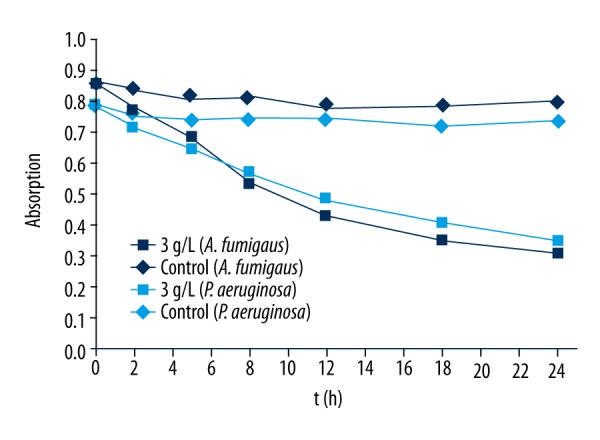
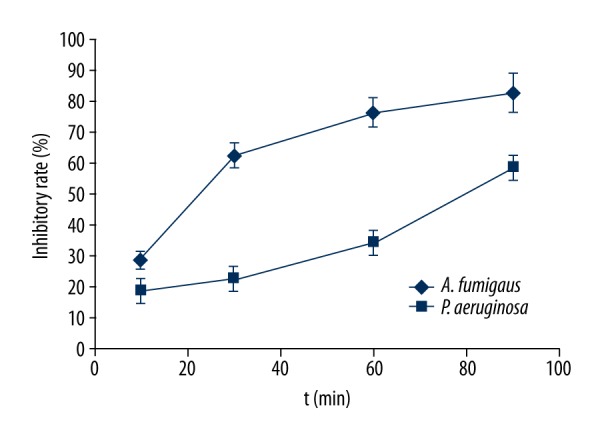
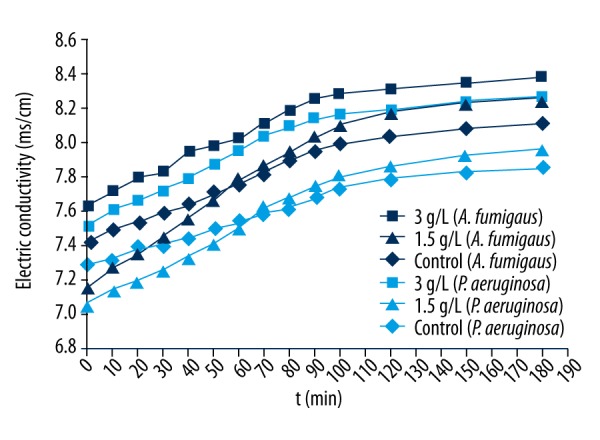
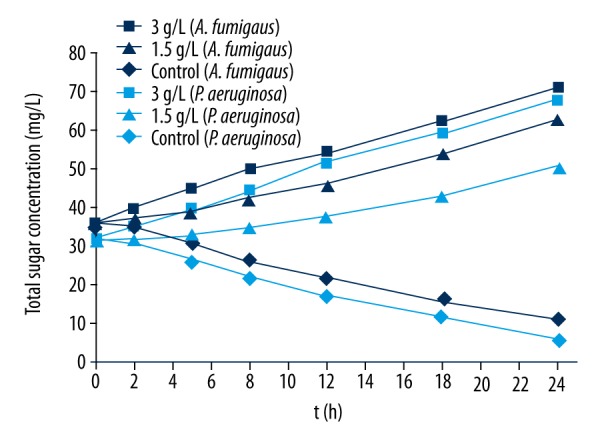
BACKGROUND The antimicrobial mechanisms of ε-polylysine (EPL) against Pseudomonas aeruginosa and Aspergillus fumigatus biofilm were investigated. MATERIAL AND METHODS We assessed the changes in electric conductivity of broth and total sugar concentration, as well as changes in phosphorous metabolism and protein expression, of the 2 organisms before and after treatment with EPL. RESULTS The experimental results showed that EPL has antimicrobial activity against Pseudomonas aeruginosa and Aspergillus fumigatus, but the activity was much stronger for the former. After treatment with EPL, the electric conductivity and total sugar concentration of microbial broth increased, suggesting that EPL damages the cell membrane structure, which increases permeability of the cell membrane and release of cell components. CONCLUSIONS The consumption of phosphorous decreased in the EPL-treated organisms, which seriously affected the synthesis of important cell components such as nucleic acid and phospholipid, as well as energy metabolism.
背景 研究了ε-聚赖氨酸(EPL)对铜绿假单胞菌和烟曲霉生物膜的抗菌机制。
材料与方法 我们评估了用EPL处理前后这两种微生物的肉汤电导率、总糖浓度变化,以及磷代谢和蛋白质表达的变化。
结果 实验结果表明,EPL对铜绿假单胞菌和烟曲霉具有抗菌活性,但对前者的活性更强。用EPL处理后,微生物肉汤的电导率和总糖浓度增加,表明EPL破坏了细胞膜结构,增加了细胞膜的通透性和细胞成分的释放。
结论 经EPL处理的生物体中磷的消耗减少,这严重影响了核酸和磷脂等重要细胞成分的合成以及能量代谢。