Henry Ford Hospital, 2799 West Grand Boulevard, Detroit, Michigan 48202, USA.
BMC Microbiol. 2014 Mar 3;14:53. doi: 10.1186/1471-2180-14-53.
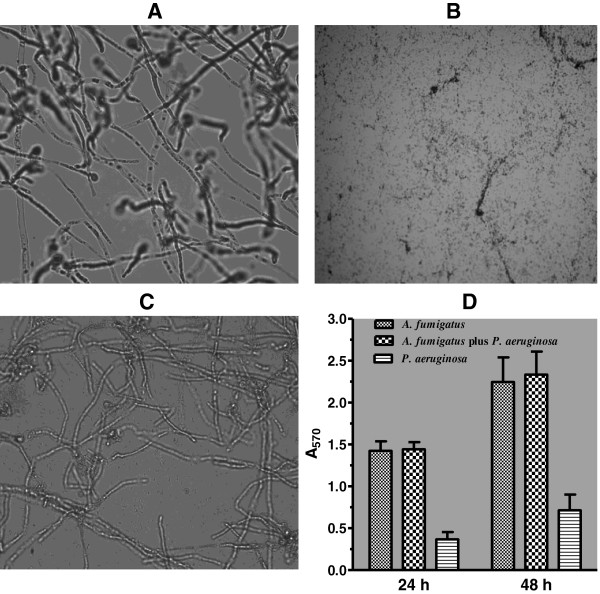
Mixed microbial infections of the respiratory tracts with P. aeruginosa and A. fumigatus capable of producing biofilms are commonly found in cystic fibrosis patients. The primary objective of this study was to develop an in vitro model for P. aeruginosa and A. fumigatus polymicrobial biofilm to study the efficacy of various antimicrobial drugs alone and in combinations against biofilm-embedded cells. Simultaneous static cocultures of P. aeruginosa and sporelings were used for the development of in vitro P. aeruginosa-A. fumigatus polymicrobial biofilm in SD broth in 24-well cell culture plates at 35°C, and the biofilm formation was monitored microscopically and spectrophotometrically. Using P. aeruginosa-A. fumigatus sporelings cocultures we examined the effects of various antimicrobial drugs alone and in combination against polymicrobial biofilm by CFU and tetrazolium reduction assays.
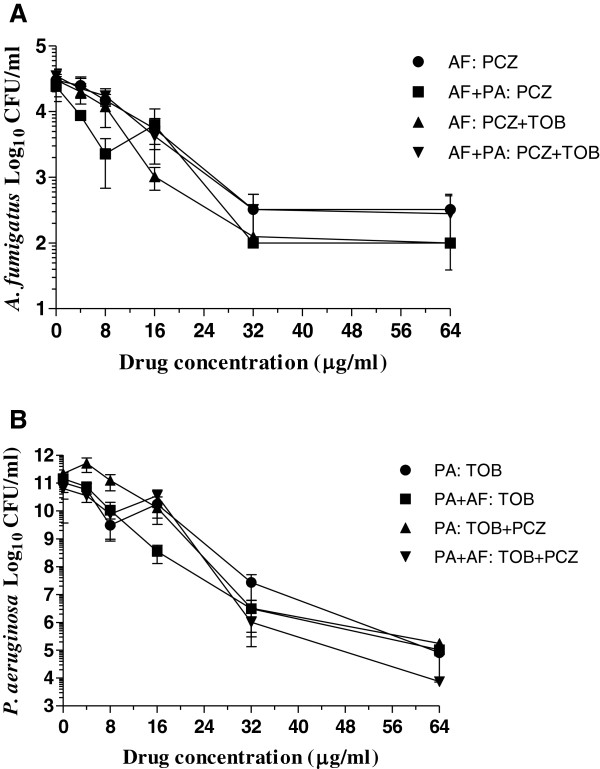
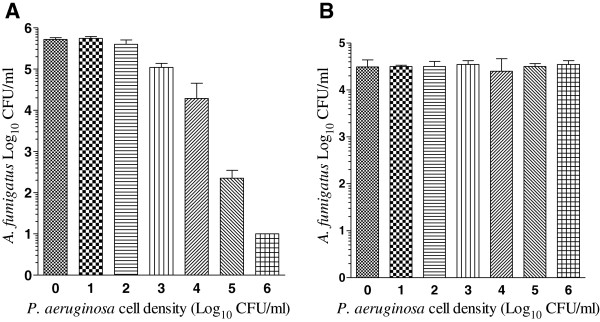
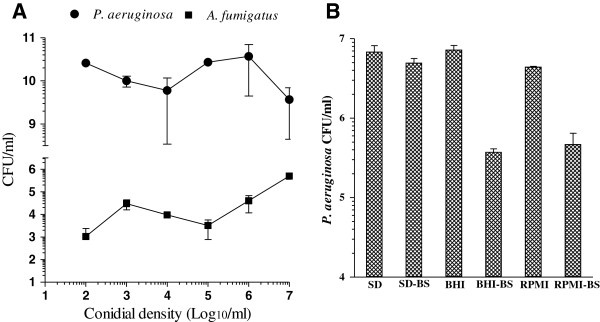
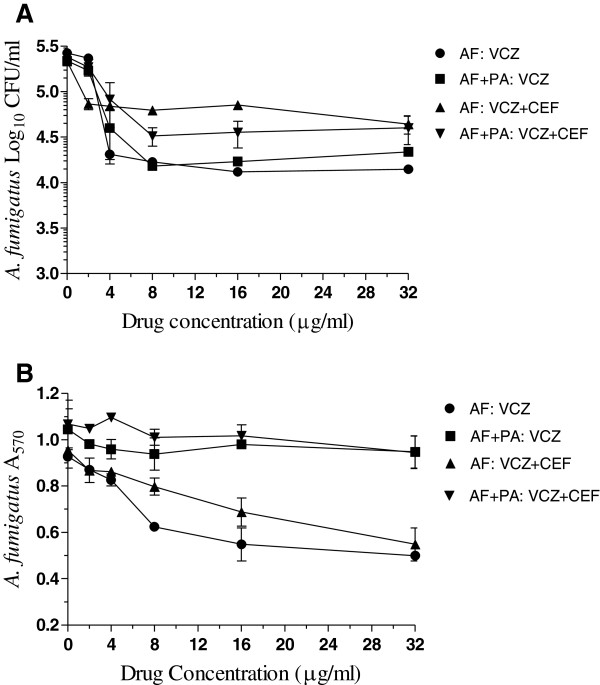
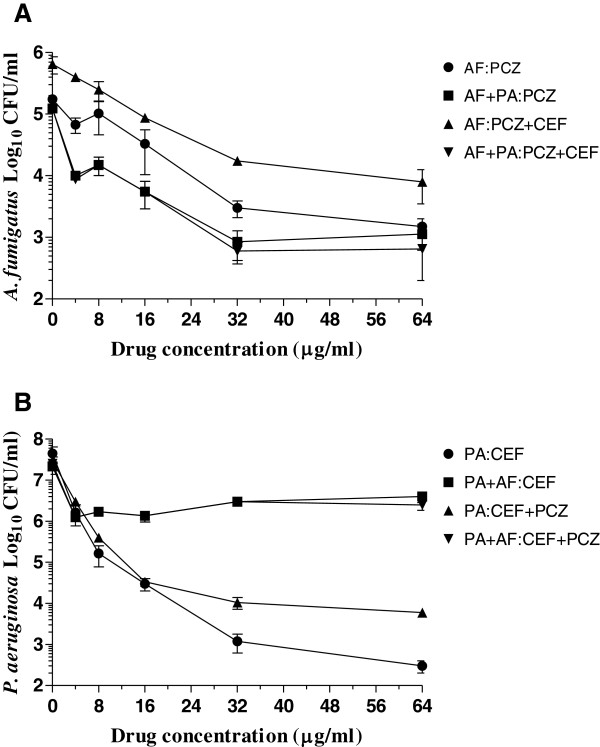
In simultaneous static cocultures P. aeruginosa cells killed A. fumigatus conidia, whereas the bacterial cells showed no substantial fungicidal effect on sporelings grown for 12 h or longer at 35°C. Monospecies cultures of P. aeruginosa produced loosely adhered monomicrobial biofilm and addition of 10% bovine serum to the growth medium inhibited the formation of monomicrobial biofilm by P. aeruginosa whereas it produced tightly adhered polymicrobial biofilm in the presence of A. fumigatus mycelial growth. A. fumigatus produced firmly adherent monomicrobial and polymicrobial biofilms. A comparison of CFU and MTT assays showed that the latter is unsuitable for studying the effectiveness of antimicrobial treatment against polymicrobial biofilm. Tobramycin alone and in combination with posaconazole was highly effective against monomicrobial and polymicrobial biofilms of P. aeruginosa whereas cefepime alone and in combination with posaconazole showed excellent activity against monomicrobial biofilm of P. aeruginosa but was less effective against polymicrobial biofilm. Monomicrobial and polymicrobial biofilms of A. fumigatus showed similar susceptibility to posaconazole with and without the antibacterial drug.
Simultaneous static coculture of A. fumigatus sporelings grown for 12 h or longer was superior to ungerminated conidia with P. aeruginosa for the development of A. fumigatus-P. aeruginosa biofilm. P. aeruginosa-A. fumigatus polymicrobial biofilm shows differential susceptibility to antimicrobial drugs whereas the susceptibility of A. fumigatus to antimicrobial drugs was unchanged.
在囊性纤维化患者中,呼吸道混合微生物感染铜绿假单胞菌和烟曲霉,能够产生生物膜。本研究的主要目的是建立一种体外铜绿假单胞菌和烟曲霉多微生物生物膜模型,以研究各种单独和联合使用的抗菌药物对生物膜内细胞的疗效。在 35°C 的 SD 肉汤中,通过同时静态共培养铜绿假单胞菌和孢子,在 24 孔细胞培养板中开发体外铜绿假单胞菌-烟曲霉多微生物生物膜,并用显微镜和分光光度法监测生物膜形成。使用铜绿假单胞菌-烟曲霉孢子共培养物,我们通过 CFU 和四唑减少测定法检查了各种单独和联合使用的抗菌药物对多微生物生物膜的影响。
在同时的静态共培养中,铜绿假单胞菌细胞杀死了烟曲霉分生孢子,而细菌细胞对在 35°C 下生长 12 小时或更长时间的孢子没有明显的杀菌作用。铜绿假单胞菌的单种培养物产生松散附着的单微生物生物膜,向生长培养基中添加 10%牛血清抑制了铜绿假单胞菌单微生物生物膜的形成,而在烟曲霉菌丝生长存在的情况下,它产生了紧密附着的多微生物生物膜。烟曲霉产生了牢固附着的单微生物和多微生物生物膜。CFU 和 MTT 测定的比较表明,后者不适合研究抗微生物治疗对多微生物生物膜的有效性。妥布霉素单独和联合泊沙康唑对铜绿假单胞菌的单微生物和多微生物生物膜均具有高度有效性,而头孢吡肟单独和联合泊沙康唑对铜绿假单胞菌的单微生物生物膜具有极好的活性,但对多微生物生物膜的作用较小。有和没有抗菌药物时,烟曲霉的单微生物和多微生物生物膜对泊沙康唑的敏感性相似。
与未发芽的分生孢子相比,生长 12 小时或更长时间的烟曲霉孢子的同时静态共培养更适合开发烟曲霉-铜绿假单胞菌生物膜。铜绿假单胞菌-烟曲霉多微生物生物膜对抗菌药物的敏感性不同,而烟曲霉对抗菌药物的敏感性没有改变。