Department of Orthopedics, E-Da Hospital/I-Shou University, Kaohsiung, Taiwan.
Department of Physical Therapy, College of Medicine, National Cheng Kung University, Tainan, Taiwan; Institute of Allied Health Sciences, College of Medicine, National Cheng Kung University, Tainan, Taiwan.
Redox Biol. 2018 Apr;14:72-81. doi: 10.1016/j.redox.2017.08.011. Epub 2017 Aug 24.
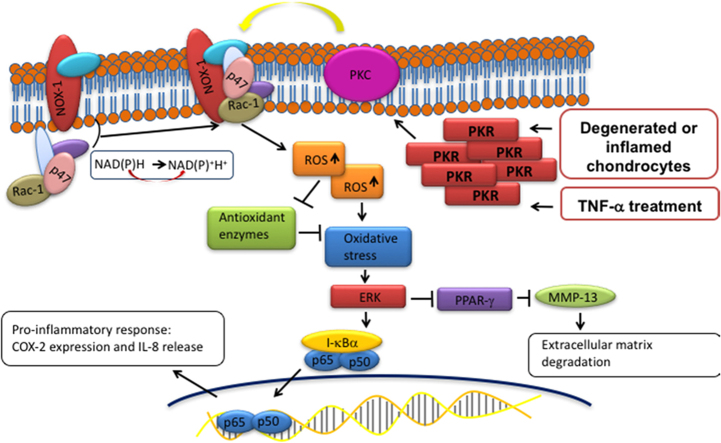
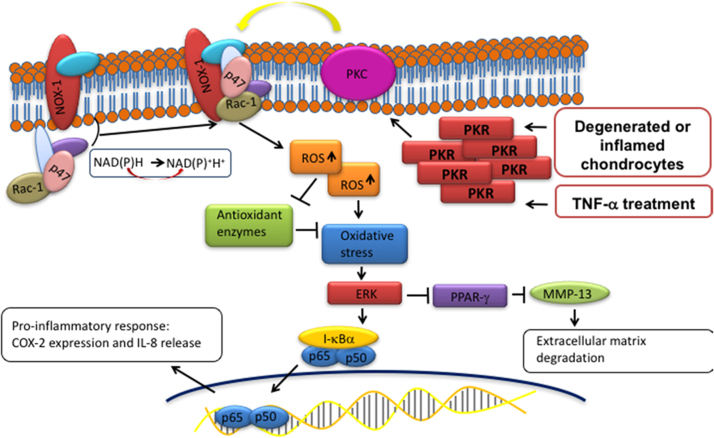
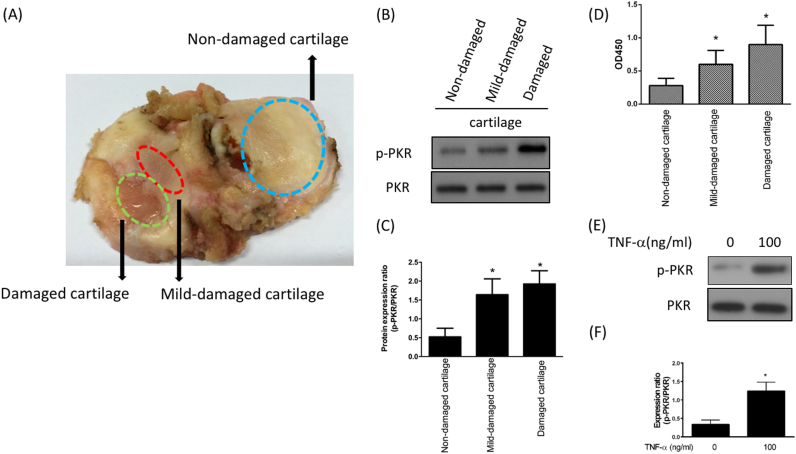
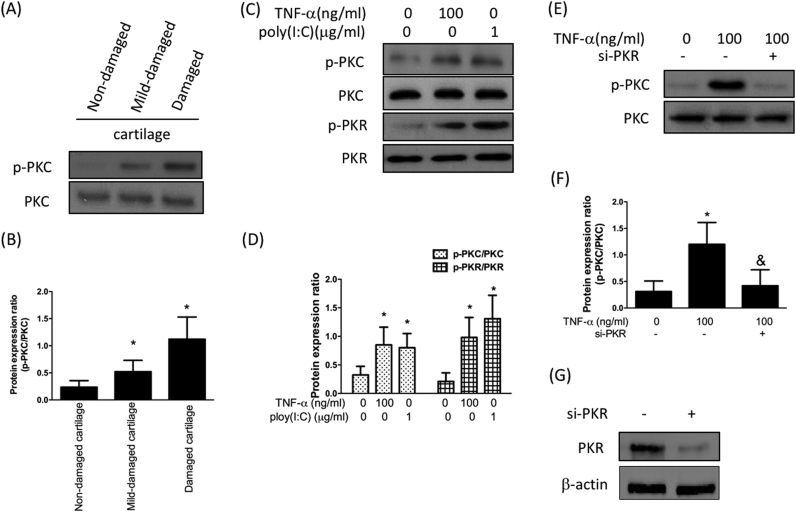
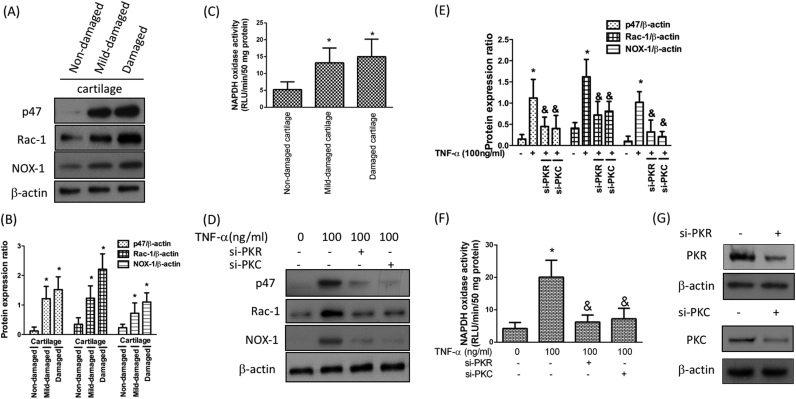
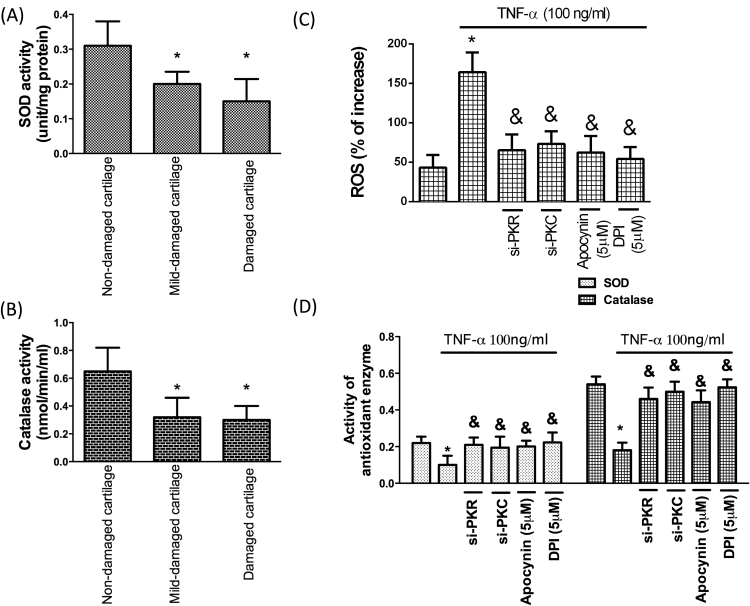
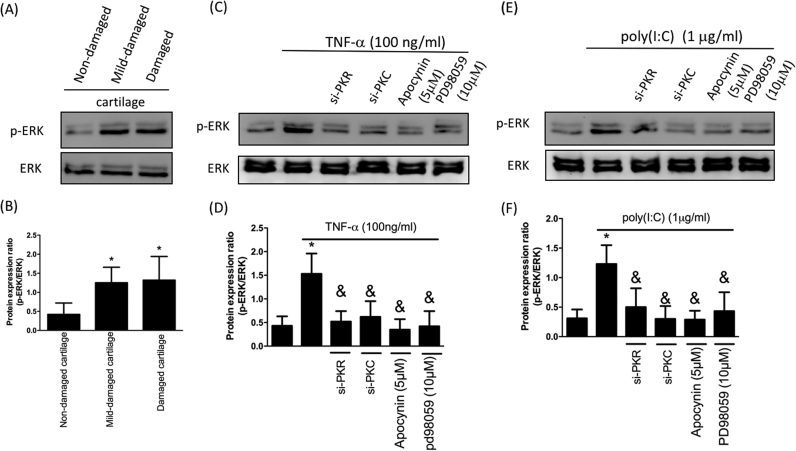
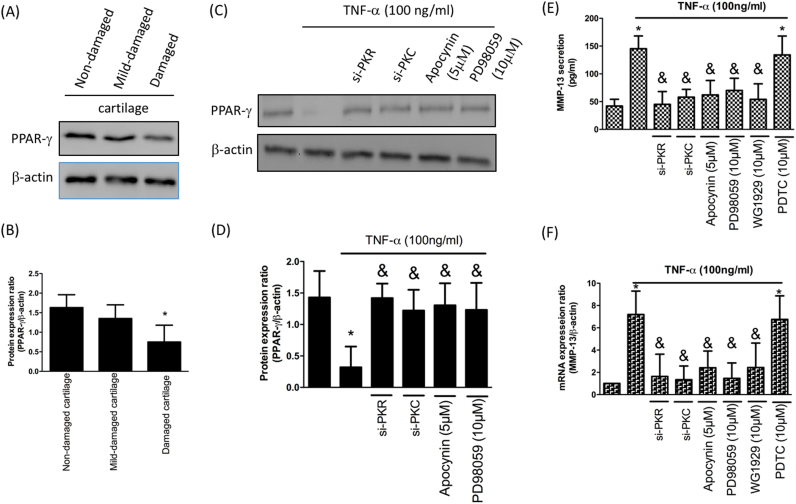
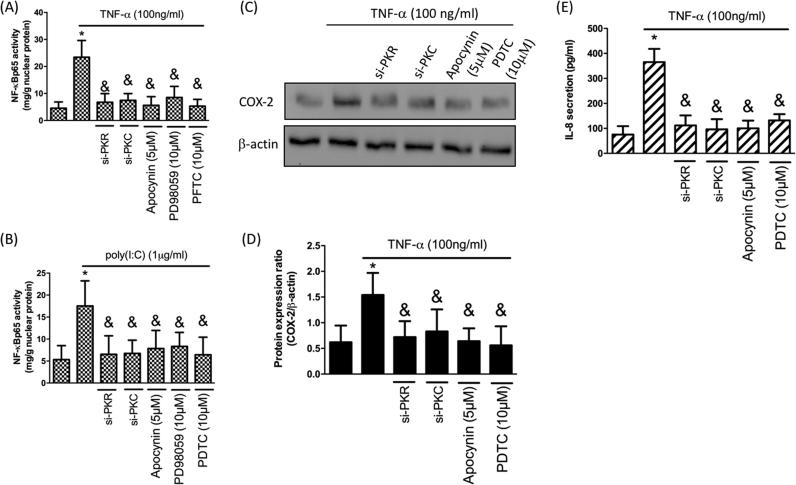
Osteoarthritis (OA) is a degenerative joint disease affecting a large population of people. Although the elevated expression of PKR (double stranded RNA-dependent protein kinase) and MMP-13 (collagenase-3) have been indicated to play pivotal roles in the pathogenesis of OA, the exact mechanism underlying the regulation of MMP-13 by PKR following inflammatory stimulation was relatively unknown. The purpose of this study was to determine the signaling pathway involved in the PKR-mediated induction of MMP-13 after TNF-α-stimulation. In this study, cartilages of knee joint were obtained from OA subjects who underwent arthroplastic knee surgery. Cartilages were used for tissue analysis or for chondrocytes isolation. In results, the upregulated expression of PKR was observed in damaged OA cartilages as well as in TNF-α-stimulated chondrocytes. Phosphorylation of PKC (protein kinase C) was found after TNF-α administration or PKR activation using poly(I:C), indicating PKC was regulated by PKR. The subsequent increased activity of NADPH oxidase led to oxidative stress accumulation and antioxidant capacity downregulation followed by an exaggerated inflammatory response with elevated levels of COX-2 and IL-8 via ERK/NF-κB pathway. Activated ERK pathway also impeded the inhibition of MMP-13 by PPAR-γ. These findings demonstrated that TNF-α-induced PKR activation triggered oxidative stress-mediated inflammation and MMP-13 in human chondrocytes. Unraveling these deregulated signaling cascades will deepen our knowledge of OA pathophysiology and provide aid in the development of novel therapies.
骨关节炎(OA)是一种影响大量人群的退行性关节疾病。虽然已经表明 PKR(双链 RNA 依赖性蛋白激酶)和 MMP-13(胶原酶-3)的高表达在 OA 的发病机制中起关键作用,但 PKR 对 MMP-13 的调节的确切机制在炎症刺激后仍然未知。本研究旨在确定 TNF-α 刺激后 PKR 介导的 MMP-13 诱导所涉及的信号通路。在这项研究中,从接受关节成形术膝关节手术的 OA 患者中获得膝关节软骨。软骨用于组织分析或分离软骨细胞。结果表明,在受损的 OA 软骨和 TNF-α 刺激的软骨细胞中观察到 PKR 的上调表达。在 TNF-α 给药或使用 poly(I:C) 激活 PKR 后,发现 PKC(蛋白激酶 C)的磷酸化,表明 PKC 受 PKR 调节。随后 NADPH 氧化酶活性的增加导致氧化应激积累和抗氧化能力下调,随后通过 ERK/NF-κB 途径导致 COX-2 和 IL-8 的水平升高,从而引发炎症反应加剧。激活的 ERK 通路也阻碍了 PPAR-γ 对 MMP-13 的抑制。这些发现表明,TNF-α 诱导的 PKR 激活触发了人软骨细胞中的氧化应激介导的炎症和 MMP-13。揭示这些失调的信号级联将加深我们对 OA 病理生理学的认识,并为新型治疗方法的开发提供帮助。