Institute of Zoology, University of Veterinary Medicine Hannover, Bünteweg 17, Hannover, D-30559, Germany.
Sci Rep. 2017 Sep 4;7(1):10321. doi: 10.1038/s41598-017-10417-8.
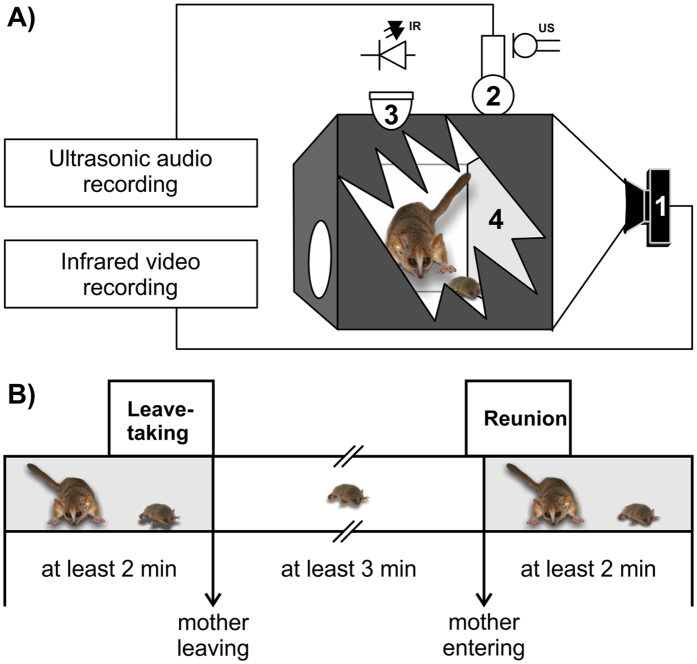
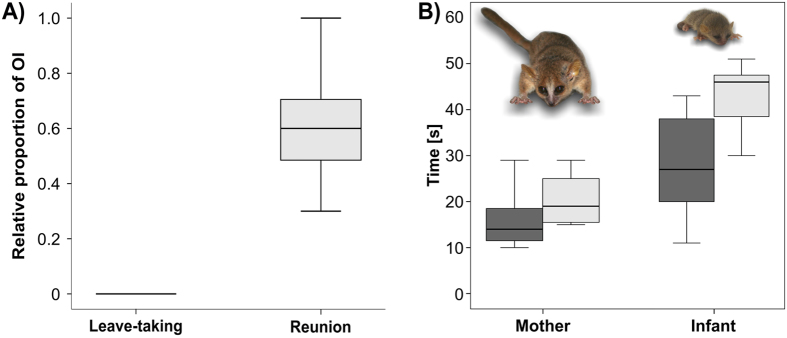
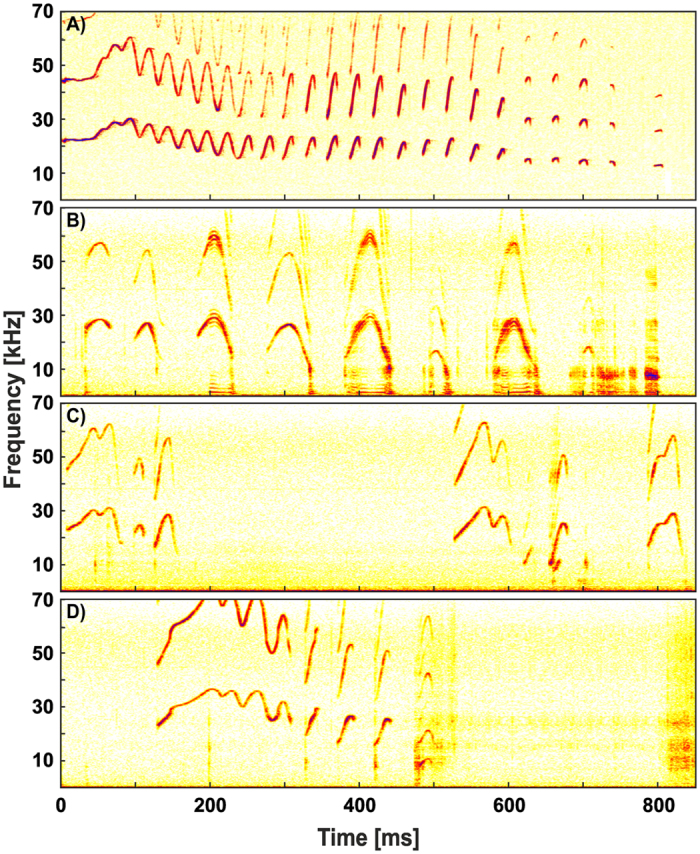
In human societies, ritualized greeting behavior includes gestural and vocal displays to signal the social acceptance of an encountering person. These displays are universal across cultures suggesting a pre-human origin. Vocal greeting displays are only reported for monkeys and apes with complex social systems, but none of these studies confirmed that greeting signals fulfill all criteria characterizing human greeting behavior. In this study, we analyzed for the first time whether vocal exchanges between mother and infants in a non-human primate fulfill the criteria of human greeting behavior and whether vocal greeting behavior is present in a basal primate with a less complex social system, the gray mouse lemur. By comparing spontaneous leave-takings and reunions, we found that vocal exchanges during mother-infant reunions fulfilled all six criteria characterizing human greeting behavior. Thus, predictable reciprocal vocal exchanges occurred at the start of the reunion (but not during leave-taking), when mother and infant had visual contact to each other. Thus, we argued that mother-infant vocal exchanges governing reunions are essential to establish social bonds and to ritualize the greeting function. Our findings suggest that ritualized vocal greeting has its origins deeply rooted in mammalian phylogeny and derives from vocal exchanges during parent-infant reunions.
在人类社会中,仪式化的问候行为包括手势和声音表现,以表示对遇到的人的社会接纳。这些表现形式在文化中是普遍存在的,这表明它们具有人类之前的起源。只有具有复杂社会系统的猴子和猿类才会报告发声问候的行为,但这些研究都没有证实问候信号是否满足了所有刻画人类问候行为的标准。在这项研究中,我们首次分析了非人类灵长类动物中母亲和婴儿之间的声音交流是否满足人类问候行为的标准,以及在社会系统不太复杂的基础灵长类动物——灰鼠狐猴中是否存在发声问候行为。通过比较自发的分离和团聚,我们发现,在母亲和婴儿相互有视觉接触的情况下,在团聚开始时(而不是在分离时),婴儿和母亲之间的声音交流满足了刻画人类问候行为的所有六个标准。因此,我们认为,控制团聚的母婴声音交流对于建立社会联系和使问候功能仪式化至关重要。我们的研究结果表明,仪式化的发声问候行为在哺乳动物的进化历程中有着深远的根源,并且源自于母婴团聚时的声音交流。