El-Beltagi Hossam S, El-Senousi Naglaa A, Ali Zeinab A, Omran Azza A
Department of Biochemistry, Faculty of Agriculture, Cairo University, Giza, Egypt.
Department of Meat and Fish Technology Research, Food Technology Research Institute, Agricultural Research Center, Giza, Egypt.
PLoS One. 2017 Sep 5;12(9):e0183657. doi: 10.1371/journal.pone.0183657. eCollection 2017.
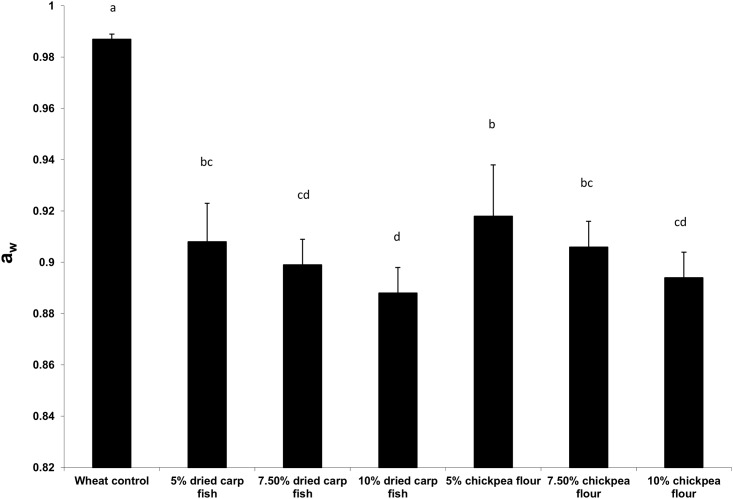
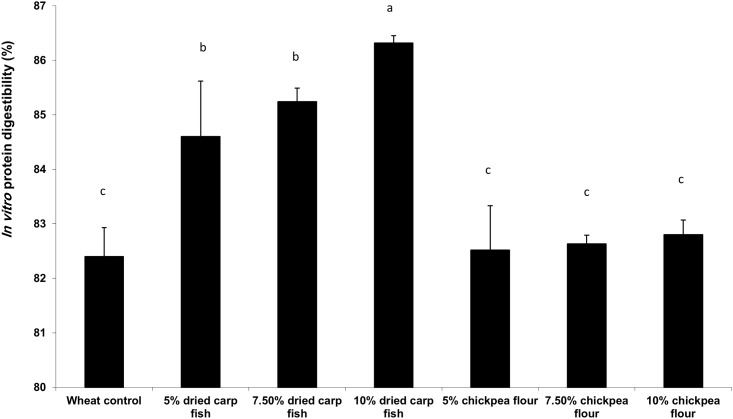
Pizza being the most popular food worldwide, quality and sensory appeal are important considerations during its modification effort. This study was aimed to evaluate the quality of pizza made using two different sources of proteins, chickpea (Cicer arietinum) flour and dried carp fish powder (Cyprinus carpio). Analysis indicated nutrients richness specificity of chickpea flour (higher fiber, energy, iron, zinc, linoleic acid and total nonessential amino acids) and dried carp fish powder (higher contents of protein, fats, ash, oleic acid and total essential amino acids) complementing wheat flour to enhance nutritional value of pizza. Total plate count and thiobarbituric acid were increased (P<0.05) in dried carp fish powder after 45 days of storage, but no Coliform were detected. Wheat flour was substituted with 5, 7.5 and 10% chickpea flour or dried carp fish powder and chemical, textural, sensory and storage evaluation parameters of in pizza were investigated. Dried carp fish powder increased (P<0.05) contents of protein, ash, fats, zinc and protein digestibility of pizza. Chickpea flour increased iron and zinc contents of the pizza. Water activity (aw) was decreased in fish powder and chickpea pizza. Pizza firmness and gumminess were significantly (p<0.05) increased at every level of protein source, but cohesiveness was decreased with 10% chickpea flour. Pizza chewiness was the same (P>0.05) across the levels of two protein sources. Springiness was decreased (P<0.05) with high level (10%) dried fish powder and low/intermediate level of chickpea flour. Chickpea and dried carp fish incorporation up to 7.50% in pizza at the expense of wheat flour had no effect (P>0.05) on all sensorial parameters except for odor values. The results could be useful in utilization of chickpea flour and carp fish powder in designing nutritious pizza for consumers.
披萨作为全球最受欢迎的食物,在其改良过程中,品质和感官吸引力是重要的考量因素。本研究旨在评估使用两种不同蛋白质来源——鹰嘴豆(鹰嘴豆属)粉和干鲤鱼粉(鲤)制作的披萨的品质。分析表明,鹰嘴豆粉(纤维、能量、铁、锌、亚油酸和总非必需氨基酸含量较高)和干鲤鱼粉(蛋白质、脂肪、灰分、油酸和总必需氨基酸含量较高)的营养丰富特性可与小麦粉互补,从而提高披萨的营养价值。储存45天后,干鲤鱼粉中的总平板计数和硫代巴比妥酸增加(P<0.05),但未检测到大肠菌群。用5%、7.5%和10%的鹰嘴豆粉或干鲤鱼粉替代小麦粉,并对披萨的化学、质地、感官和储存评估参数进行了研究。干鲤鱼粉增加了(P<0.05)披萨的蛋白质、灰分、脂肪、锌含量和蛋白质消化率。鹰嘴豆粉增加了披萨中铁和锌的含量。鱼粉和鹰嘴豆披萨的水分活度(aw)降低。在每个蛋白质来源水平下,披萨的硬度和胶黏性均显著增加(p<0.05),但10%鹰嘴豆粉会降低其黏聚性。两种蛋白质来源不同水平下,披萨的咀嚼性相同(P>0.05)。高含量(10%)干鱼粉和低/中等含量鹰嘴豆粉会降低弹性(P<0.05)。用鹰嘴豆和干鲤鱼粉以小麦粉为代价在披萨中添加量高达7.50%,除气味值外,对所有感官参数均无影响(P>0.05)。这些结果对于利用鹰嘴豆粉和鲤鱼粉为消费者设计营养丰富的披萨可能是有用的。