Theriau Christopher F, Sauvé O'Llenecia S, Beaudoin Marie-Soleil, Wright David C, Connor Michael K
School of Kinesiology and Health Science, Muscle Health Research Centre, York University, Toronto, ON, Canada.
Department of Human Health and Nutritional Sciences, University of Guelph, Guelph, ON, Canada.
PLoS One. 2017 Sep 5;12(9):e0183897. doi: 10.1371/journal.pone.0183897. eCollection 2017.
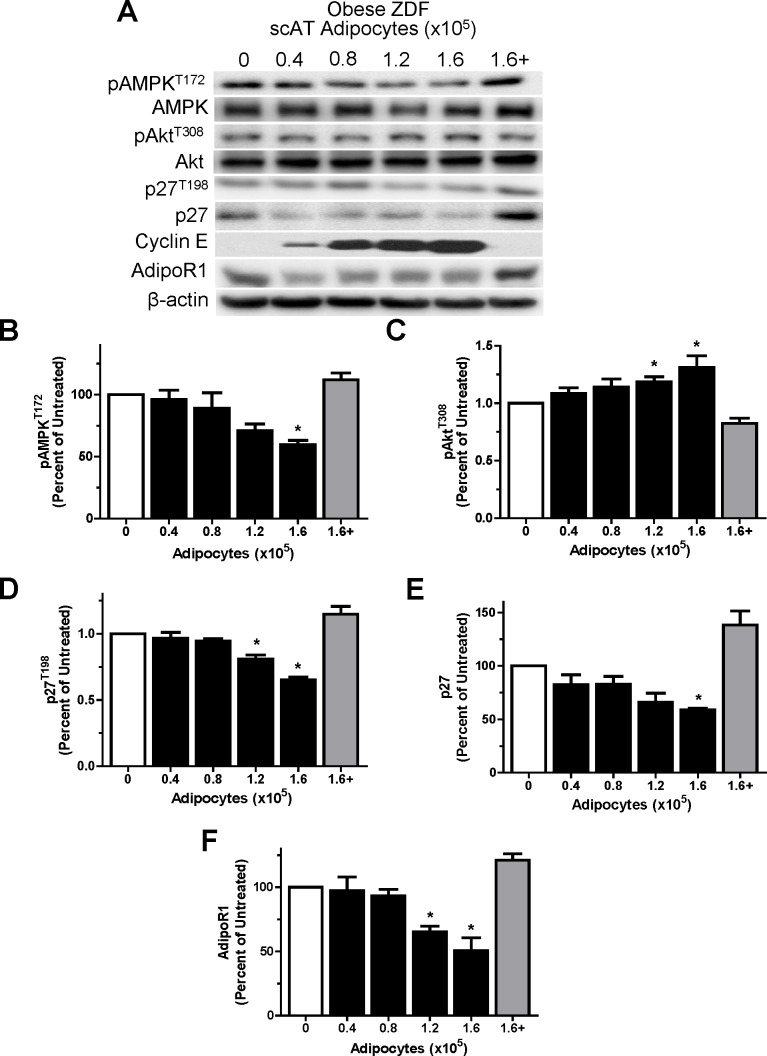
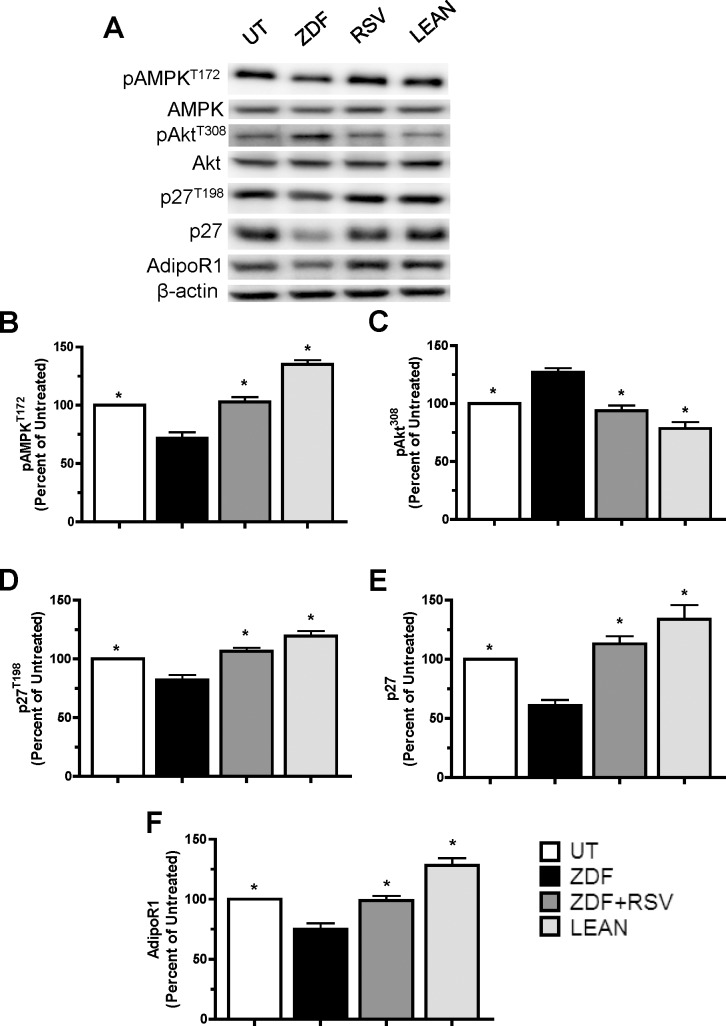
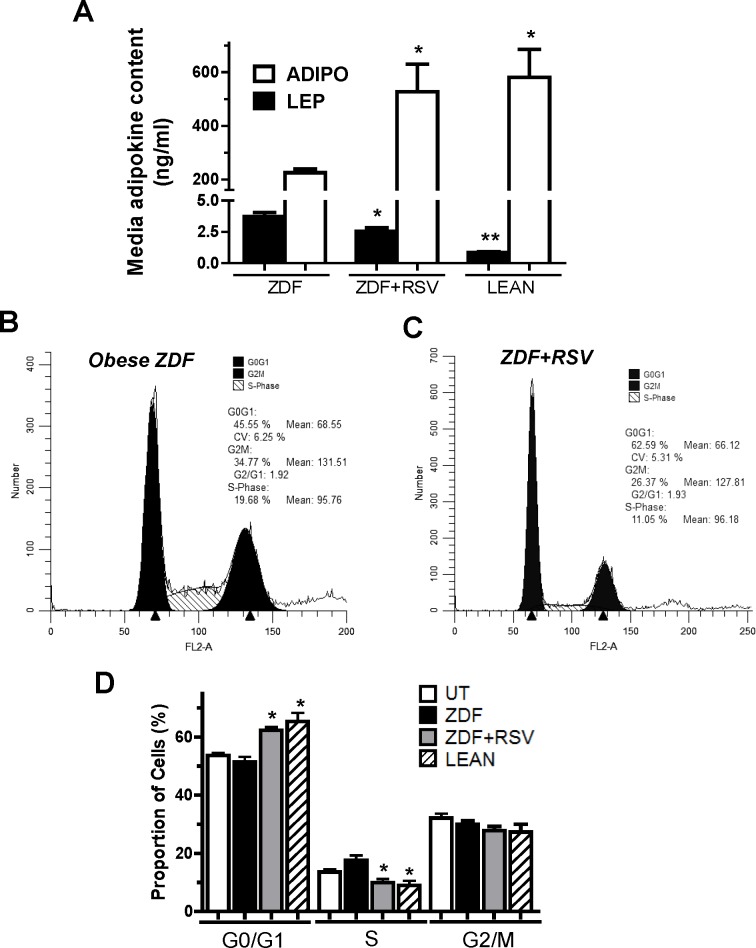
Obesity is clearly associated with an increased risk of breast cancer in postmenopausal women. The purpose was to determine if obesity alters the adipocyte adipokine secretion profile, thereby altering the adipose-dependent paracrine/endocrine growth microenvironment surrounding breast cancer cells (MCF7). Additionally, we determined whether resveratrol (RSV) supplementation can counteract any obesity-dependent effects on breast cancer tumor growth microenvironment. Obese ZDF rats received standard chow diet or diet supplemented with 200 mg/kg body weight RSV. Chow-fed Zucker rats served as lean controls. After 6 weeks, conditioned media (CM) prepared from inguinal subcutaneous adipose tissue (scAT) was added to MCF7 cells for 24 hrs. Experiments were also conducted using purified isolated adipocytes to determine whether any endocrine effects could be attributed specifically to the adipocyte component of adipose tissue. scAT from ZDF rats promoted cell cycle entry in MCF7 cells which was counteracted by RSV supplementation. RSV-CM had a higher ratio of ADIPO:LEP compared to ZDF-CM. This altered composition of the CM led to increased levels of pAMPKT172, p27, p27T198 and AdipoR1 while decreasing pAktT308 in MCF7 cells grown in RSV-CM compared to ZDF-CM. RSV-CM increased number of cells in G0/G1 and decreased cells in S-phase compared to ZDF-CM. Co-culture experiments revealed that these obesity-dependent effects were driven by the adipocyte component of the adipose tissue. Obesity decreased the ratio of adiponectin:leptin secreted by adipocytes, altering the adipose-dependent growth microenvironment resulting in increased breast cancer cell proliferation. Supplementation with RSV reversed these adipose-dependent effects suggesting a potential for RSV as a nutritional supplementation to improve breast cancer treatment in obese patients.
肥胖显然与绝经后女性患乳腺癌的风险增加有关。本研究旨在确定肥胖是否会改变脂肪细胞的脂肪因子分泌谱,从而改变乳腺癌细胞(MCF7)周围依赖脂肪的旁分泌/内分泌生长微环境。此外,我们还确定了补充白藜芦醇(RSV)是否可以抵消肥胖对乳腺癌肿瘤生长微环境的任何影响。肥胖的ZDF大鼠接受标准饲料或补充200mg/kg体重RSV的饲料。喂食普通饲料的Zucker大鼠作为瘦对照。6周后,将从腹股沟皮下脂肪组织(scAT)制备的条件培养基(CM)添加到MCF7细胞中24小时。还使用纯化的分离脂肪细胞进行实验,以确定是否有任何内分泌作用可具体归因于脂肪组织的脂肪细胞成分。ZDF大鼠的scAT促进MCF7细胞进入细胞周期,而补充RSV可抵消这种作用。与ZDF-CM相比,RSV-CM的ADIPO:LEP比值更高。CM组成的这种改变导致在RSV-CM中生长的MCF7细胞中pAMPKT172、p27、p27T198和AdipoR1水平升高,而pAktT308水平降低。与ZDF-CM相比,RSV-CM增加了G0/G1期的细胞数量,减少了S期的细胞数量。共培养实验表明,这些依赖肥胖的作用是由脂肪组织的脂肪细胞成分驱动的。肥胖降低了脂肪细胞分泌的脂联素:瘦素的比值,改变了依赖脂肪的生长微环境,导致乳腺癌细胞增殖增加。补充RSV可逆转这些依赖脂肪的作用,表明RSV作为一种营养补充剂有潜力改善肥胖患者的乳腺癌治疗。