Wang Meng, Zhang Peiwei, Zhu Yufei, Kong Xiangyin, Zhang Zhenguo, Hu Landian
State Key Laboratory of Medical Genomics, Institute of Health Sciences, Shanghai Institutes for Biological Sciences, Chinese Academy of Sciences and Ruijin Hospital, Shanghai Jiaotong University School of Medicine, Shanghai, People's Republic of China.
Department of Biology, University of Rochester, Rochester, NY, 14627, USA.
BMC Med Genomics. 2017 Sep 6;10(1):55. doi: 10.1186/s12920-017-0292-z.
Inhibition of nonsense-mediated mRNA decay (NMD) in tumor cells can suppress tumor growth through expressing new antigens whose mRNAs otherwise are degraded by NMD. Thus NMD inhibition is a promising approach for developing cancer therapies. Apparently, the success of this approach relies on the basal NMD activity in cancer cells. If NMD is already strongly inhibited in tumors, the approach would not work. Therefore, it is crucial to assess NMD activity in cancers to forecast the efficacy of NMD-inhibition based therapy.
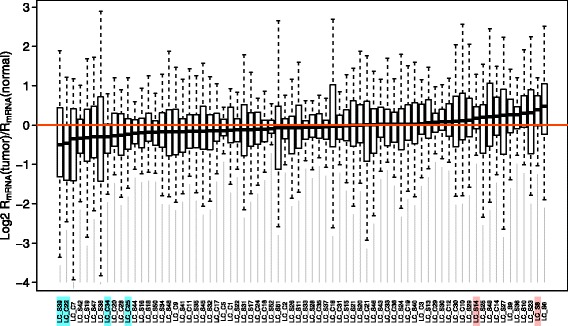
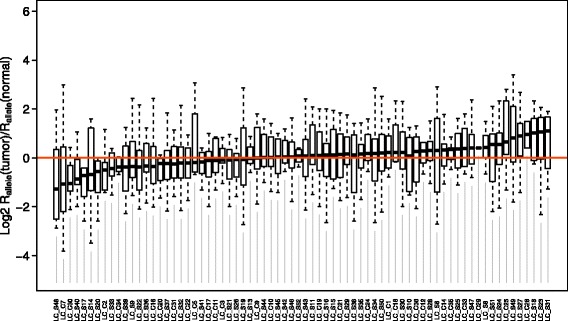
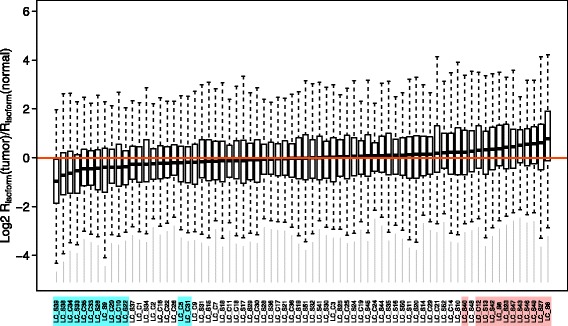
Here we develop three metrics using RNA-seq data to measure NMD activity, and apply them to a dataset consisting of 72 lung cancer (adenocarcinoma) patients.
We show that these metrics have good correlations, and that the NMD activities in adenocarcinoma samples vary among patients: some cancerous samples show significantly stronger NMD activities than the normal tissues while some others show the opposite pattern. The variation of NMD activities among these samples may be partly explained by the varying expression of NMD effectors.
In sum, NMD activity varies among lung cancerous samples, which forecasts varying efficacies of NMD-inhibition based therapy. The developed metrics can be further used in other cancer types to assess NMD activity.
抑制肿瘤细胞中的无义介导的mRNA衰变(NMD)可通过表达新抗原抑制肿瘤生长,否则这些mRNA会被NMD降解。因此,抑制NMD是开发癌症治疗方法的一种有前景的途径。显然,这种方法的成功依赖于癌细胞中的基础NMD活性。如果NMD在肿瘤中已经被强烈抑制,那么这种方法将不起作用。因此,评估癌症中的NMD活性对于预测基于NMD抑制的治疗效果至关重要。
在这里,我们使用RNA测序数据开发了三种指标来测量NMD活性,并将它们应用于一个由72例肺癌(腺癌)患者组成的数据集。
我们表明这些指标具有良好的相关性,并且腺癌样本中的NMD活性在患者之间存在差异:一些癌样本显示出比正常组织明显更强的NMD活性,而其他一些则显示出相反的模式。这些样本中NMD活性的变化可能部分由NMD效应器的表达变化来解释。
总之,肺癌样本中的NMD活性各不相同,这预示着基于NMD抑制的治疗效果也各不相同。所开发的指标可进一步用于其他癌症类型以评估NMD活性。