Pedrollo Elis Forcellini, Nicoletto Bruna Bellincanta, Carpes Larissa Salomoni, de Freitas Júlia de Melo Cardoso, Buboltz Julia Roberta, Forte Cristina Carra, Bauer Andrea Carla, Manfro Roberto Ceratti, Souza Gabriela Corrêa, Leitão Cristiane Bauermann
Post Graduate Program in Health Sciences, Endocrinology, Universidade Federal do Rio Grande do Sul, Rua Ramiro Barcelos, 2400, 90035-003, Porto Alegre, RS, Brazil.
Nutrition Course, Knowledge Area of Life Sciences, Universidade de Caxias do Sul, Caxias do Sul, RS, Brazil.
Trials. 2017 Sep 6;18(1):413. doi: 10.1186/s13063-017-2158-2.
Excessive weight gain is commonly observed within the first year after kidney transplantation and is associated with negative outcomes, such as graft loss and cardiovascular events. The purpose of this study is to evaluate the effect of a high protein and low glycemic-index diet on preventing weight gain after kidney transplantation.
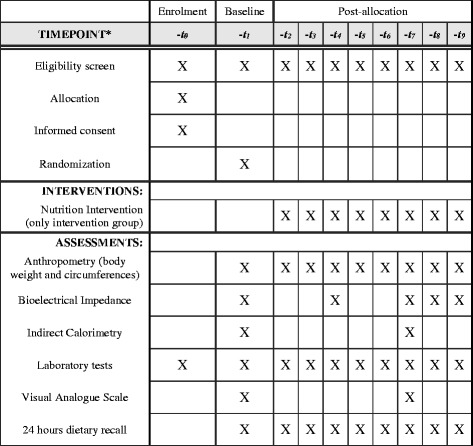
We designed a prospective, single-center, open-label, randomized controlled study to compare the efficacy of a high protein (1.3-1.4 g/kg/day) and low-glycemic index diet versus a conventional diet (0.8-1.0 g/kg/day of protein) on preventing weight gain after kidney transplantation. A total of 120 eligible patients 2 months after transplantation will be recruited. Patients with an estimated glomerular filtration rate through the modification of diet of renal disease (MDRD) formula < 30 mL/min/1.73 m or urinary albumin excretion > 300 mg/24 h will be excluded. Patients' diets will be allocated through simple sequential randomization. Patients will be followed-up for 12 months with nine clinic appointments with a dietitian and the evaluations will include nutritional assessment (anthropometrics, body composition, and resting metabolic rate) and laboratory tests. The primary outcome is weight maintenance or body weight gain under 5% after 12 months. Secondary outcomes include body composition, resting metabolic rate, satiety sensation, kidney function, and other metabolic parameters.
Diets with higher protein content and lower glycemic index may lead to weight loss because of higher satiety sensation. However, there is a concern about the association of high protein intake and kidney damage. Nevertheless, there is little evidence on the impact of high protein intake on long-term kidney function outcome. Therefore, we designed a study to test if a high protein diet with low-glycemic index will be an effective and safe nutritional intervention to prevent weight gain in kidney transplant patients.
ClinicalTrials.gov identifier, NCT02883777 . Registered on 3 August 2016.
肾移植后的第一年通常会出现体重过度增加的情况,且与移植肾丢失和心血管事件等不良后果相关。本研究的目的是评估高蛋白、低血糖指数饮食对预防肾移植后体重增加的效果。
我们设计了一项前瞻性、单中心、开放标签、随机对照研究,以比较高蛋白(1.3 - 1.4克/千克/天)和低血糖指数饮食与传统饮食(0.8 - 1.0克/千克/天蛋白质)在预防肾移植后体重增加方面的疗效。共招募120例移植后2个月符合条件的患者。估算肾小球滤过率通过肾脏病饮食改良(MDRD)公式计算<30毫升/分钟/1.73平方米或尿白蛋白排泄>300毫克/24小时的患者将被排除。患者的饮食将通过简单序贯随机化进行分配。患者将接受为期12个月的随访,与营养师进行9次门诊预约,评估将包括营养评估(人体测量学、身体成分和静息代谢率)以及实验室检查。主要结局是12个月后体重维持或体重增加不超过5%。次要结局包括身体成分、静息代谢率、饱腹感、肾功能及其他代谢参数。
蛋白质含量较高且血糖指数较低的饮食可能因更高的饱腹感而导致体重减轻。然而,人们担心高蛋白摄入与肾损害之间的关联。尽管如此,关于高蛋白摄入对长期肾功能结局影响的证据很少。因此,我们设计了一项研究,以测试低升糖指数的高蛋白饮食是否是预防肾移植患者体重增加的有效且安全的营养干预措施。
ClinicalTrials.gov标识符,NCT02883777。于2016年8月3日注册。