Department of Biological Sciences, University of Lethbridge, 4401 University Drive, Lethbridge, T1K 3M4, Alberta, Canada.
Environmental Science and Monitoring Branch, Canadian Nuclear Laboratories, 286 Plant Road, Chalk River, K0J 1J0, Ontario, Canada.
Sci Rep. 2017 Sep 5;7(1):10502. doi: 10.1038/s41598-017-11095-2.
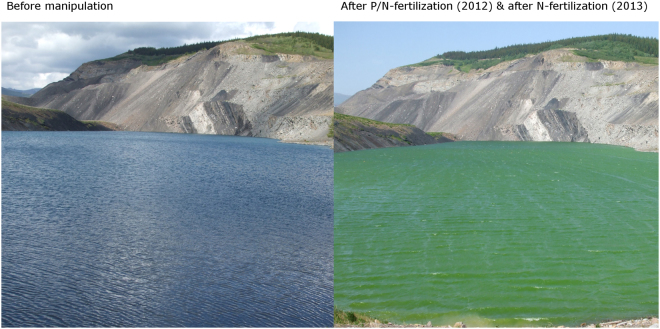
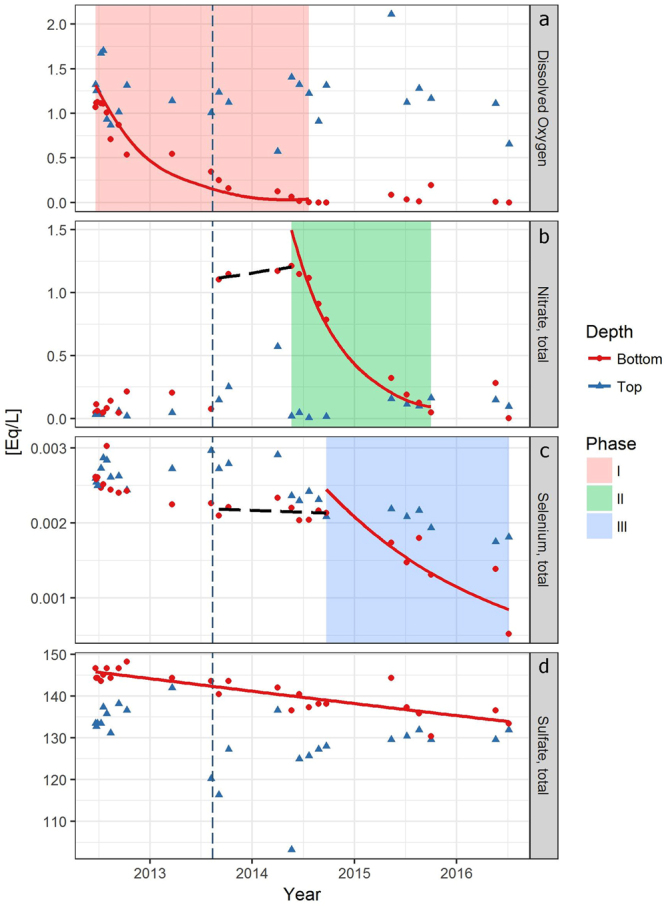
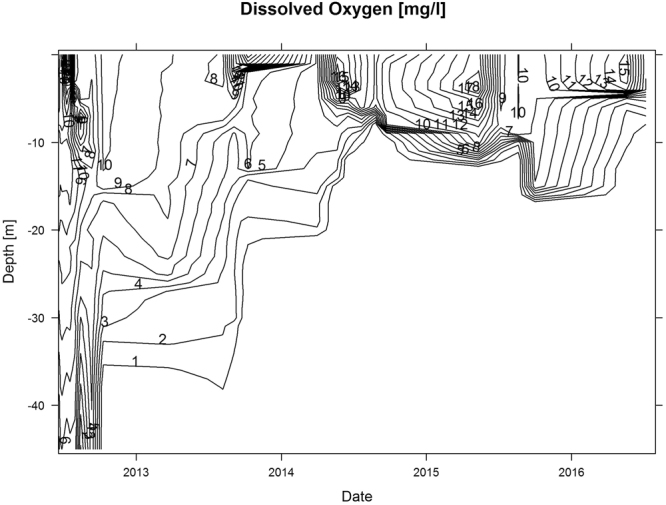
Selenium (Se), an essential micro nutrient, is toxic to aquatic life at slightly higher water concentrations. Watersheds receiving leachate from selenium rich sources require large-scale, long-term treatment to mitigate Se toxicity. We applied the principles of anaerobic bacterial bioreactors, previously successful in small scale Se mitigation, to a whole end-pit lake ecosystem. Fertilization of the lake with N and P increased primary production, creating a meromictic, anoxic layer, and enhanced the habitat for locally present, anaerobic, Se and sulfur reducing bacteria. Within two years, Se concentrations were reduced ten-fold, reaching water-quality guideline values. The successful experiment demonstrated a novel treatment of large volumes of Se-contaminated water, and introduced an inexpensive method to mitigate a persistent aquatic pollutant of global concern.
硒(Se)是一种必需的微量元素,在稍高的水浓度下对水生生物有毒。接收来自富含硒的来源的沥滤液的流域需要大规模、长期的处理来减轻 Se 毒性。我们应用了先前在小规模 Se 缓解中成功应用的厌氧细菌生物反应器的原理,将整个终坑湖生态系统应用于整个终坑湖生态系统。用 N 和 P 给湖泊施肥增加了初级生产力,形成了分层的、缺氧的层,并增强了当地存在的、厌氧的 Se 和硫还原细菌的栖息地。在两年内,硒浓度降低了十倍,达到了水质指导值。这项成功的实验证明了一种处理大量受污染水的新方法,并引入了一种廉价的方法来减轻全球关注的持久性水污染物。