Vohra Rais, Huntington Serena, Koike Jennifer, Le Kevin, Geller Richard J
California Poison Control System, Valley Children's Hospital, Madera, California.
University of California San Francisco, Fresno Medical Education and Research Program, Fresno, California.
West J Emerg Med. 2017 Aug;18(5):923-927. doi: 10.5811/westjem.2017.6.33665. Epub 2017 Jul 14.
Topical benzocaine is a local anesthetic commonly used to relieve pain caused by teething, periodontal irritation, burns, wounds, and insect bites. Oral preparations may contain benzocaine concentrations ranging from 7.5% to 20%. Pediatric exposure to such large concentrations may result in methemoglobinemia and secondarily cause anemia, cyanosis, and hypoxia.
This is a retrospective study of exposures reported to a statewide poison control system. The electronic health records were queried for pediatric exposures to topical benzocaine treated at a healthcare facility from 2004 to 2014. Cases of benzocaine exposure were reviewed for demographic and clinical information, and descriptive statistical analysis was performed.
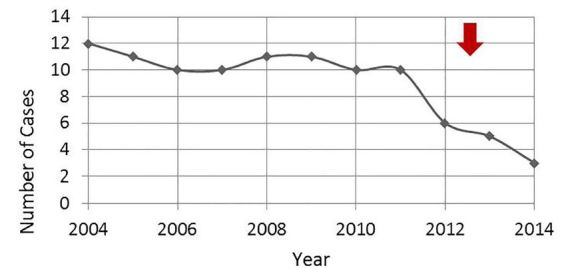
The query resulted in 157 cases; 58 were excluded due to co-ingestants, or miscoding of non-benzocaine exposures. Children four years of age and younger represented the majority of cases (93%) with a median age of 1 year. There were 88 cases of accidental/ exploratory exposure, while 6 cases resulted from therapeutic application or error, 4 cases from adverse reactions, and 1 case from an unknown cause. Asymptomatic children accounted for 75.5% of cases, but major clinical effects were observed in 5 patients. Those with serious effects were exposed to a range of benzocaine concentrations (7.5-20%), with 4 cases reporting methemoglobin levels between 20.2%-55%. Methylene blue was administered in 4 of the cases exhibiting major effects.
The majority of exposures were accidental ingestions by young children. Most exposures resulted in minor to no effects. However, some patients required treatment with methylene blue and admission to a critical care unit. Therapeutic application by parents or caregivers may lead to adverse effects from these commonly available products.
外用苯佐卡因是一种局部麻醉剂,常用于缓解出牙、牙周刺激、烧伤、伤口和昆虫叮咬引起的疼痛。口服制剂中苯佐卡因的浓度范围可能为7.5%至20%。儿科患者接触如此高浓度的苯佐卡因可能会导致高铁血红蛋白血症,继而引起贫血、发绀和缺氧。
这是一项对向全州毒物控制系统报告的接触病例的回顾性研究。查询了2004年至2014年在医疗机构接受治疗的儿科外用苯佐卡因接触病例的电子健康记录。对苯佐卡因接触病例的人口统计学和临床信息进行了审查,并进行了描述性统计分析。
查询得到157例病例;58例因同时摄入其他物质或非苯佐卡因接触的编码错误而被排除。4岁及以下儿童占大多数病例(93%),中位年龄为1岁。有88例意外/探索性接触病例,6例由治疗应用或失误导致,4例由不良反应导致,1例原因不明。无症状儿童占病例的75.5%,但5例患者出现了主要临床症状。出现严重症状的患者接触的苯佐卡因浓度范围为7.5%-20%,4例报告高铁血红蛋白水平在20.2%-55%之间。4例出现主要症状的病例使用了亚甲蓝。
大多数接触是幼儿意外摄入。大多数接触导致轻微影响或无影响。然而,一些患者需要用亚甲蓝治疗并入住重症监护病房。父母或护理人员的治疗应用可能会导致这些常见产品产生不良反应。