Biso Sylvia, Wongrakpanich Supakanya, Agrawal Akanksha, Yadlapati Sujani, Kishlyansky Marina, Figueredo Vincent
Department of Internal Medicine, Einstein Medical Center, Philadelphia, PA, USA.
Einstein Institute for Heart and Vascular Health, Einstein Medical Center, Philadelphia, PA, USA.
Cardiovasc Psychiatry Neurol. 2017;2017:5842182. doi: 10.1155/2017/5842182. Epub 2017 Aug 10.
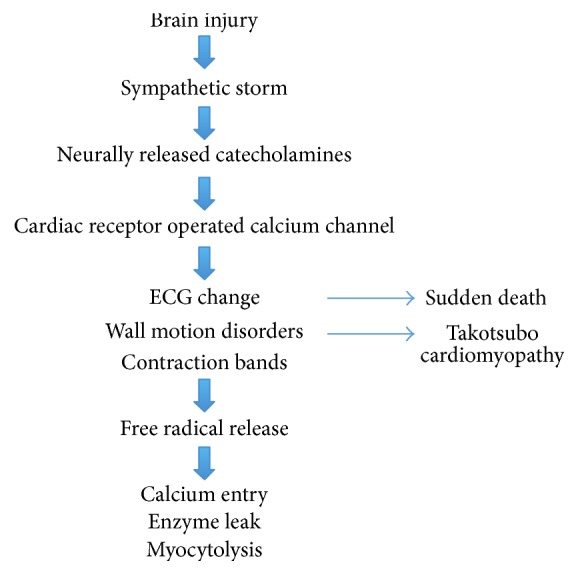
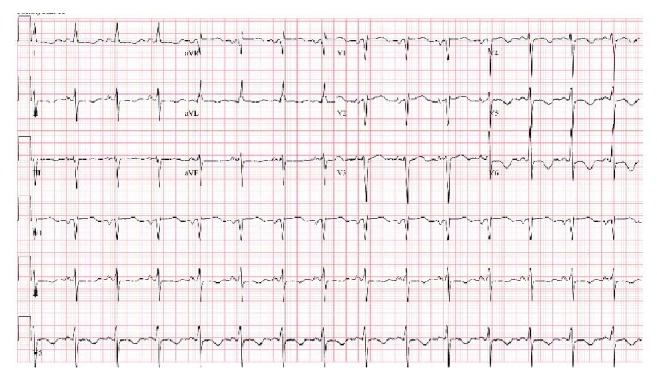
Neurologic stunned myocardium (NSM) is a phenomenon where neurologic events give rise to cardiac abnormalities. Neurologic events like stroke and seizures cause sympathetic storm and autonomic dysregulation that result in myocardial injury. The clinical presentation can involve troponin elevation, left ventricular dysfunction, and ECG changes. These findings are similar to Takotsubo cardiomyopathy and acute coronary syndrome. It is difficult to distinguish NSM from acute coronary syndrome based on clinical presentation alone. Because of this difficulty, a patient with NSM who is at high risk for coronary heart disease may undergo cardiac catheterization to rule out coronary artery disease. The objective of this review of literature is to enhance physician's awareness of NSM and its features to help tailor management according to the patient's clinical profile.
神经源性 stunned 心肌(NSM)是一种神经事件引发心脏异常的现象。中风和癫痫发作等神经事件会引发交感风暴和自主神经调节异常,进而导致心肌损伤。临床表现可能包括肌钙蛋白升高、左心室功能障碍和心电图改变。这些表现与Takotsubo心肌病和急性冠状动脉综合征相似。仅根据临床表现很难将NSM与急性冠状动脉综合征区分开来。由于存在这一困难,患有NSM且冠心病风险较高的患者可能会接受心脏导管检查以排除冠状动脉疾病。这篇文献综述的目的是提高医生对NSM及其特征的认识,以帮助根据患者的临床情况制定合适的治疗方案。