Hasenoehrl Carina, Feuersinger David, Sturm Eva M, Bärnthaler Thomas, Heitzer Ellen, Graf Ricarda, Grill Magdalena, Pichler Martin, Beck Stephan, Butcher Lee, Thomas Dominique, Ferreirós Nerea, Schuligoi Rufina, Schweiger Caroline, Haybaeck Johannes, Schicho Rudolf
Institute of Experimental and Clinical Pharmacology, Medical University of Graz, Graz, Austria.
Institute of Human Genetics, Medical University of Graz, Graz, Austria.
Int J Cancer. 2018 Jan 1;142(1):121-132. doi: 10.1002/ijc.31030. Epub 2017 Sep 21.
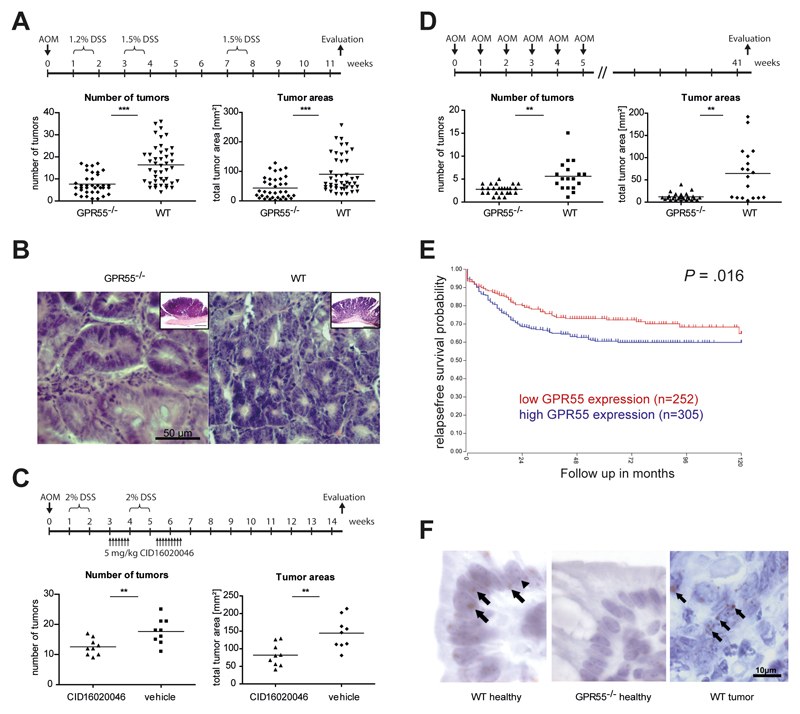
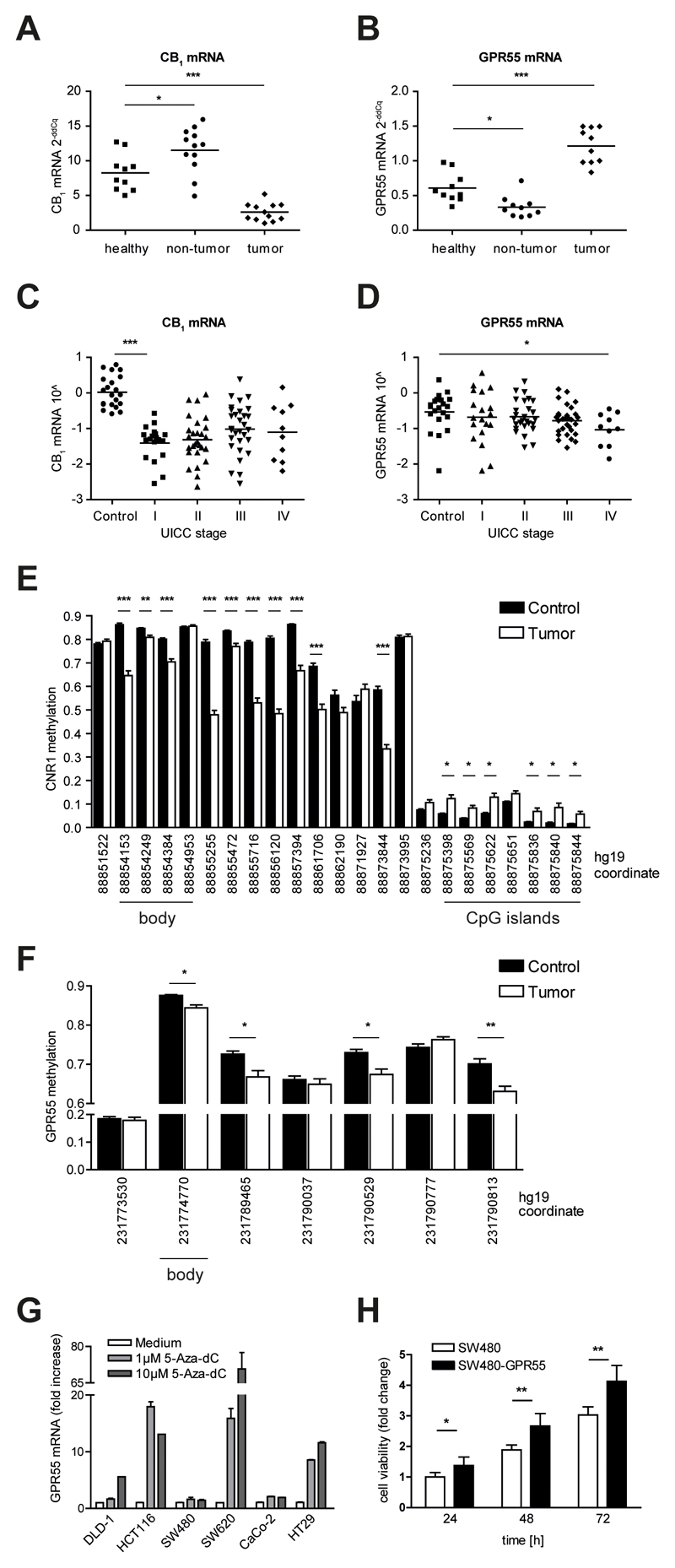
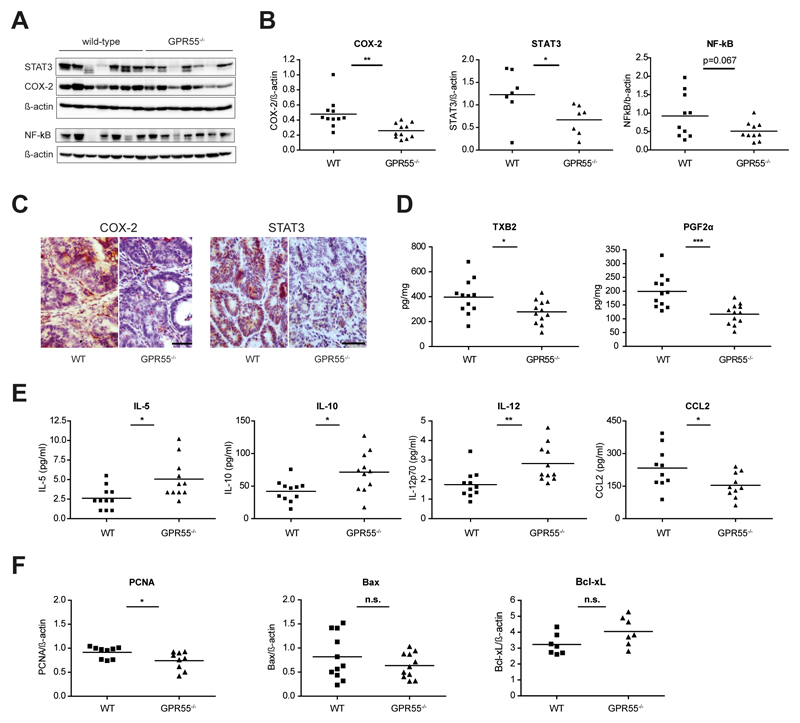
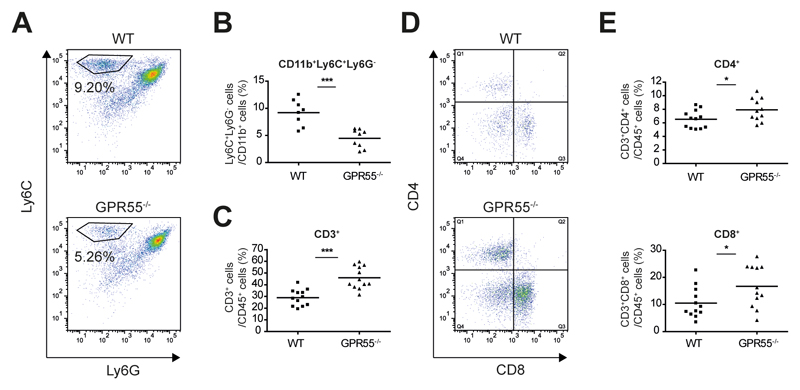
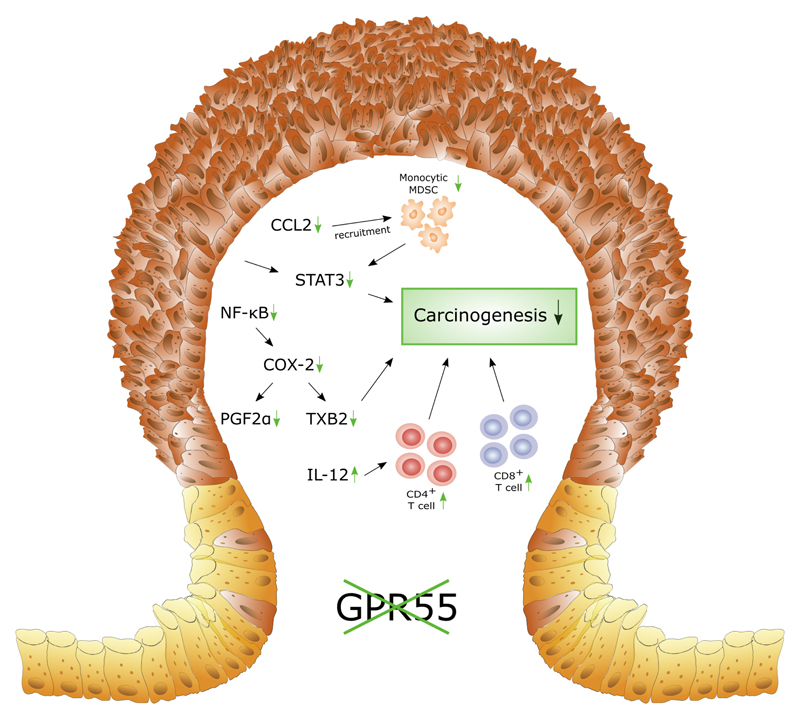
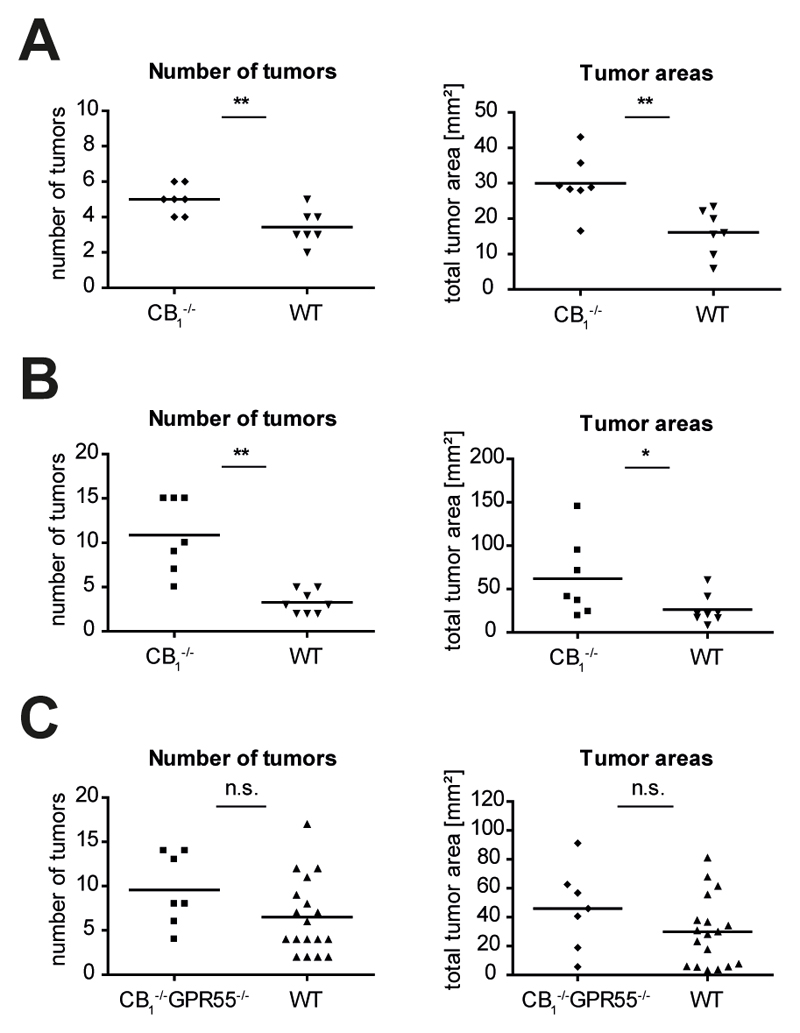
The putative cannabinoid receptor GPR55 has been shown to play a tumor-promoting role in various cancers, and is involved in many physiological and pathological processes of the gastrointestinal (GI) tract. While the cannabinoid receptor 1 (CB ) has been reported to suppress intestinal tumor growth, the role of GPR55 in the development of GI cancers is unclear. We, therefore, aimed at elucidating the role of GPR55 in colorectal cancer (CRC), the third most common cancer worldwide. Using azoxymethane (AOM)- and dextran sulfate sodium (DSS)-driven CRC mouse models, we found that GPR55 plays a tumor-promoting role that involves alterations of leukocyte populations, i.e. myeloid-derived suppressor cells and T lymphocytes, within the tumor tissues. Concomitantly, expression levels of COX-2 and STAT3 were reduced in tumor tissue of GPR55 knockout mice, indicating reduced presence of tumor-promoting factors. By employing the experimental CRC models to CB knockout and CB /GPR55 double knockout mice, we can further show that GPR55 plays an opposing role to CB . We report that GPR55 and CB mRNA expression are differentially regulated in the experimental models and in a cohort of 86 CRC patients. Epigenetic methylation of CNR1 and GPR55 was also differentially regulated in human CRC tissue compared to control samples. Collectively, our data suggest that GPR55 and CB play differential roles in colon carcinogenesis where the former seems to act as oncogene and the latter as tumor suppressor.
公认的大麻素受体GPR55已被证明在多种癌症中发挥促肿瘤作用,并参与胃肠道的许多生理和病理过程。虽然据报道大麻素受体1(CB1)可抑制肠道肿瘤生长,但GPR55在胃肠道癌症发生发展中的作用尚不清楚。因此,我们旨在阐明GPR55在结直肠癌(CRC)中的作用,结直肠癌是全球第三大常见癌症。使用氧化偶氮甲烷(AOM)和葡聚糖硫酸钠(DSS)诱导的CRC小鼠模型,我们发现GPR55发挥促肿瘤作用,这涉及肿瘤组织内白细胞群体的改变,即髓源性抑制细胞和T淋巴细胞。同时,GPR55基因敲除小鼠肿瘤组织中COX-2和STAT3的表达水平降低,表明促肿瘤因子的存在减少。通过将实验性CRC模型应用于CB1基因敲除和CB1/GPR55双基因敲除小鼠,我们可以进一步表明GPR55与CB1发挥相反的作用。我们报告,在实验模型和86例CRC患者队列中,GPR55和CB1的mRNA表达受到不同调节。与对照样本相比,人CRC组织中CNR1和GPR55的表观遗传甲基化也受到不同调节。总体而言,我们的数据表明,GPR55和CB1在结肠癌发生中发挥不同作用,前者似乎作为癌基因,后者作为肿瘤抑制基因。