Stockholm University.
J Res Adolesc. 2017 Jun;27(2):478-487. doi: 10.1111/jora.12281. Epub 2016 Sep 28.
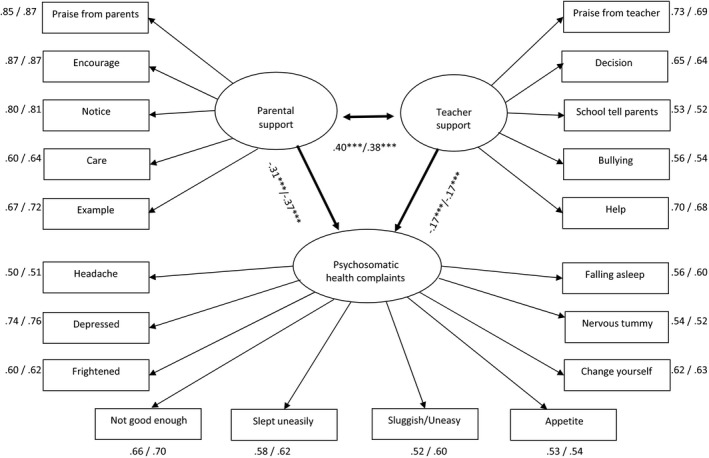
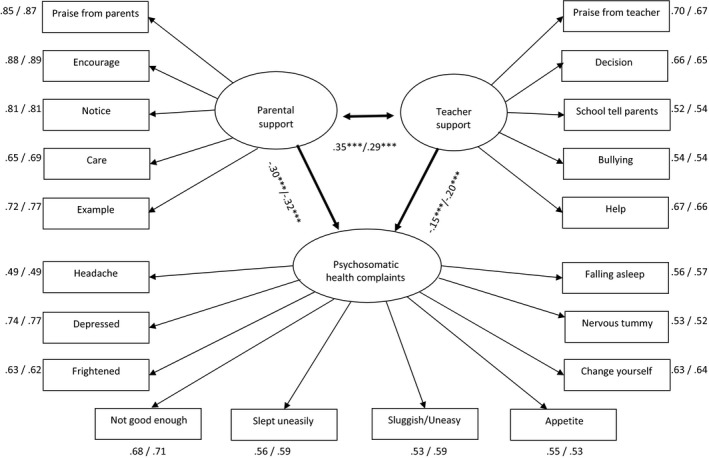
This study explores the relative contribution of parental and teacher support to adolescents' psychosomatic health complaints, with a particular focus on gender and age differences. Based on a survey of 49,172 ninth- and eleventh-grade students in Stockholm (2006-2014), structural equation modeling results demonstrated negative associations between parental and teacher support on psychosomatic health complaints. Parental support had a stronger association with the outcome among girls than boys. It was also more important than teacher support for psychosomatic health complaints. Parental support was more important for younger girls' health compared to older girls, with opposite patterns for teacher support. These findings highlight the need to consider gender and age to understand the links between social support and health during adolescence.
本研究探讨了父母支持和教师支持对青少年身心症状的相对贡献,特别关注了性别和年龄差异。基于对斯德哥尔摩 49172 名 9 年级和 11 年级学生(2006-2014 年)的调查,结构方程模型结果表明,父母支持和教师支持与身心症状之间呈负相关。父母支持对女孩的影响比男孩更大。与教师支持相比,父母支持对身心症状的影响更为重要。与年长女孩相比,父母支持对年幼女孩的健康更为重要,而教师支持则相反。这些发现强调了需要考虑性别和年龄,以理解青春期社会支持与健康之间的联系。