Lyu Heather, Xu Tim, Brotman Daniel, Mayer-Blackwell Brandan, Cooper Michol, Daniel Michael, Wick Elizabeth C, Saini Vikas, Brownlee Shannon, Makary Martin A
Department of Surgery, Brigham and Women's Hospital, Harvard Medical School, Boston, Massachusetts, United States of America.
Department of Surgery and the Department of Medicine, Johns Hopkins University School of Medicine, Baltimore, Maryland, United States of America.
PLoS One. 2017 Sep 6;12(9):e0181970. doi: 10.1371/journal.pone.0181970. eCollection 2017.
Overtreatment is a cause of preventable harm and waste in health care. Little is known about clinician perspectives on the problem. In this study, physicians were surveyed on the prevalence, causes, and implications of overtreatment.
2,106 physicians from an online community composed of doctors from the American Medical Association (AMA) masterfile participated in a survey. The survey inquired about the extent of overutilization, as well as causes, solutions, and implications for health care. Main outcome measures included: percentage of unnecessary medical care, most commonly cited reasons of overtreatment, potential solutions, and responses regarding association of profit and overtreatment.
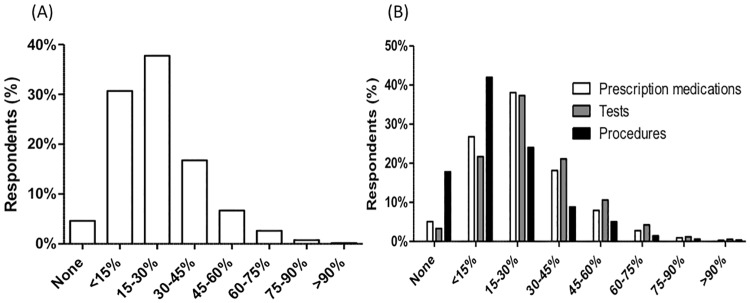
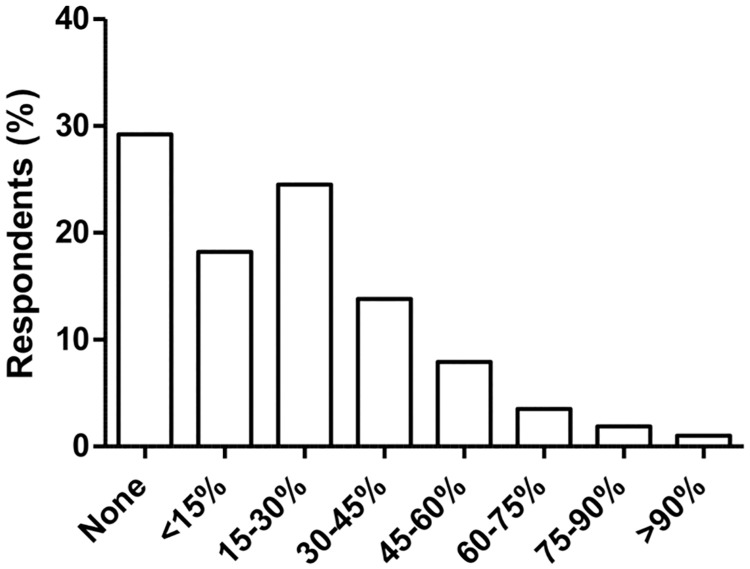
The response rate was 70.1%. Physicians reported that an interpolated median of 20.6% of overall medical care was unnecessary, including 22.0% of prescription medications, 24.9% of tests, and 11.1% of procedures. The most common cited reasons for overtreatment were fear of malpractice (84.7%), patient pressure/request (59.0%), and difficulty accessing medical records (38.2%). Potential solutions identified were training residents on appropriateness criteria (55.2%), easy access to outside health records (52.0%), and more practice guidelines (51.5%). Most respondents (70.8%) believed that physicians are more likely to perform unnecessary procedures when they profit from them. Most respondents believed that de-emphasizing fee-for-service physician compensation would reduce health care utilization and costs.
From the physician perspective, overtreatment is common. Efforts to address the problem should consider the causes and solutions offered by physicians.
过度医疗是医疗保健中可预防的伤害和浪费的一个原因。对于临床医生对该问题的看法知之甚少。在本研究中,对医生进行了关于过度医疗的患病率、原因及影响的调查。
来自美国医学协会(AMA)主文件中的医生组成的在线社区的2106名医生参与了一项调查。该调查询问了医疗服务过度使用的程度,以及原因、解决方案和对医疗保健的影响。主要结局指标包括:不必要医疗护理的百分比、过度医疗最常被提及的原因、潜在解决方案以及关于利益与过度医疗关联的回答。
回复率为70.1%。医生报告称,总体医疗护理中经内插法得出的中位数为20.6%是不必要的,其中包括22.0%的处方药、24.9%的检查和11.1%的手术。过度医疗最常被提及的原因是担心医疗失误(84.7%)、患者压力/要求(59.0%)以及获取病历困难(38.2%)。确定的潜在解决方案包括对住院医师进行适当性标准培训(55.2%)、方便获取外部健康记录(52.0%)以及更多的实践指南(51.5%)。大多数受访者(70.8%)认为,当医生从中获利时,他们更有可能进行不必要的手术。大多数受访者认为,减少按服务收费的医生薪酬会降低医疗保健利用率和成本。
从医生的角度来看,过度医疗很常见。解决该问题的努力应考虑医生提出的原因和解决方案。