Department of Gastroenterology, the First Affiliated Hospital, College of Medicine, Zhejiang University, Hangzhou, Zhejiang, China.
Division of Hepatology, Hangzhou Normal University Affiliated Hospital, Hangzhou, Zhejiang, China.
Gut. 2018 Dec;67(12):2169-2180. doi: 10.1136/gutjnl-2017-313778. Epub 2017 Sep 6.
Accumulation of free fatty acids (FFAs) in hepatocytes induces lipotoxicity, leading to non-alcoholic fatty liver disease (NAFLD). This study aimed to investigate the underlying mechanisms by which FFA contributes to the pathogenesis of NAFLD via the regulation of 3-mercaptopyruvate sulfurtransferase (MPST), a key enzyme that regulates endogenous hydrogen sulfide (HS) biosynthesis.
Hepatic MPST expression was evaluated in mice and patients with NAFLD. A variety of molecular approaches were used to study the effects of MPST regulation on hepatic steatosis in vivo and in vitro.
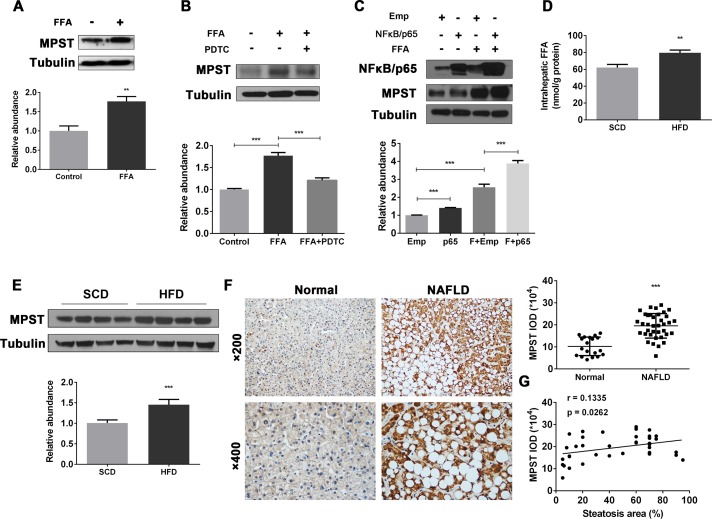
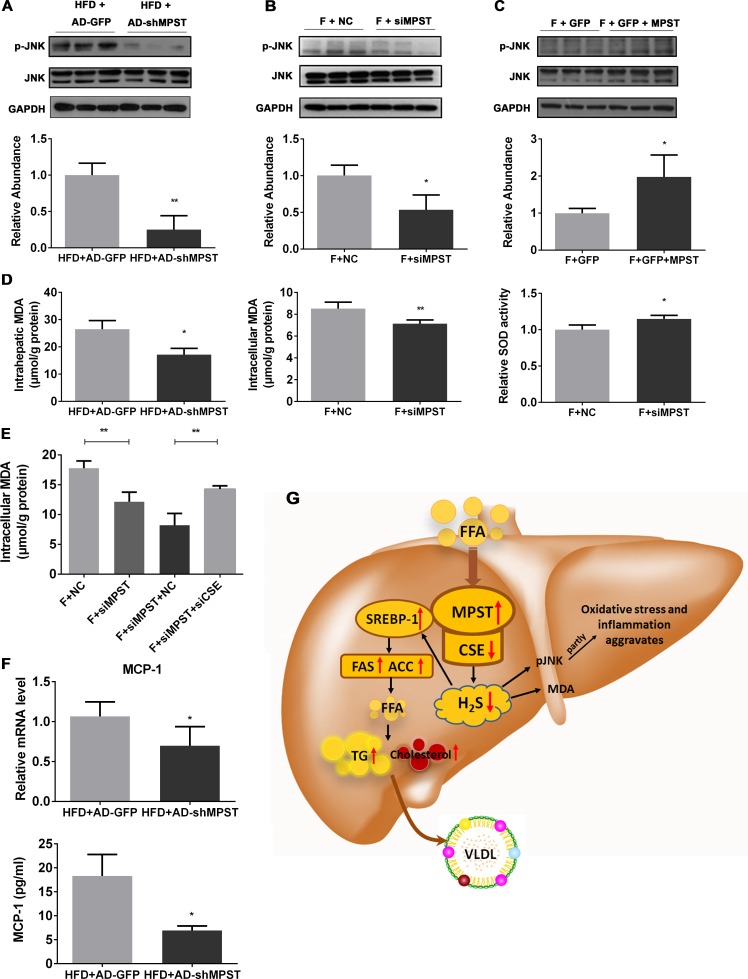
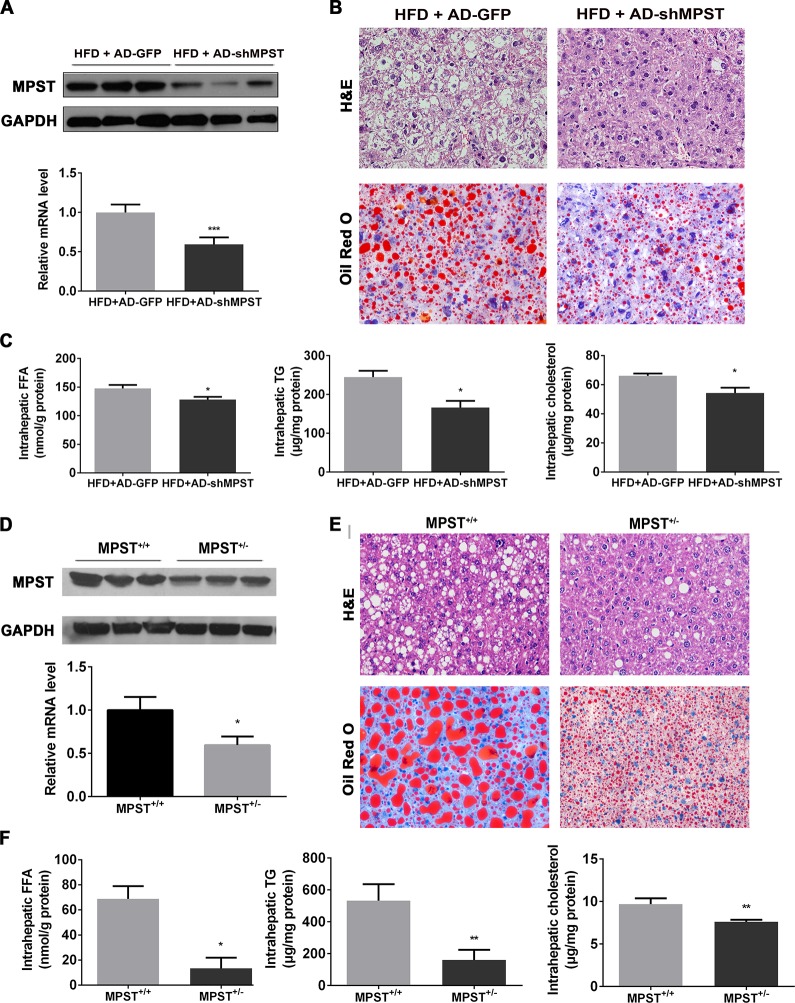
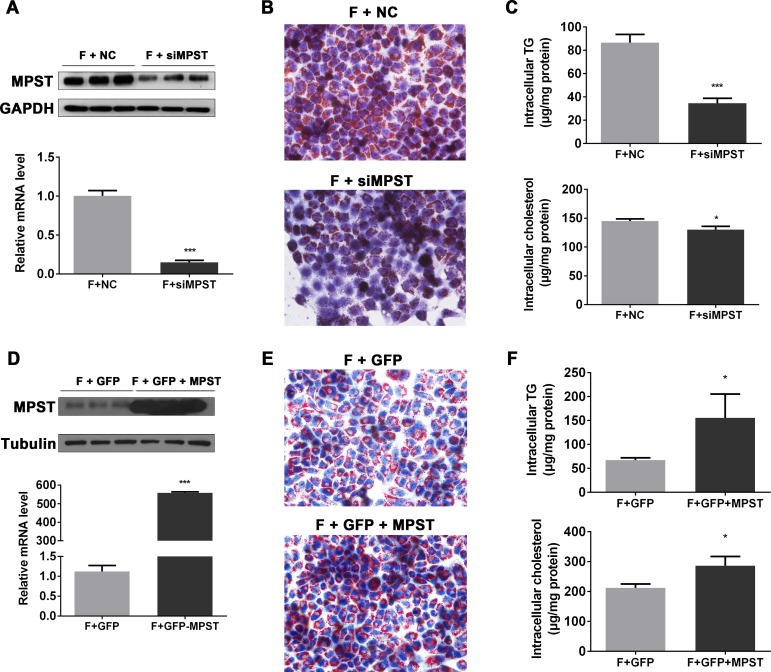
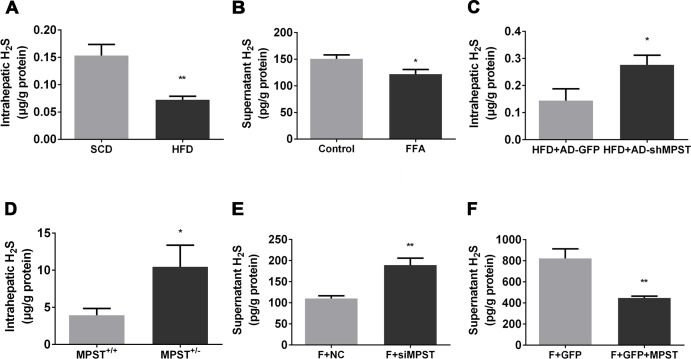
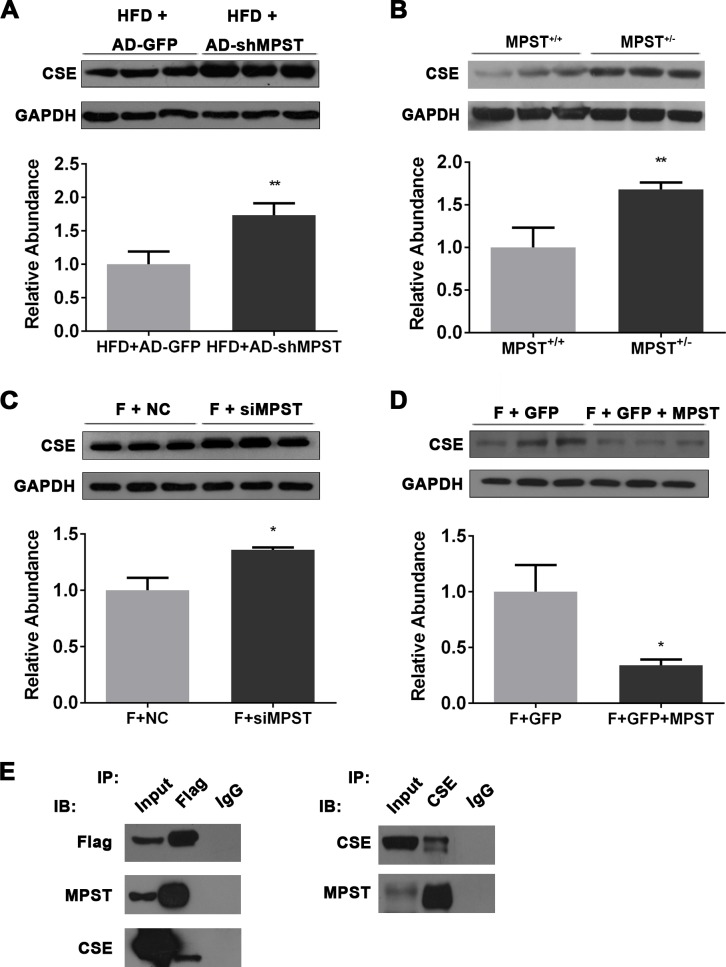
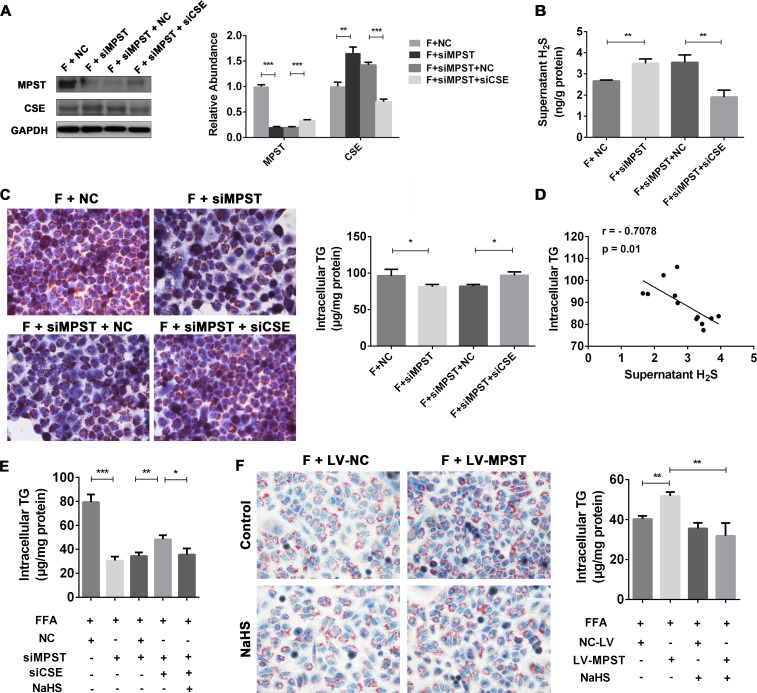
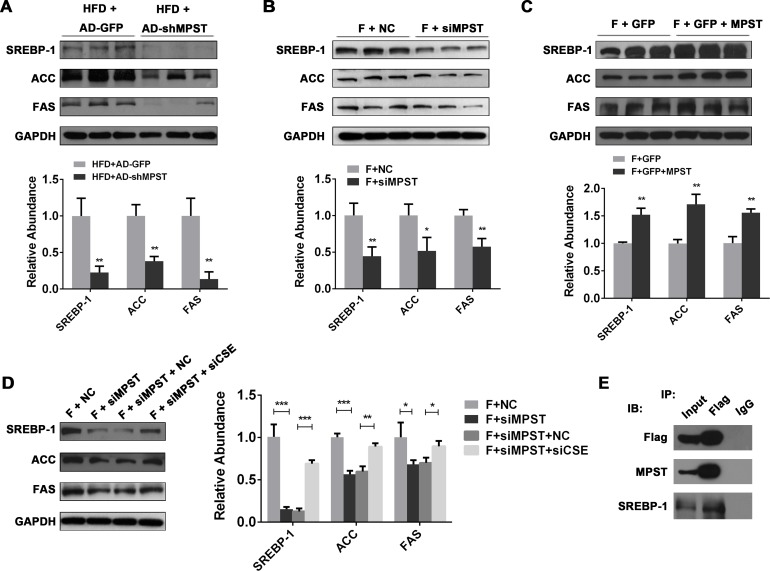
In vitro treatment of hepatocytes with FFAs upregulated MPST expression, which was partially dependent on NF-κB/p65. Hepatic MPST expression was markedly increased in high fat diet (HFD)-fed mice and patients with NAFLD. Partial knockdown of MPST via adenovirus delivery of MPST short hairpin RNA or heterozygous deletion of the gene significantly ameliorated hepatic steatosis in HFD-fed mice. Consistently, inhibition of MPST also reduced FFA-induced fat accumulation in L02 cells. Intriguingly, inhibition of MPST significantly enhanced rather than decreased HS production, whereas MPST overexpression markedly inhibited HS production. Co-immunoprecipitation experiments showed that MPST directly interacted with and negatively regulated cystathionine γ-lyase (CSE), a major source of HS production in the liver. Mechanistically, MPST promoted steatosis via inhibition of CSE/HS and subsequent upregulation of the sterol regulatory element-binding protein 1c pathway, C-Jun N-terminal kinase phosphorylation and hepatic oxidative stress.
FFAs upregulate hepatic expression of MPST and subsequently inhibit the CSE/HS pathway, leading to NAFLD. MPST may be a potential therapeutic target for NAFLD.
肝细胞内游离脂肪酸(FFAs)的积累会导致脂毒性,进而引发非酒精性脂肪性肝病(NAFLD)。本研究旨在通过研究 FFA 如何通过调节 3-巯基丙酮酸硫转移酶(MPST)来影响内源性硫化氢(HS)生物合成,从而探讨其在 NAFLD 发病机制中的作用。
评估了 NAFLD 小鼠和患者肝脏中 MPST 的表达情况。采用多种分子方法研究了 MPST 调节对体内和体外肝脂肪变性的影响。
FFA 体外处理肝细胞可上调 MPST 表达,部分依赖 NF-κB/p65。高脂肪饮食(HFD)喂养的小鼠和 NAFLD 患者肝脏中 MPST 表达明显增加。腺病毒介导的 MPST 短发夹 RNA 转染或基因杂合缺失可部分降低 MPST 的表达,显著改善 HFD 喂养小鼠的肝脂肪变性。同样,抑制 MPST 也可减少 L02 细胞中 FFA 诱导的脂肪堆积。有趣的是,抑制 MPST 可显著增强而不是降低 HS 的产生,而 MPST 的过表达则显著抑制 HS 的产生。免疫共沉淀实验表明,MPST 可直接与肝脏 HS 生成的主要来源胱硫醚 γ-裂解酶(CSE)相互作用,并负调控其活性。在机制上,MPST 通过抑制 CSE/HS 及其下游固醇调节元件结合蛋白 1c 通路、c-Jun N-末端激酶磷酸化和肝氧化应激来促进脂肪变性。
FFAs 上调肝脏 MPST 的表达,进而抑制 CSE/HS 通路,导致 NAFLD。MPST 可能是治疗 NAFLD 的一个潜在靶点。