Renner Marina, Stute Gesa, Alzureiqi Mohammad, Reinhard Jacqueline, Wiemann Susanne, Schmid Heiko, Faissner Andreas, Dick H Burkhard, Joachim Stephanie C
Experimental Eye Research, University Eye Hospital, Ruhr-University BochumBochum, Germany.
Department of Cell Morphology and Molecular Neurobiology, Faculty of Biology and Biotechnology, Ruhr-University BochumBochum, Germany.
Front Cell Neurosci. 2017 Aug 22;11:254. doi: 10.3389/fncel.2017.00254. eCollection 2017.
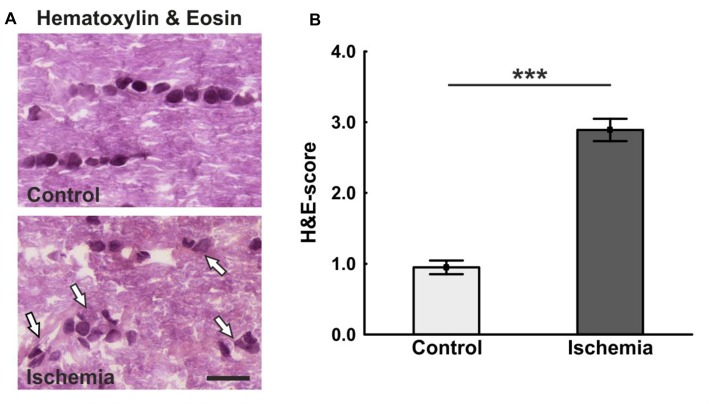
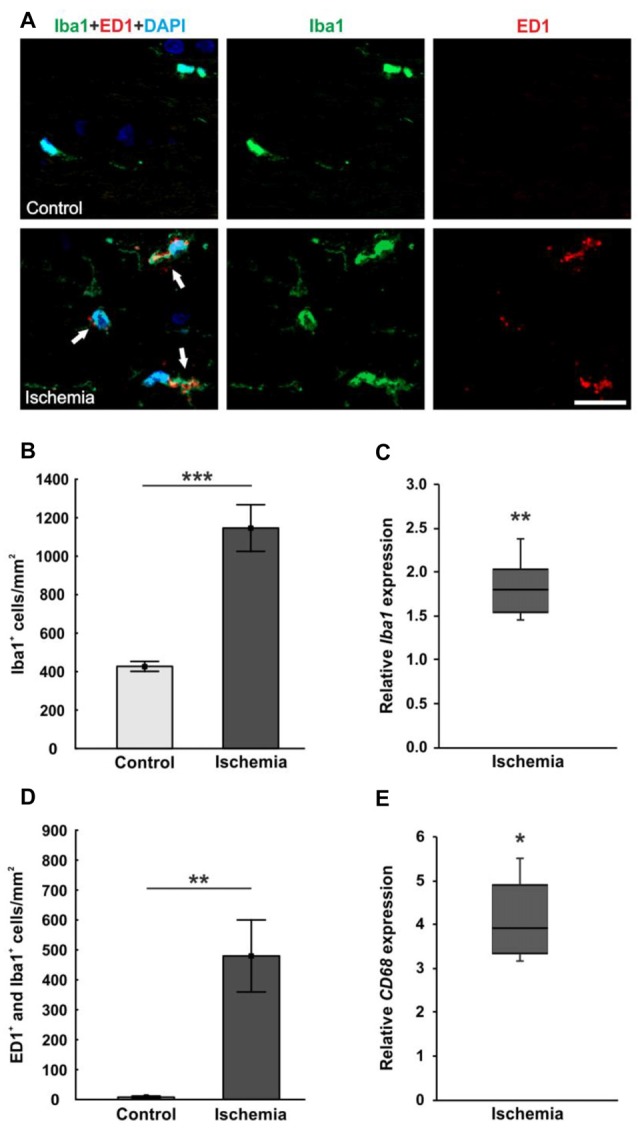
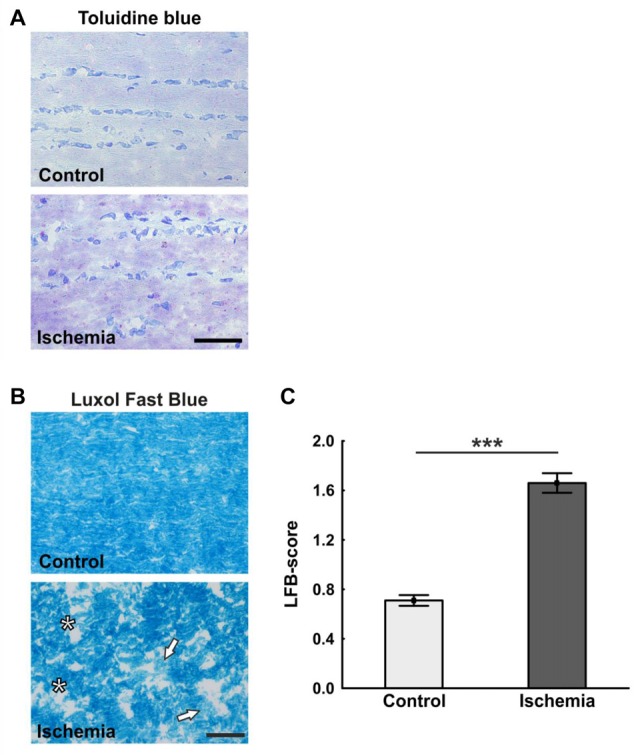
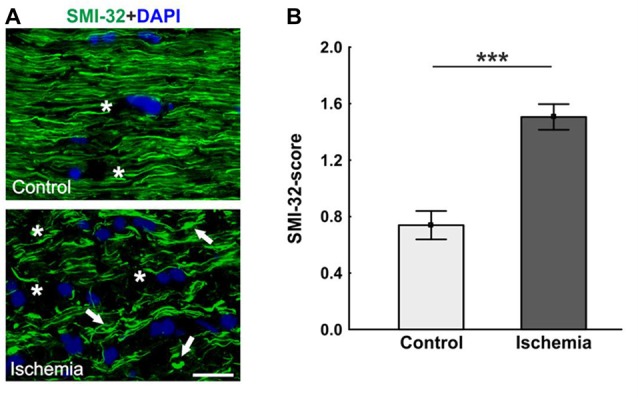
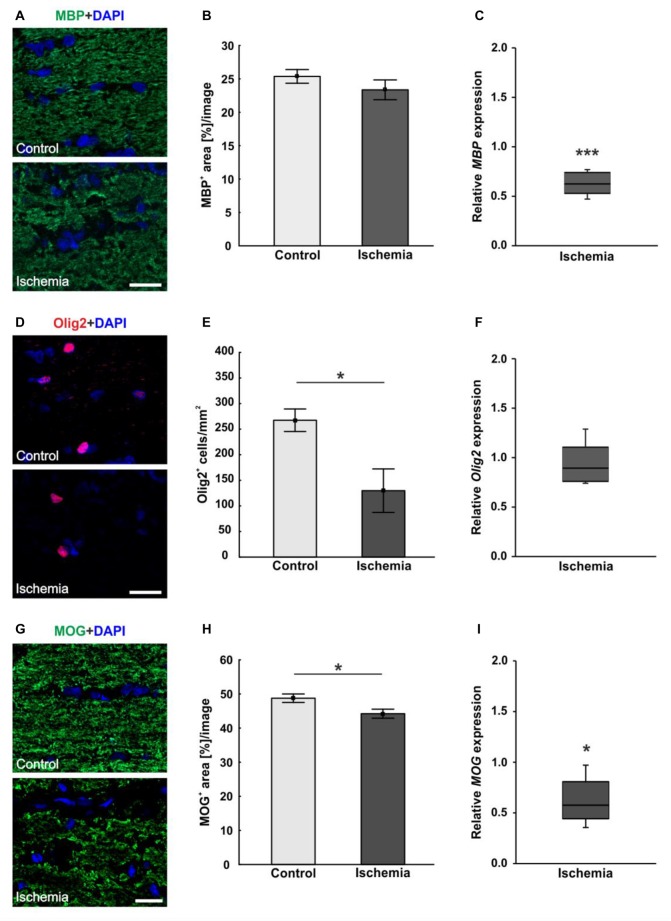
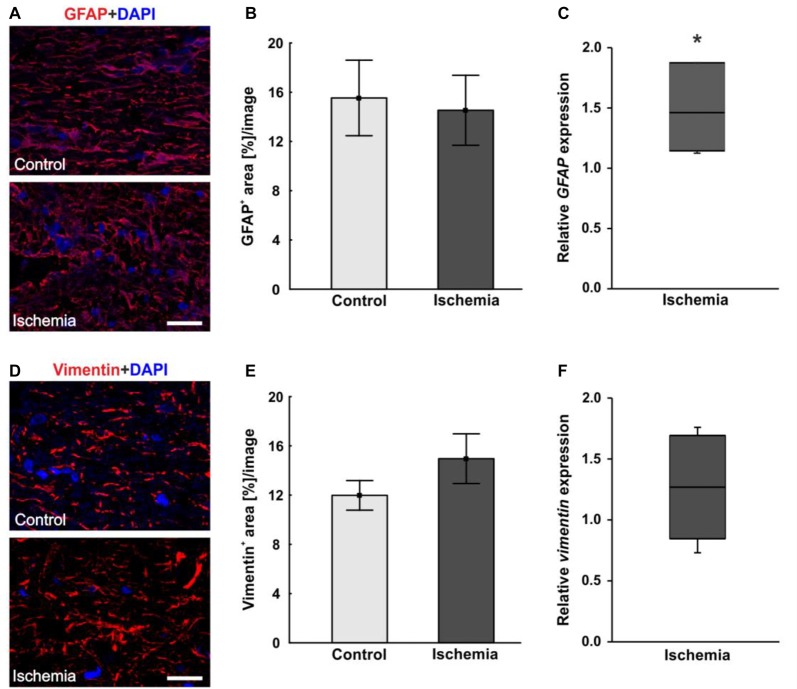
Retinal ischemia is a common pathomechanism in many ocular disorders such as age-related macular degeneration (AMD), diabetic retinopathy, glaucoma or retinal vascular occlusion. Several studies demonstrated that ischemia/reperfusion (I/R) leads to morphological and functional changes of different retinal cell types. However, little is known about the ischemic effects on the optic nerve. The goal of this study was to evaluate these effects. Ischemia was induced by raising the intraocular pressure (IOP) in one eye of rats to 140 mmHg for 1 h followed by natural reperfusion. After 21 days, histological as well as quantitative real-time PCR (qRT-PCR) analyses of optic nerves were performed. Ischemic optic nerves showed an infiltration of cells and also degeneration with signs of demyelination. Furthermore, a migration and an activation of microglia could be observed histologically as well as on mRNA level. In regard to macroglia, a trend toward gliosis could be noted after ischemia induction by vimentin staining. Additionally, an up-regulation of mRNA was found in ischemic optic nerves. Counting of oligodendrocyte transcription factor 2 positive (Olig2) cells revealed a decrease of oligodendrocytes in the ischemic group. Also, and mRNA expression was down-regulated after induction of I/R. On immunohistological level, a decrease of MOG was detectable in ischemic optic nerves as well. In addition, SMI-32 stained neurofilaments of longitudinal optic nerve sections showed a strong structural damage of the ischemic optic nerves in comparison to controls. Consequently, retinal ischemia impacts optic nerve degeneration. These findings could help to better understand the course of destruction in the optic nerve after an ischemic insult. Especially for therapeutic studies, the optic nerve is important because of its susceptibility to be damaged as a result to retinal ischemic injury and also its connecting function between the eye and the brain. So, future drug screenings should target not only the retina, but also the functionality and structure of the optic nerve. In the future, these results could lead to the development of new therapeutic strategies for treatment of ischemic injury.
视网膜缺血是许多眼部疾病如年龄相关性黄斑变性(AMD)、糖尿病性视网膜病变、青光眼或视网膜血管阻塞的常见病理机制。多项研究表明,缺血/再灌注(I/R)会导致不同视网膜细胞类型发生形态和功能变化。然而,关于缺血对视神经的影响却知之甚少。本研究的目的是评估这些影响。通过将大鼠一只眼的眼压升高至140 mmHg持续1小时,随后自然再灌注来诱导缺血。21天后,对视神经进行组织学以及定量实时PCR(qRT-PCR)分析。缺血的视神经显示出细胞浸润以及伴有脱髓鞘迹象的变性。此外,从组织学以及mRNA水平上都可观察到小胶质细胞的迁移和激活。关于大胶质细胞,通过波形蛋白染色发现在缺血诱导后有胶质增生的趋势。此外,在缺血的视神经中发现mRNA上调。少突胶质细胞转录因子2阳性(Olig2)细胞计数显示缺血组少突胶质细胞减少。同样,在I/R诱导后, 和 mRNA表达下调。在免疫组织学水平上,缺血的视神经中也可检测到髓鞘少突胶质糖蛋白(MOG)减少。此外,与对照组相比,纵向视神经切片的SMI-32染色神经丝显示缺血的视神经有严重的结构损伤。因此,视网膜缺血会影响视神经变性。这些发现有助于更好地理解缺血损伤后视神经的破坏过程。特别是对于治疗研究而言,视神经很重要,因为它容易因视网膜缺血损伤而受损,并且在眼与脑之间具有连接功能。所以,未来的药物筛选不仅应针对视网膜,还应针对视神经的功能和结构。未来,这些结果可能会导致开发出治疗缺血性损伤的新治疗策略。