Currie Ashleigh R, Tait Karen, Parry Helen, de Francisco-Mora Beatriz, Hicks Natalie, Osborn A Mark, Widdicombe Steve, Stahl Henrik
Biogeochemistry and Earth Science, Scottish Association for Marine Science, Scottish Marine InstituteOban, United Kingdom.
Plymouth Marine LaboratoryPlymouth, United Kingdom.
Front Microbiol. 2017 Aug 22;8:1599. doi: 10.3389/fmicb.2017.01599. eCollection 2017.
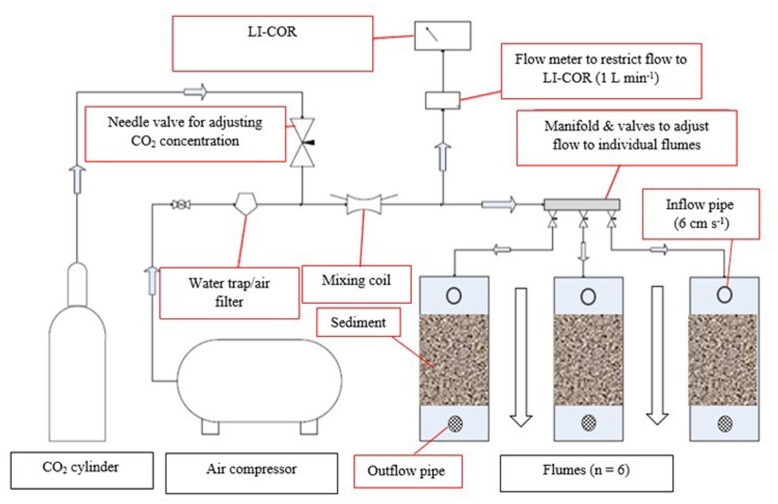
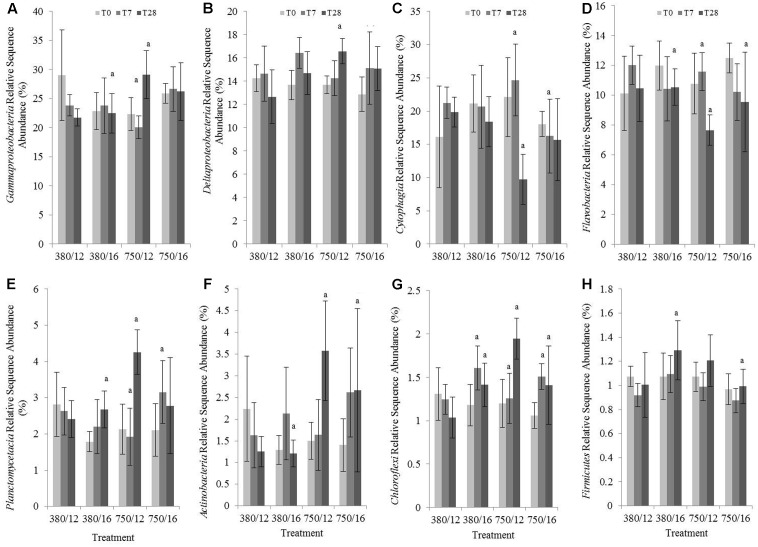
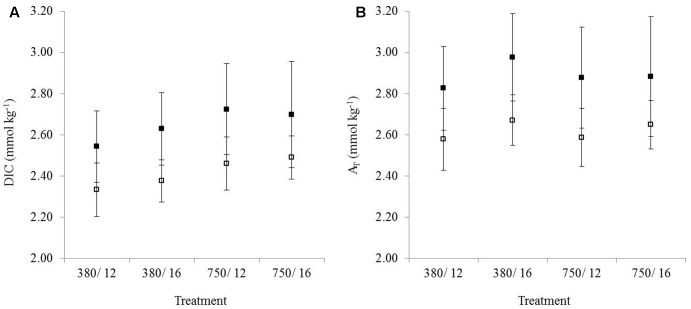
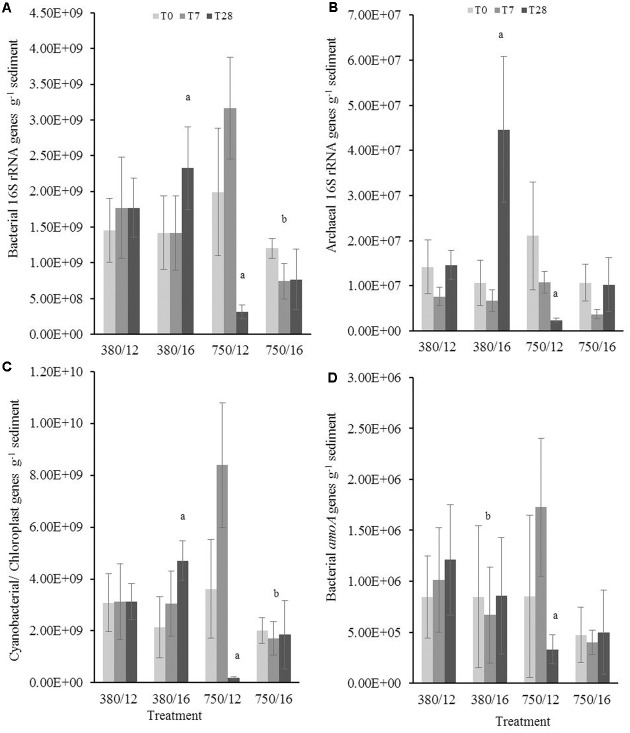
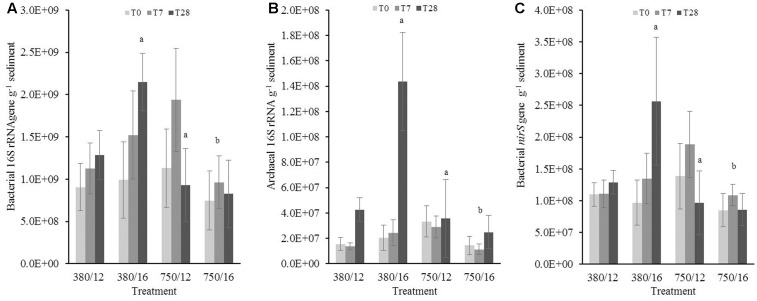
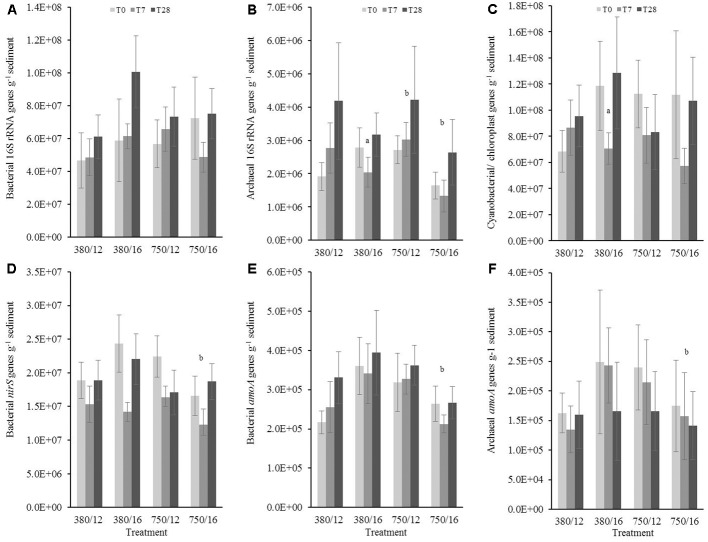
Marine ecosystems are exposed to a range of human-induced climate stressors, in particular changing carbonate chemistry and elevated sea surface temperatures as a consequence of climate change. More research effort is needed to reduce uncertainties about the effects of global-scale warming and acidification for benthic microbial communities, which drive sedimentary biogeochemical cycles. In this research, mesocosm experiments were set up using muddy and sandy coastal sediments to investigate the independent and interactive effects of elevated carbon dioxide concentrations (750 ppm CO) and elevated temperature (ambient +4°C) on the abundance of taxonomic and functional microbial genes. Specific quantitative PCR primers were used to target archaeal, bacterial, and cyanobacterial/chloroplast 16S rRNA in both sediment types. Nitrogen cycling genes archaeal and bacterial ammonia monooxygenase () and bacterial nitrite reductase () were specifically targeted to identify changes in microbial gene abundance and potential impacts on nitrogen cycling. In muddy sediment, microbial gene abundance, including and genes, increased under elevated temperature and reduced under elevated CO after 28 days, accompanied by shifts in community composition. In contrast, the combined stressor treatment showed a non-additive effect with lower microbial gene abundance throughout the experiment. The response of microbial communities in the sandy sediment was less pronounced, with the most noticeable response seen in the archaeal gene abundances in response to environmental stressors over time. 16S rRNA genes ( and ) were lower in abundance in the combined stressor treatments in sandy sediments. Our results indicated that marine benthic microorganisms, especially in muddy sediments, are susceptible to changes in ocean carbonate chemistry and seawater temperature, which ultimately may have an impact upon key benthic biogeochemical cycles.
海洋生态系统面临一系列人为引起的气候压力因素,特别是气候变化导致的碳酸盐化学变化和海表温度升高。需要开展更多研究工作,以减少全球变暖及酸化对驱动沉积生物地球化学循环的底栖微生物群落影响的不确定性。在本研究中,利用泥泞和沙质海岸沉积物设置了中宇宙实验,以研究二氧化碳浓度升高(750 ppm CO₂)和温度升高(环境温度 +4°C)对分类和功能微生物基因丰度的独立及交互影响。使用特异性定量PCR引物靶向两种沉积物类型中的古菌、细菌以及蓝细菌/叶绿体16S rRNA。专门靶向氮循环基因古菌和细菌氨单加氧酶( )以及细菌亚硝酸还原酶( ),以确定微生物基因丰度的变化以及对氮循环的潜在影响。在泥泞沉积物中,包括 和 基因在内的微生物基因丰度在温度升高时增加,在二氧化碳浓度升高28天后降低,同时群落组成发生变化。相比之下,复合应激处理在整个实验过程中显示出非加性效应,微生物基因丰度较低。沙质沉积物中微生物群落的反应不太明显,随着时间推移,对环境应激源的反应中最明显的是古菌基因丰度的变化。在沙质沉积物的复合应激处理中,16S rRNA基因( 和 )的丰度较低。我们的结果表明,海洋底栖微生物,尤其是在泥泞沉积物中,易受海洋碳酸盐化学和海水温度变化的影响,这最终可能会对关键的底栖生物地球化学循环产生影响。