Ready Damien, Yagiz Kader, Amin Pooneh, Yildiz Yuksel, Funari Vincent, Bozdag Serdar, Cinar Bekir
Department of Mathematics, Statistics, and Computer Science, Marquette University, Milwaukee, Wisconsin, United States of America.
Department of Medicine, Samuel Oschin Comprehensive Cancer Institute, Cedars-Sinai Medical Center, Los Angeles, California, United States of America.
PLoS One. 2017 Sep 7;12(9):e0184590. doi: 10.1371/journal.pone.0184590. eCollection 2017.
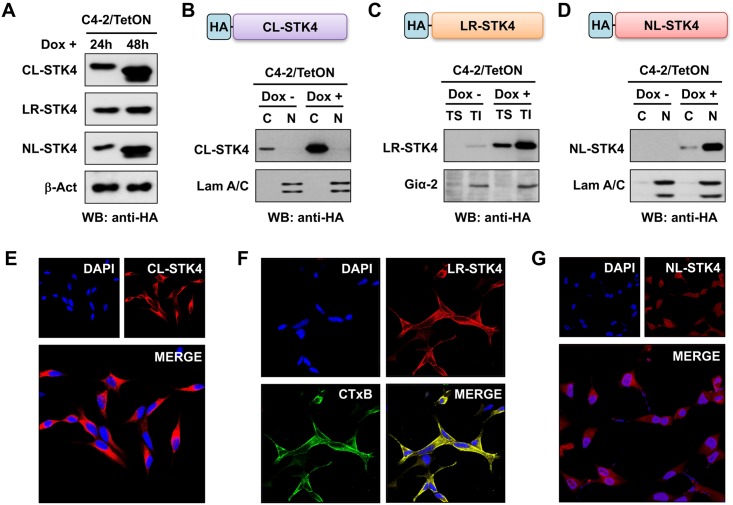
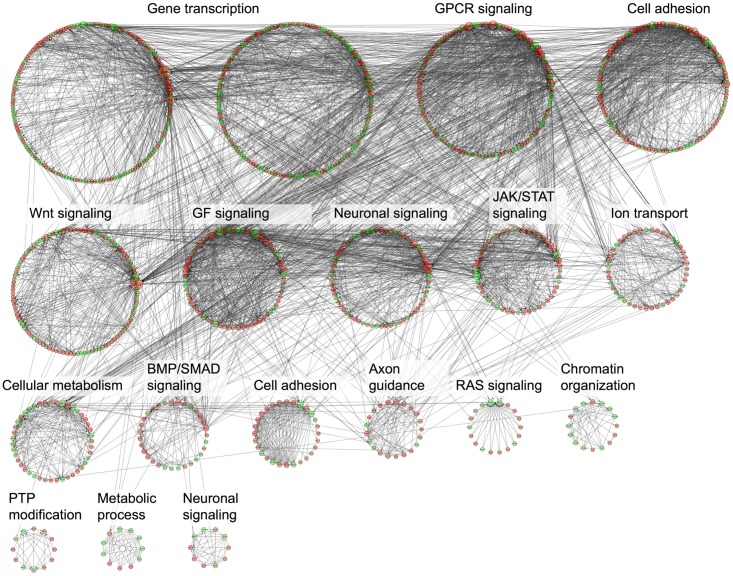
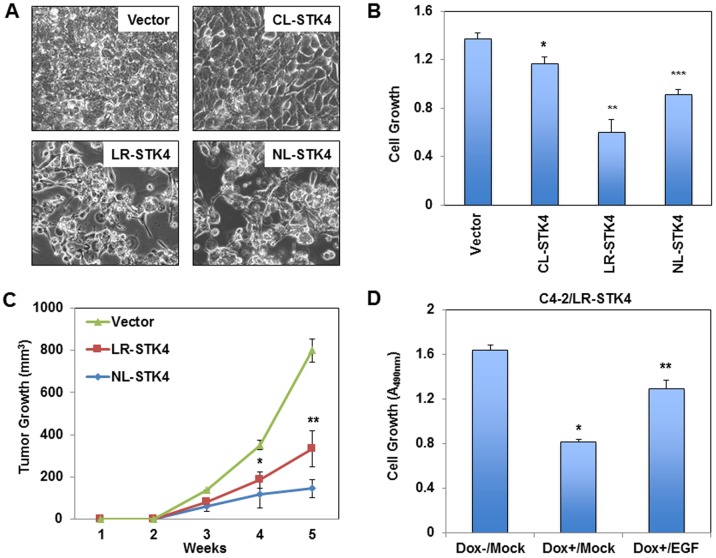
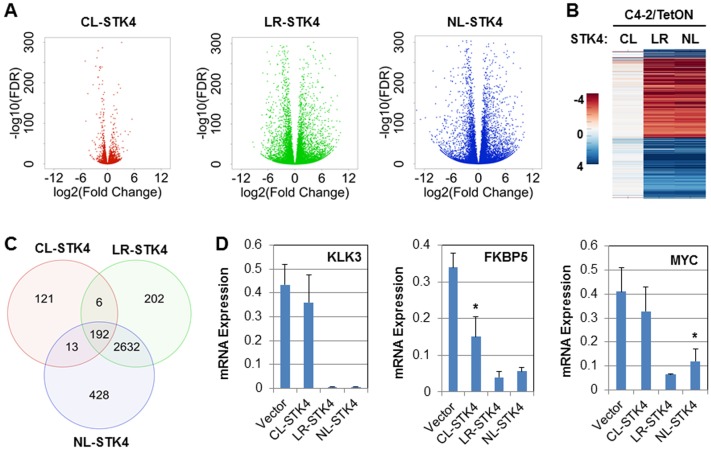
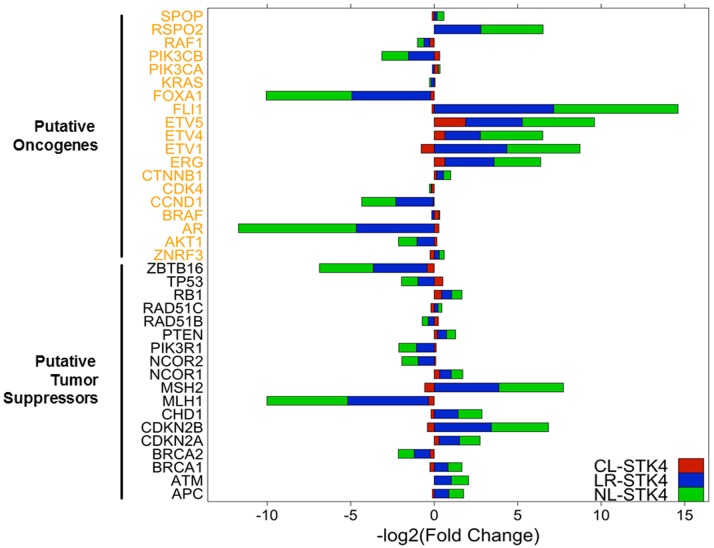
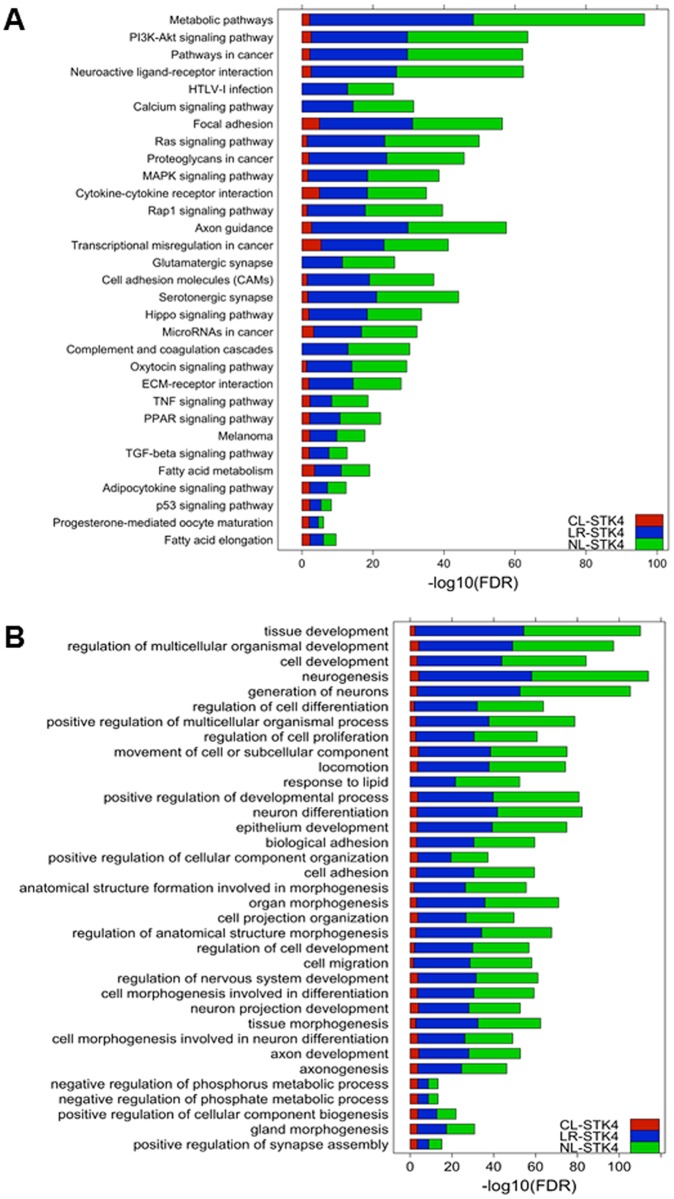
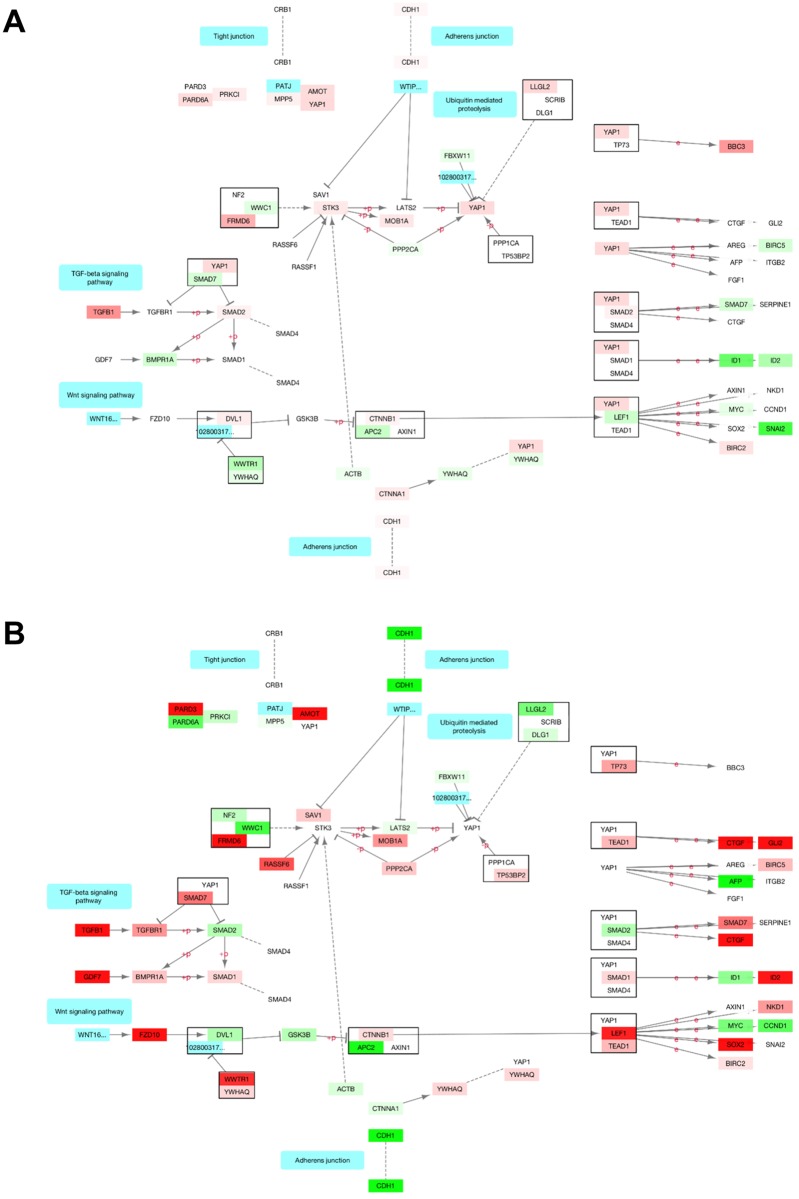
Dysregulation of MST1/STK4, a key kinase component of the Hippo-YAP pathway, is linked to the etiology of many cancers with poor prognosis. However, how STK4 restricts the emergence of aggressive cancer remains elusive. Here, we investigated the effects of STK4, primarily localized in the cytoplasm, lipid raft, and nucleus, on cell growth and gene expression in aggressive prostate cancer. We demonstrated that lipid raft and nuclear STK4 had superior suppressive effects on cell growth in vitro and in vivo compared with cytoplasmic STK4. Using RNA sequencing and bioinformatics analysis, we identified several differentially expressed (DE) genes that responded to ectopic STK4 in all three subcellular compartments. We noted that the number of DE genes observed in lipid raft and nuclear STK4 cells were much greater than cytoplasmic STK4. Our functional annotation clustering showed that these DE genes were commonly associated with oncogenic pathways such as AR, PI3K/AKT, BMP/SMAD, GPCR, WNT, and RAS as well as unique pathways such as JAK/STAT, which emerged only in nuclear STK4 cells. These findings indicate that MST1/STK4/Hippo signaling restricts aggressive tumor cell growth by intersecting with multiple molecular pathways, suggesting that targeting of the STK4/Hippo pathway may have important therapeutic implications for cancer.
MST1/STK4是Hippo-YAP信号通路的关键激酶成分,其失调与许多预后不良的癌症病因有关。然而,STK4如何限制侵袭性癌症的发生仍不清楚。在这里,我们研究了主要定位于细胞质、脂筏和细胞核的STK4对侵袭性前列腺癌细胞生长和基因表达的影响。我们证明,与细胞质STK4相比,脂筏和细胞核STK4在体外和体内对细胞生长具有更强的抑制作用。通过RNA测序和生物信息学分析,我们鉴定了在所有三个亚细胞区室中对异位STK4有反应的几个差异表达(DE)基因。我们注意到,在脂筏和细胞核STK4细胞中观察到的DE基因数量远多于细胞质STK4。我们的功能注释聚类表明,这些DE基因通常与致癌途径如AR、PI3K/AKT、BMP/SMAD、GPCR、WNT和RAS以及仅在细胞核STK4细胞中出现的独特途径如JAK/STAT相关。这些发现表明,MST1/STK4/Hippo信号通过与多种分子途径相交来限制侵袭性肿瘤细胞的生长,这表明靶向STK4/Hippo信号通路可能对癌症具有重要的治疗意义。