Immunology Program, Memorial Sloan Kettering Cancer Center, New York, New York, USA.
Clinical and Translational Science Center, Weill Cornell Medical College, New York, New York, USA.
Sci Rep. 2017 Sep 7;7(1):10767. doi: 10.1038/s41598-017-10346-6.
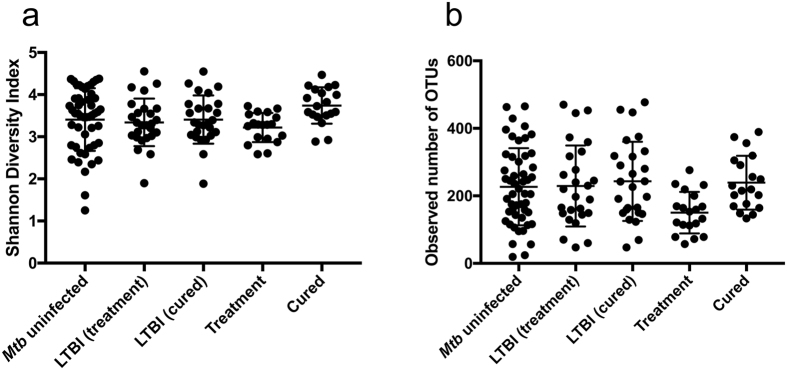
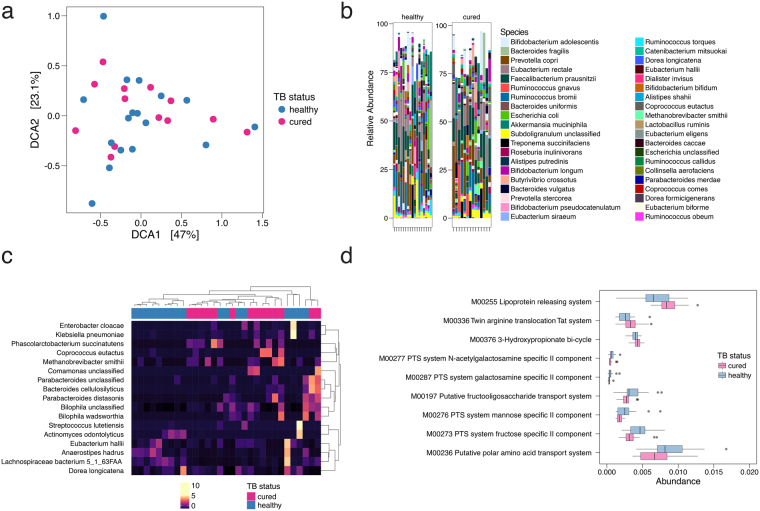
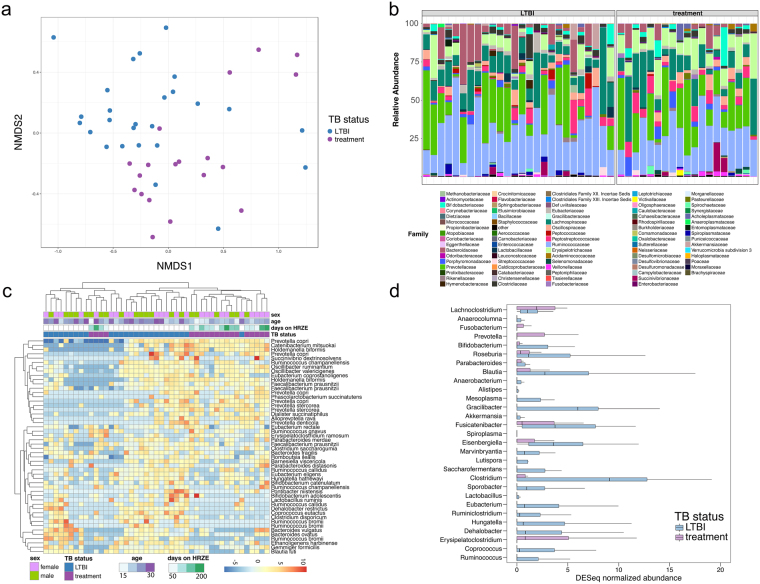
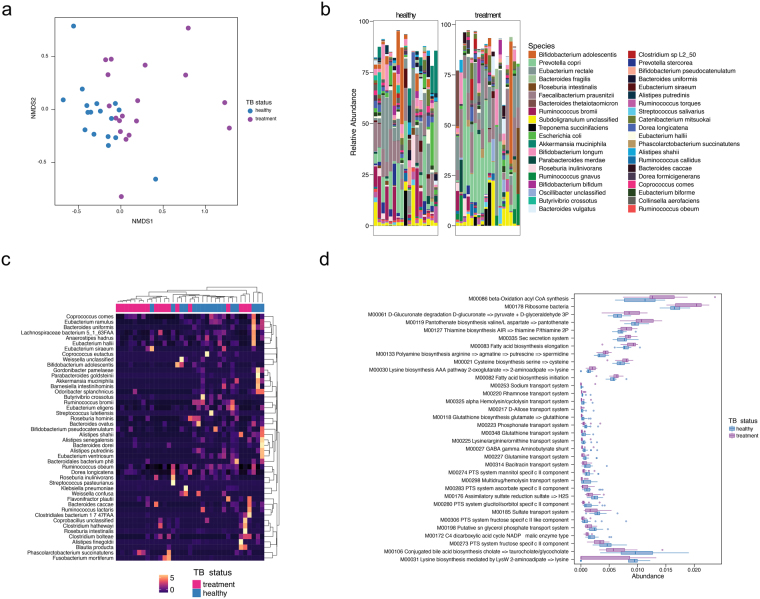
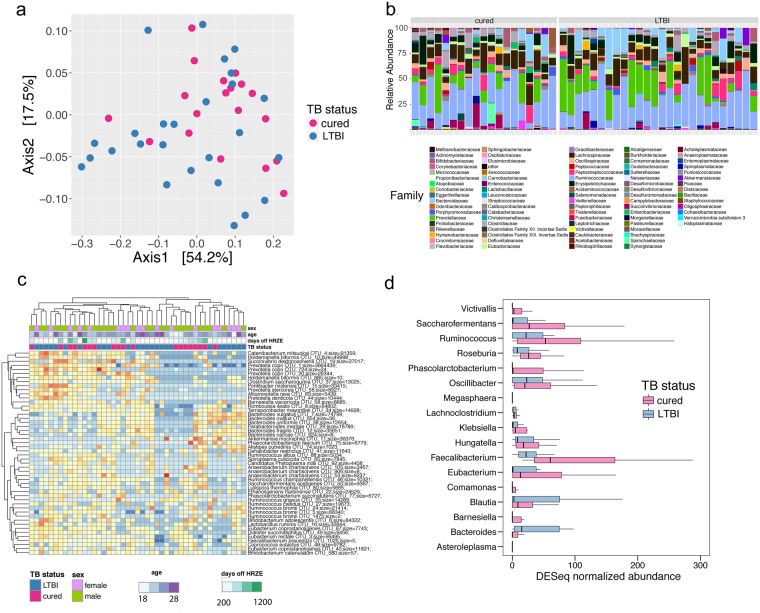
Mycobacterium tuberculosis, the cause of Tuberculosis (TB), infects one third of the world's population and causes substantial mortality worldwide. In its shortest format, treatment of TB requires six months of multidrug therapy with a mixture of broad spectrum and mycobacterial specific antibiotics, and treatment of multidrug resistant TB is longer. The widespread use of this regimen makes this one of the largest exposures of humans to antimicrobials, yet the effects of TB treatment on intestinal microbiome composition and long-term stability are unknown. We compared the microbiome composition, assessed by both 16S rDNA and metagenomic DNA sequencing, of TB cases during antimycobacterial treatment and following cure by 6 months of antibiotics. TB treatment does not perturb overall diversity, but nonetheless dramatically depletes multiple immunologically significant commensal bacteria. The microbiomic perturbation of TB therapy can persist for at least 1.2 years, indicating that the effects of TB treatment are long lasting. These results demonstrate that TB treatment has dramatic effects on the intestinal microbiome and highlight unexpected durable consequences of treatment for the world's most common infection on human ecology.
结核分枝杆菌是结核病(TB)的病原体,它感染了世界上三分之一的人口,并在全球范围内造成了大量的死亡。在最短的治疗方案中,结核病的治疗需要六个月的多药治疗,包括广谱和分枝杆菌特异性抗生素的混合治疗,而耐多药结核病的治疗时间更长。这种方案的广泛应用使得这是人类接触抗生素最多的情况之一,但结核病治疗对肠道微生物组组成和长期稳定性的影响尚不清楚。我们比较了抗分枝杆菌治疗期间和 6 个月抗生素治愈后的结核病病例的微生物组组成,通过 16S rDNA 和宏基因组 DNA 测序进行评估。结核病治疗不会破坏整体多样性,但仍然显著耗尽了多种具有免疫意义的共生细菌。结核病治疗的微生物组扰动至少可以持续 1.2 年,表明结核病治疗的效果是持久的。这些结果表明,结核病治疗对肠道微生物组有显著影响,并强调了治疗对人类生态学中最常见感染的意外持久影响。