Interdisciplinary Biological Sciences Program, Northwestern University, Evanston, IL 60208, USA; Department of Molecular Biosciences, Northwestern University, Evanston, IL 60208, USA.
Department of Molecular Biosciences, Northwestern University, Evanston, IL 60208, USA; Robert H. Lurie Comprehensive Cancer Center of Northwestern University, Chicago, IL 60611, USA.
Curr Opin Genet Dev. 2017 Dec;47:41-47. doi: 10.1016/j.gde.2017.08.002. Epub 2017 Sep 9.
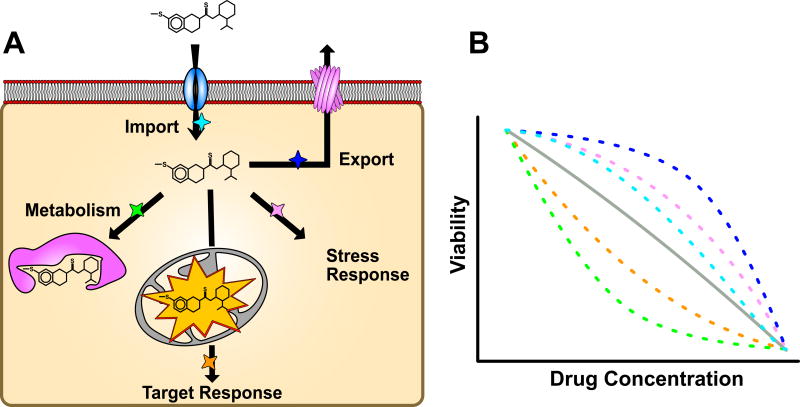
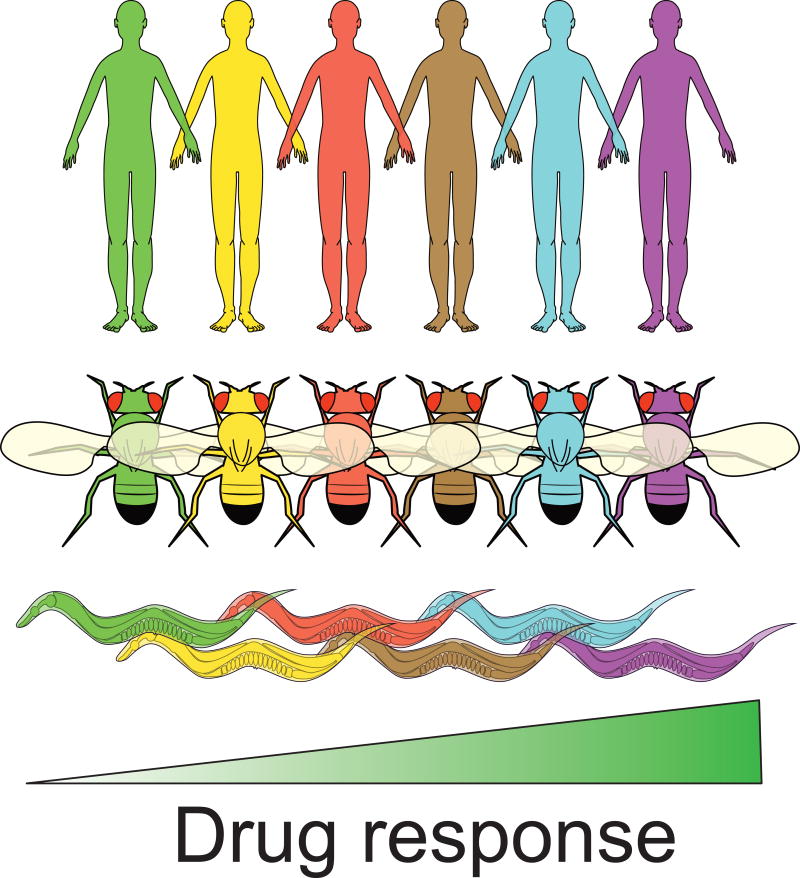
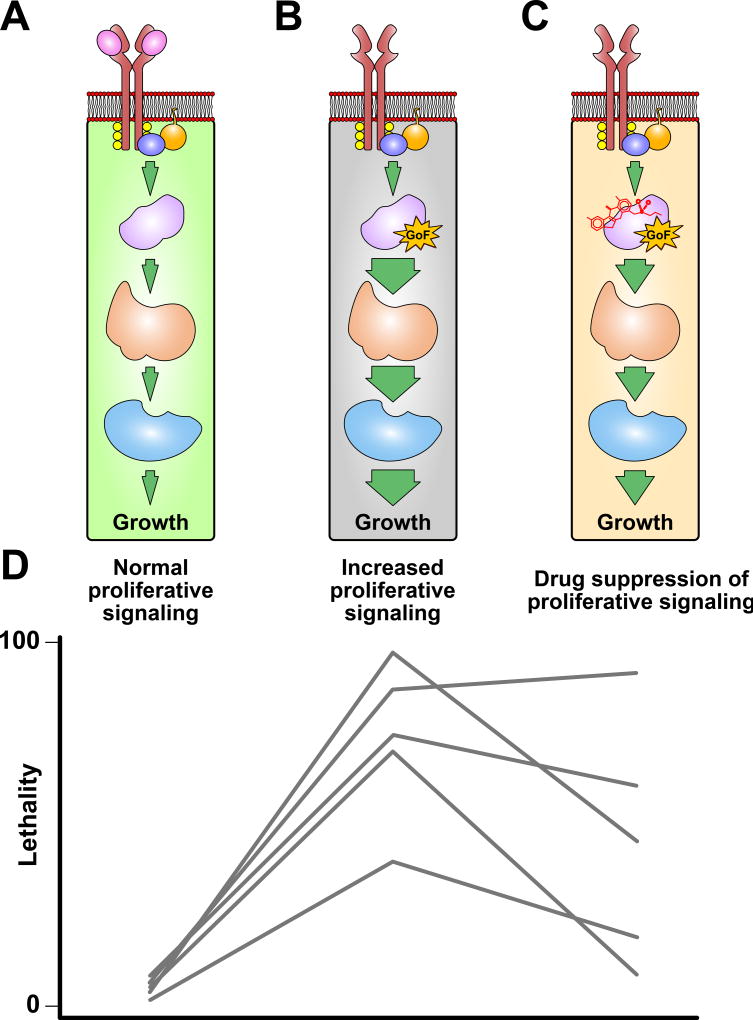
Organismal fitness depends on adaptation to complex niches where chemical compounds and pathogens are omnipresent. These stresses can lead to the fixation of alleles in both xenobiotic responses and proliferative signaling pathways that promote survival in these niches. However, both xenobiotic responses and proliferative pathways vary within and among species. For example, genetic differences can accumulate within populations because xenobiotic exposures are not constant and selection is variable. Additionally, neutral genetic variation can accumulate in conserved proliferative pathway genes because these systems are robust to genetic perturbations given their essential roles in normal cell-fate specification. For these reasons, sensitizing mutations or chemical perturbations can disrupt pathways and reveal cryptic variation. With this fundamental view of how organisms respond to cytotoxic compounds and cryptic variation in conserved signaling pathways, it is not surprising that human patients have highly variable responses to chemotherapeutic compounds. These different responses result in the low FDA-approval rates for chemotherapeutics and underscore the need for new approaches to understand these diseases and therapeutic interventions. Model organisms, especially the classic invertebrate systems of Caenorhabditis elegans and Drosophila melanogaster, can be used to combine studies of natural variation across populations with responses to both xenobiotic compounds and chemotherapeutics targeted to conserved proliferative signaling pathways.
生物体的适应性取决于对复杂生态位的适应,这些生态位中存在着无处不在的化合物和病原体。这些压力会导致在异源生物反应和促进在这些生态位中生存的增殖信号通路中固定等位基因。然而,异源生物反应和增殖途径在物种内和物种间都存在差异。例如,由于异源生物暴露并非恒定,选择也具有变异性,因此种群内可能会积累遗传差异。此外,由于这些系统在正常细胞命运特化中起着至关重要的作用,因此保守的增殖途径基因中可能会积累中性遗传变异。由于这些原因,致敏突变或化学干扰可能会破坏通路并揭示隐藏的变异。基于生物体如何对细胞毒性化合物和保守信号通路中的隐藏变异做出反应的这一基本观点,人类患者对化疗化合物的反应具有高度可变性也就不足为奇了。这些不同的反应导致化疗药物的 FDA 批准率低,并强调需要新的方法来理解这些疾病和治疗干预措施。模式生物,尤其是经典的无脊椎动物系统秀丽隐杆线虫和黑腹果蝇,可以用于将对种群中自然变异的研究与对异源生物化合物和针对保守增殖信号通路的化疗药物的反应结合起来。