Gunda Resign, Shamu Shepherd, Chimbari Moses J, Mukaratirwa Samson
School of Nursing and Public Health, University of KwaZulu-Natal.
Afr J Prim Health Care Fam Med. 2017 Aug 28;9(1):e1-e6. doi: 10.4102/phcfm.v9i1.1317.
Malaria is a serious public health problem in sub-Saharan Africa and is a leading cause of morbidity and mortality.
To estimate the economic burden of malaria in rural households.
The study was conducted in Gwanda district of Matabeleland South in Zimbabwe. A total of five malarious wards and all their households were selected for the study frame, out of which 80 households were chosen using clinic records.
A retrospective analysis of secondary data and a cross-sectional household survey were conducted to estimate the household economic burden of malaria. Eighty households from five rural wards were identified from the health facility malaria registers and followed up. A household was eligible for inclusion if there had been at least one reported malaria case during the period of 2013-2015. Interviewer administered questionnaires were used to collect household data on economic costs of malaria.
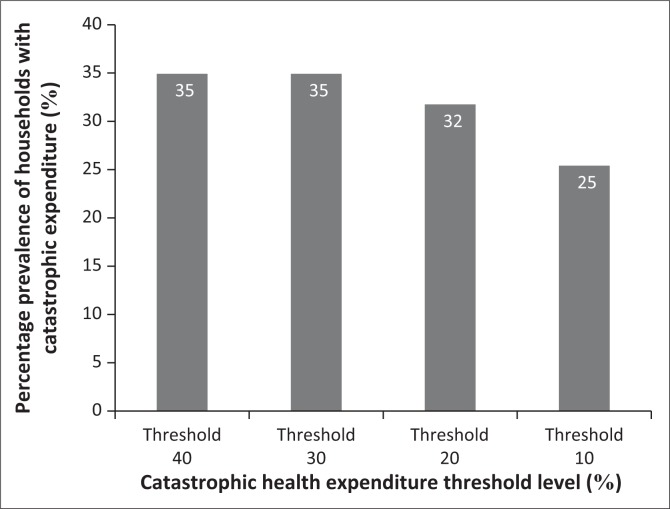
Our findings showed that households spent an average of $3.22 and $56.60 for managing an uncomplicated and a complicated malaria episode respectively. A household lost an average of eight productive working days per each malaria episode resulting in an average loss of 24% of the monthly household income. An estimated 35%, mostly poorer households suffered catastrophic health expenditures.
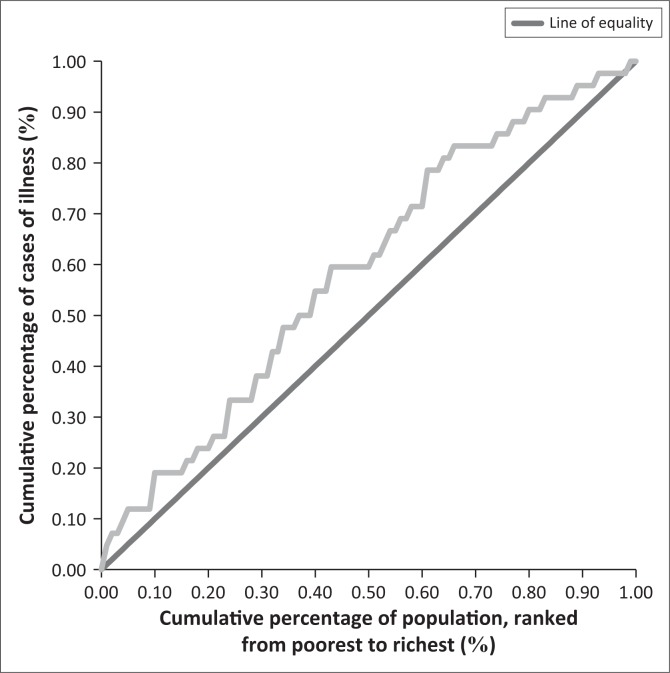
Malaria imposes significant economic burdens particularly on the poorer and vulnerable households. Although there are no user fees at rural clinics, households incur other costs to manage a malaria patient. These costs are far worse for complicated cases.
疟疾是撒哈拉以南非洲地区严重的公共卫生问题,是发病和死亡的主要原因。
评估农村家庭中疟疾的经济负担。
该研究在津巴布韦南马塔贝莱兰省的万德区开展。总共选取了五个疟疾流行区及其所有家庭作为研究框架,其中利用诊所记录选取了80户家庭。
进行二次数据的回顾性分析和横断面家庭调查,以评估疟疾的家庭经济负担。从医疗机构的疟疾登记册中识别出五个农村地区的80户家庭并进行随访。如果在2013 - 2015年期间至少有一例报告的疟疾病例,则该家庭符合纳入条件。通过访员管理的问卷收集关于疟疾经济成本的家庭数据。
我们的研究结果表明,家庭管理非重症和重症疟疾发作的平均花费分别为3.22美元和56.60美元。每个疟疾发作期家庭平均损失8个生产工作日,导致家庭月收入平均损失24%。估计35%的家庭,主要是较贫困家庭,遭受了灾难性医疗支出。
疟疾带来了巨大的经济负担,尤其是对较贫困和脆弱的家庭。尽管农村诊所不收取使用费,但家庭为管理疟疾病人仍需承担其他费用。对于重症病例,这些费用更高。