National Institute of Parasitic Diseases, Chinese Center for Disease Control and Prevention, Shanghai, 200025, People's Republic of China.
Key Laboratory of Parasite and Vector Biology, National Health and Family Planning Commission, Shanghai, 200025, People's Republic of China.
Infect Dis Poverty. 2017 Sep 11;6(1):144. doi: 10.1186/s40249-017-0339-6.
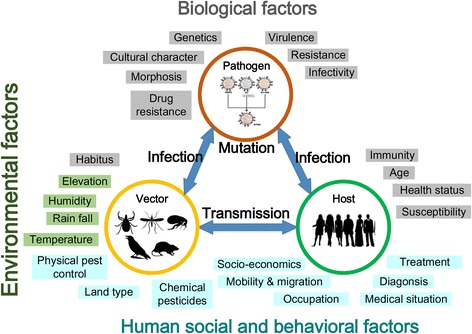
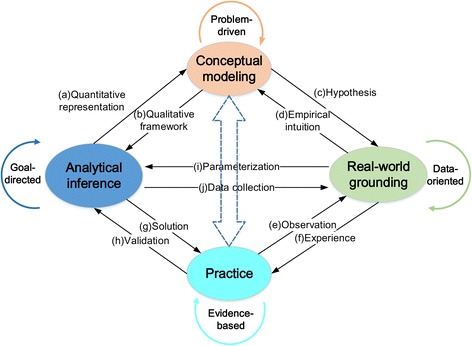
The transmission of infectious diseases is a dynamic process determined by multiple factors originating from disease pathogens and/or parasites, vector species, and human populations. These factors interact with each other and demonstrate the intrinsic mechanisms of the disease transmission temporally, spatially, and socially. In this article, we provide a comprehensive perspective, named as systems thinking, for investigating disease dynamics and associated impact factors, by means of emphasizing the entirety of a system's components and the complexity of their interrelated behaviors. We further develop the general steps for performing systems approach to tackling infectious diseases in the real-world settings, so as to expand our abilities to understand, predict, and mitigate infectious diseases.
传染病的传播是一个由疾病病原体和/或寄生虫、媒介物种和人类种群等多个因素决定的动态过程。这些因素相互作用,表现出疾病在时间、空间和社会上传播的内在机制。在本文中,我们提供了一种全面的视角,称为系统思维,用于研究疾病动态及其相关影响因素,方法是强调系统组件的整体性和它们相互关联行为的复杂性。我们进一步制定了在实际环境中应用系统方法来处理传染病的一般步骤,以提高我们理解、预测和减轻传染病的能力。