Asan Institute for Life Sciences, Asan Medical Center, University of Ulsan College of Medicine, Seoul 05505, Korea.
Department of Biomolecular Engineering, Graduate School of Biosciences and Biotechnology, Tokyo Institute of Technology, Yokohama 226-8501, Japan.
BMB Rep. 2017 Sep;50(9):478-483. doi: 10.5483/bmbrep.2017.50.9.084.
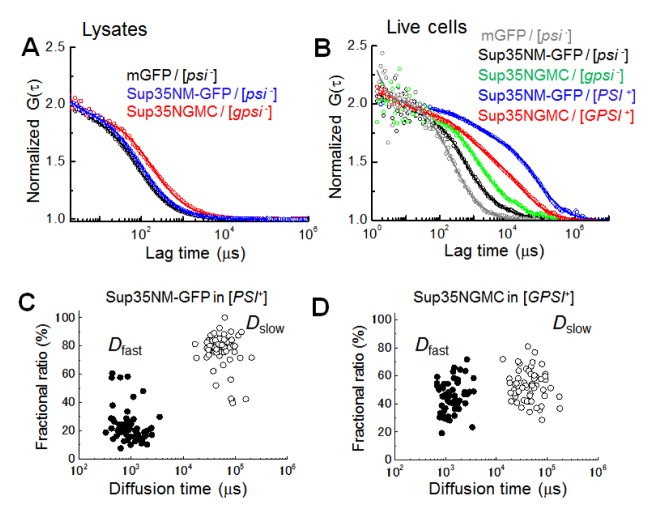
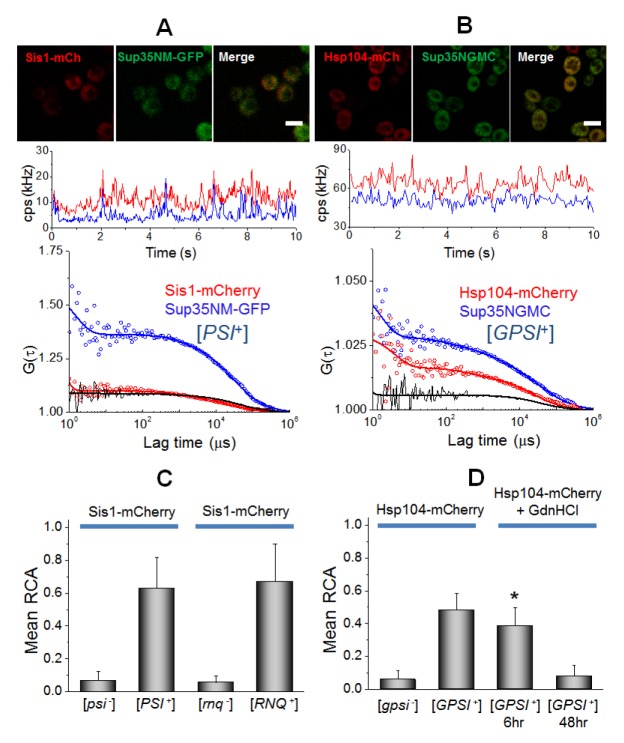
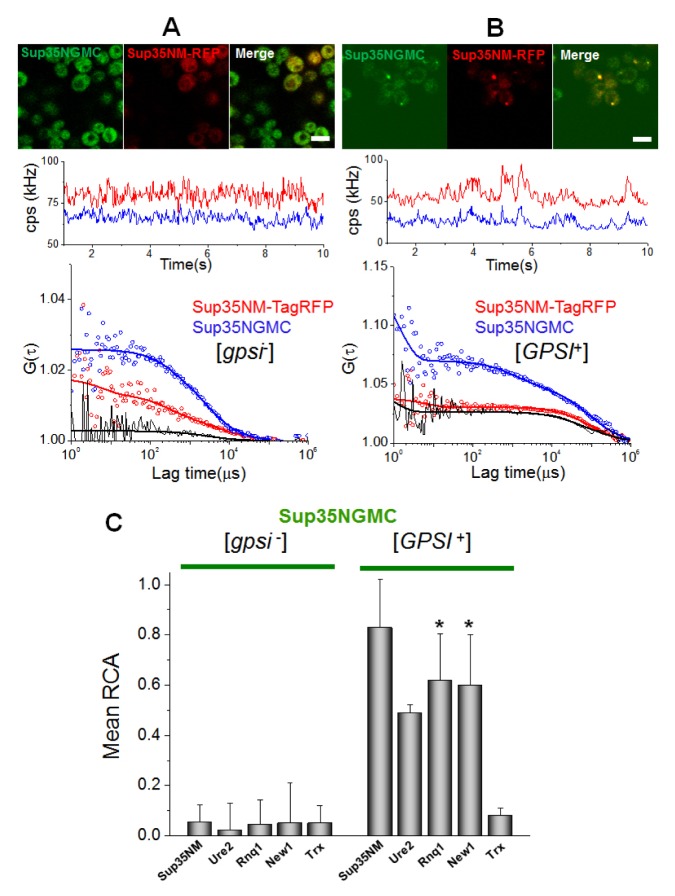
Budding yeast has dozens of prions, which are mutually dependent on each other for the de novo prion formation. In addition to the interactions among prions, transmissions of prions are strictly dependent on two chaperone systems: the Hsp104 and the Hsp70/Hsp40 (J-protein) systems, both of which cooperatively remodel the prion aggregates to ensure the multiplication of prion entities. Since it has been postulated that prions and the remodeling factors constitute complex networks in cells, a quantitative approach to describe the interactions in live cells would be required. Here, the researchers applied dual-color fluorescence cross-correlation spectroscopy to investigate the molecular network of interaction in single live cells. The findings demonstrate that yeast prions and remodeling factors constitute a network through heterogeneous protein-protein interactions. [BMB Reports 2017; 50(9): 478-483].
出芽酵母有数十种朊病毒,它们彼此相互依赖形成新的朊病毒。除了朊病毒之间的相互作用外,朊病毒的传播还严格依赖于两个伴侣蛋白系统:Hsp104 和 Hsp70/Hsp40(J 蛋白)系统,这两个系统都共同重塑朊病毒聚集体,以确保朊病毒实体的增殖。由于有人假设朊病毒和重塑因子在细胞中构成复杂的网络,因此需要一种定量方法来描述活细胞中的相互作用。在这里,研究人员应用双色荧光互相关光谱法来研究单个活细胞中相互作用的分子网络。研究结果表明,酵母朊病毒和重塑因子通过异质蛋白质-蛋白质相互作用构成网络。[BMB 报告 2017;50(9):478-483]。