Department of Rehabilitation, Kitasato University Hospital, Sagamihara, Japan.
Kidney Research Institute, University of Washington, Seattle, Washington.
J Ren Nutr. 2018 Jan;28(1):45-53. doi: 10.1053/j.jrn.2017.07.004. Epub 2017 Sep 8.
Greater physical activity is associated with lower risk of mortality in persons with kidney disease; however, little is known about the appropriate dose of physical activity among hemodialysis patients. Here detected the minimum level of habitual physical activity to help inform interventions aimed at improving outcomes in the dialysis population.
The design was prospective cohort study.
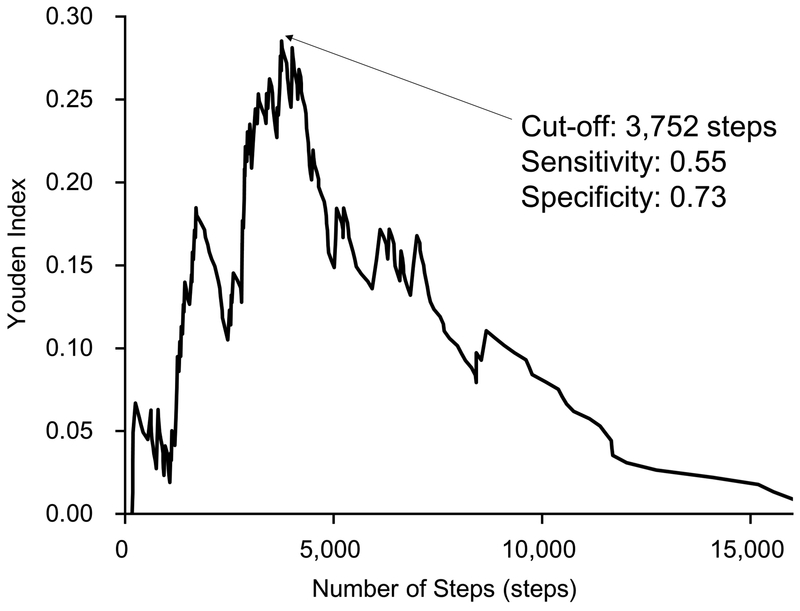
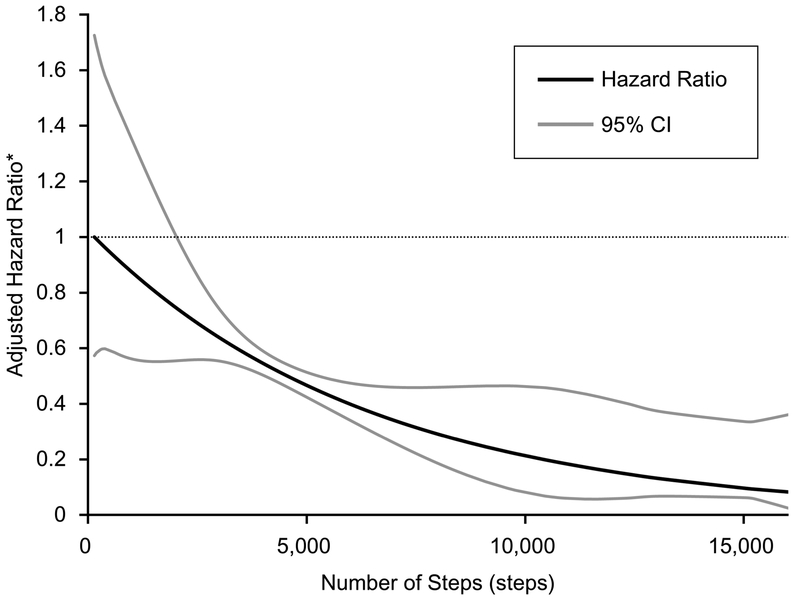
Clinically stable outpatients in a hemodialysis unit from October 2002 to March 2014 were assessed for their eligibility to be included in this 7-year prospective cohort study. We used the Youden index to determine the optimal cutoff points for physical activity. The prognostic effect of physical activity on survival was estimated by Cox proportional hazards regression analysis. The number of steps per nondialysis day was recorded by accelerometer at study entry.
The main outcome measure was all-cause mortality.
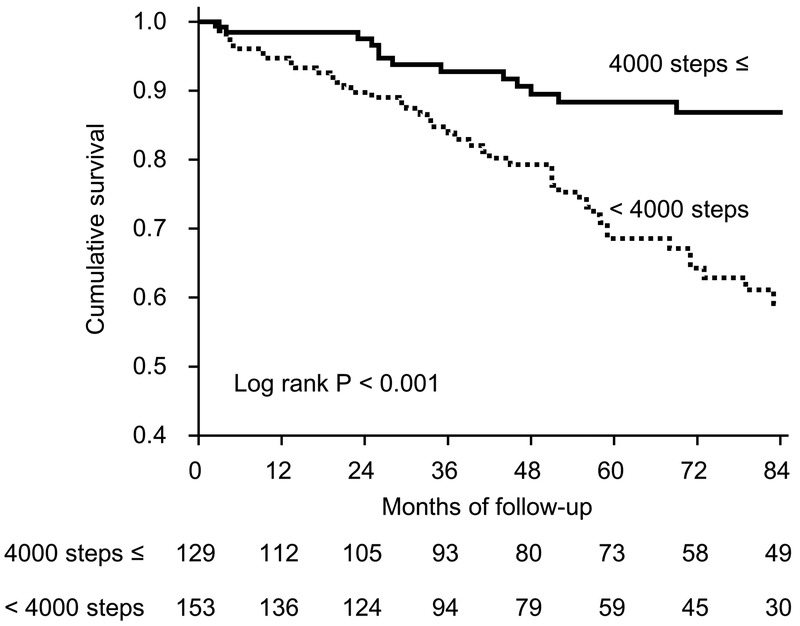
There were 282 participants who had a mean age of 65 ± 11 years and 45% were female. A total of 56 deaths occurred during the follow-up period (56 months [interquartile range: 29-84 months]). The cutoff value for the physical activity discriminating those at high risk of mortality was 3,752 steps. After adjustment for the effect of confounders, the hazard ratio in the group of <4,000 steps was 2.37 (95% confidence interval: 1.22-4.60, P = .01) compared with the others.
Engaging in physical activity is associated with decreased mortality risk among hemodialysis patients. Our findings of a substantial mortality benefit among those who engage in at least 4,000 steps provide a basis for as a minimum initial recommendation kidney health providers can provide for mobility disability-free hemodialysis patients.
身体活动量较大与肾病患者的死亡风险降低相关;然而,对于血液透析患者的身体活动适宜剂量知之甚少。本研究旨在检测习惯性身体活动的最低水平,为旨在改善透析人群结局的干预措施提供信息。
前瞻性队列研究。
2002 年 10 月至 2014 年 3 月期间,在血液透析病房中评估符合入选本 7 年前瞻性队列研究条件的临床稳定门诊患者。我们使用约登指数来确定身体活动的最佳截断点。使用 Cox 比例风险回归分析估计身体活动对生存的预后影响。使用加速度计记录非透析日的步数。
全因死亡率。
共有 282 名参与者,平均年龄为 65 ± 11 岁,45%为女性。在随访期间(56 个月[四分位距:29-84 个月])共发生 56 例死亡。区分高死亡率风险的身体活动的截断值为 3752 步。在调整混杂因素的影响后,<4000 步组的危险比为 2.37(95%置信区间:1.22-4.60,P=0.01),与其他组相比。
身体活动与血液透析患者的死亡风险降低相关。我们发现,对于至少进行 4000 步的患者,死亡率有显著降低获益,为无移动性残疾的血液透析患者提供了一个最低初始建议的依据。