Pollock F Joseph, Katz Sefano M, van de Water Jeroen A J M, Davies Sarah W, Hein Margaux, Torda Gergely, Matz Mikhail V, Beltran Victor H, Buerger Patrick, Puill-Stephan Eneour, Abrego David, Bourne David G, Willis Bette L
Australian Institute of Marine Science, Townsville, QLD, Australia.
AIMS@JCU, Townsville, Queensland, Australia.
PeerJ. 2017 Sep 6;5:e3732. doi: 10.7717/peerj.3732. eCollection 2017.
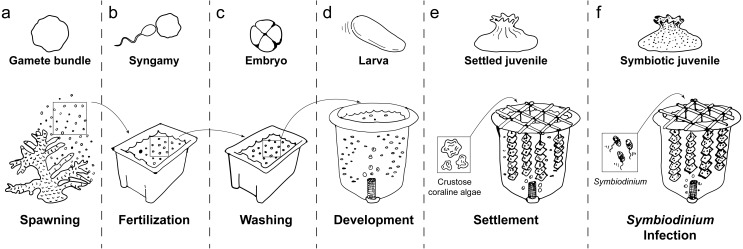
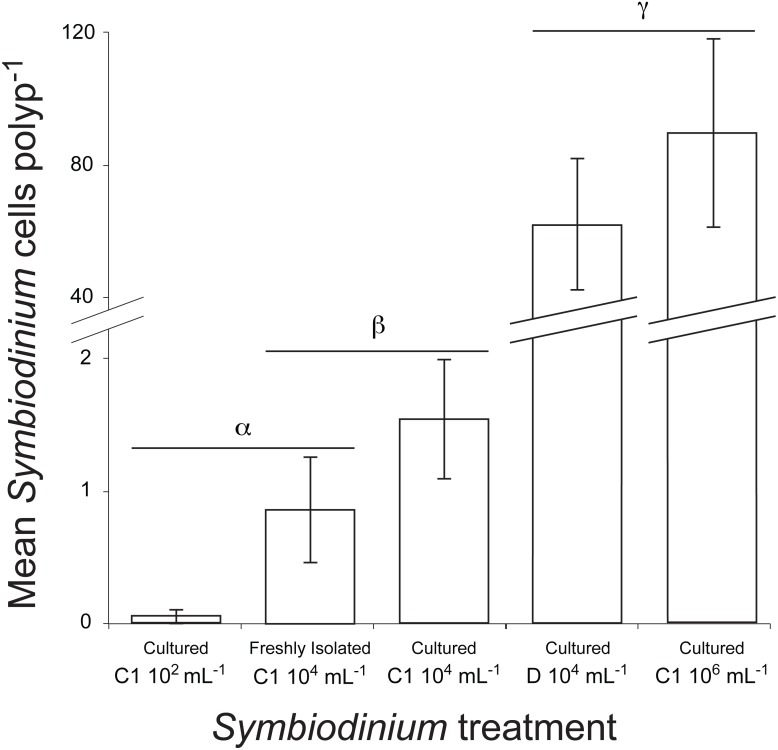
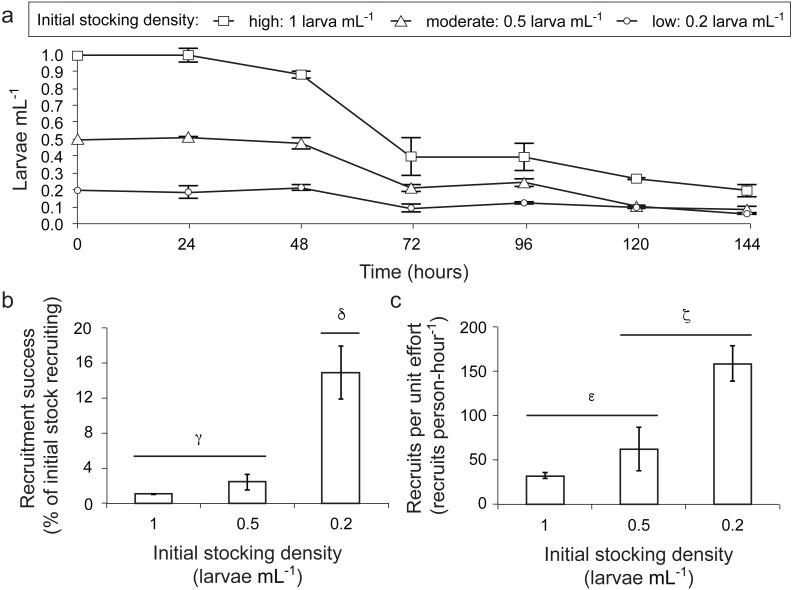
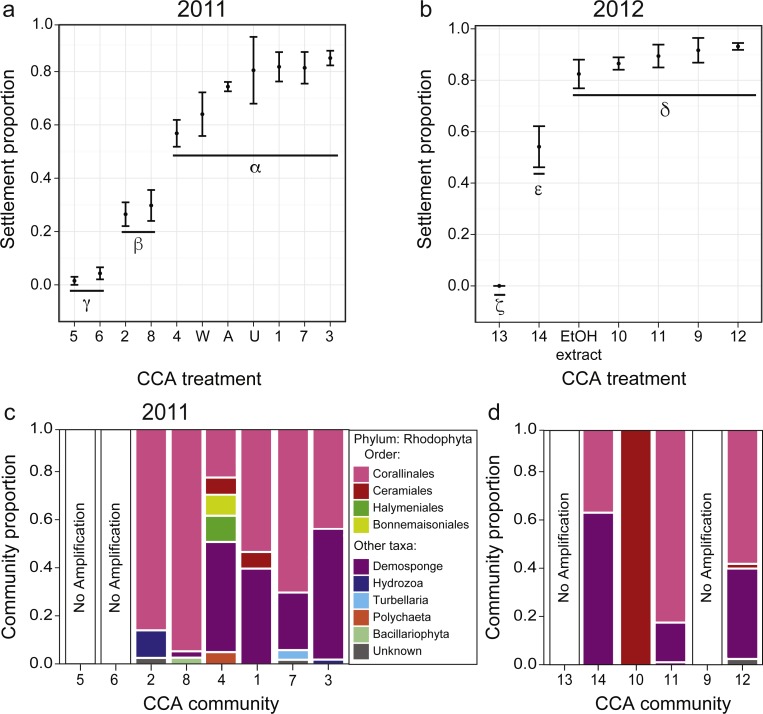
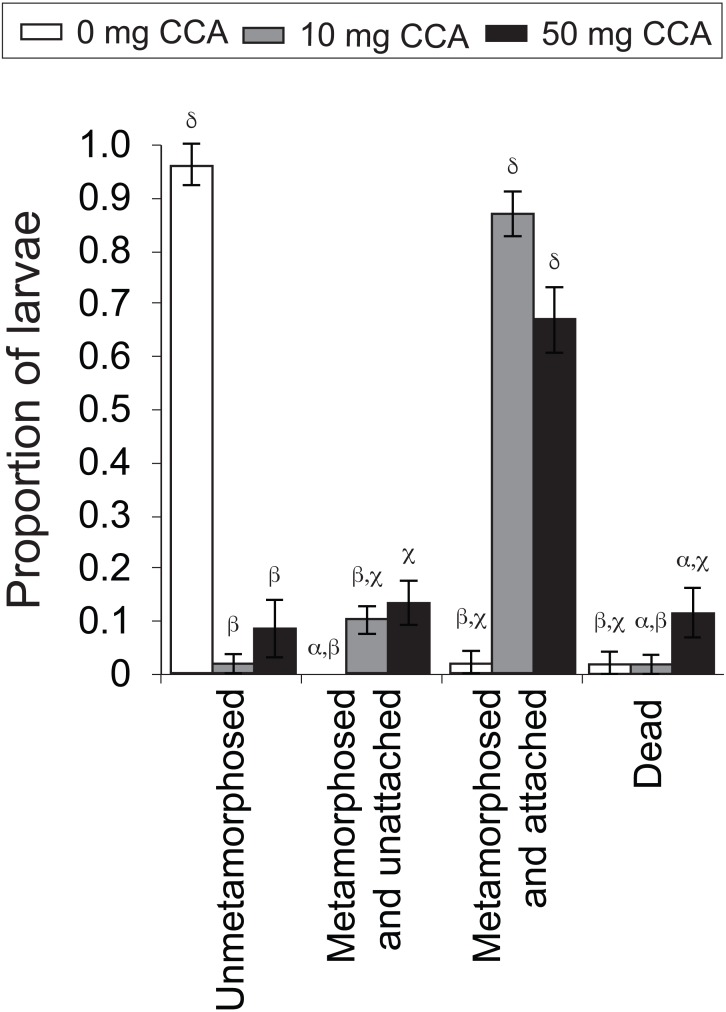
Here we describe an efficient and effective technique for rearing sexually-derived coral propagules from spawning through larval settlement and symbiont uptake with minimal impact on natural coral populations. We sought to maximize larval survival while minimizing expense and daily husbandry maintenance by experimentally determining optimized conditions and protocols for gamete fertilization, larval cultivation, induction of larval settlement by crustose coralline algae, and inoculation of newly settled juveniles with their dinoflagellate symbiont . Larval rearing densities at or below 0.2 larvae mL were found to maximize larval survival and settlement success in culture tanks while minimizing maintenance effort. Induction of larval settlement via the addition of a ground mixture of diverse crustose coralline algae (CCA) is recommended, given the challenging nature of CCA identification and our finding that non settlement-inducing CCA assemblages do not inhibit larval settlement if suitable assemblages are present. Although order of magnitude differences in infectivity were found between common Great Barrier Reef clades C and D, no significant differences in uptake were observed between laboratory-cultured and wild-harvested symbionts in each case. The technique presented here for can be adapted for research and restoration efforts in a wide range of broadcast spawning coral species.
在此,我们描述了一种高效且有效的技术,用于从产卵开始培育有性繁殖的珊瑚幼体,直至幼体沉降并摄取共生体,同时对天然珊瑚种群的影响最小。我们试图通过实验确定配子受精、幼体培育、利用壳状珊瑚藻诱导幼体沉降以及为新沉降的幼体接种其甲藻共生体的优化条件和方案,来最大限度地提高幼体存活率,同时将成本和日常饲养维护降至最低。研究发现,培养缸中的幼体饲养密度为0.2个幼体/毫升或更低时,可最大限度地提高幼体存活率和沉降成功率,同时减少维护工作量。鉴于壳状珊瑚藻(CCA)鉴定具有挑战性,且我们发现如果存在合适的组合,非沉降诱导型CCA组合不会抑制幼体沉降,因此建议通过添加多种壳状珊瑚藻的研磨混合物来诱导幼体沉降。尽管在大堡礁常见的C和D类群之间发现感染性存在数量级差异,但在每种情况下,实验室培养的共生体和野生采集的共生体之间在摄取方面未观察到显著差异。这里介绍的技术可适用于广泛的产卵珊瑚物种的研究和恢复工作。