Bista Damber, Shrestha Saroj, Kunwar Ajaya Jang, Acharya Sakshi, Jnawali Shant Raj, Acharya Krishna Prasad
Red Panda Network, Baluwatar, Kathmandu, Nepal.
Kathmandu Center for Genomics and Research Laboratory, Gwarko, Lalitpur, Nepal.
PeerJ. 2017 Sep 6;5:e3767. doi: 10.7717/peerj.3767. eCollection 2017.
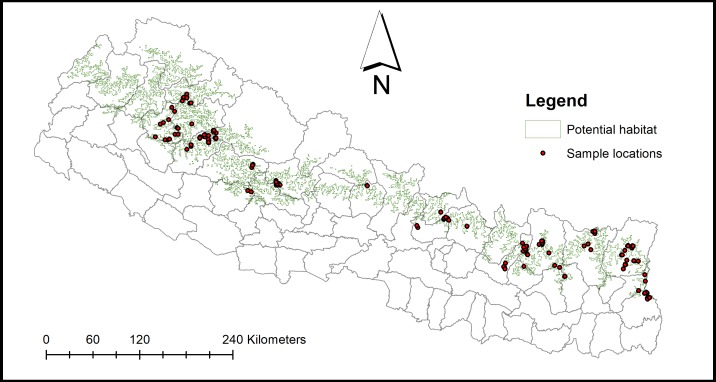
Red pandas are known to be highly susceptible to endoparasites, which can have a prominent impact on the population dynamics of this endangered species. There are very limited published reports on prevalence and risk of parasites in wild populations of red panda, especially localized reports. This study attempts to provide an in-depth insight of the status of endoparasites in red pandas, which is critical for strengthening conservation efforts. A total of 272 fecal samples were collected through systematic sampling across the red panda distribution range in Nepal and coprological examination was completed using standard techniques. It was followed by an estimation of prevalence and mean intensity of parasites, as well as statistical analysis, which was carried out using R statistical software. Parasite prevalence was documented in 90.80% ( = 247) out of 272 samples examined which includes seven different species along with three genera of parasites belonging to Protozoans (3 species), Cestodes (1 genus, 1 species) and Nematodes (2 genera, 3 species). Nematodes predominated in all infected samples (87.62%). Prevalence of ( = 227, 70.06%), having a mean intensity of 3.45 ± 2.88 individuals per sample, was observed, followed by ( = 19, 5.86%) and ( = 24, 7.41%). Eight variables for assessing the determinants of infestation were tested: protected areas; non-protected areas; aspect; elevation; slope; and distance to water sources, herding stations, and settlements. Only the settlement displayed significant association ( = -1534e-04, = - 2.192, = 0.0293) though each parasite species displayed dissimilar association with different variables. This study indicates the urgent need of improving existing herding practice through habitat zonation, rotational grazing, medication of livestock, and prohibition of open defecation within and around red panda habitat.
小熊猫已知对体内寄生虫高度敏感,这可能对这种濒危物种的种群动态产生显著影响。关于野生小熊猫种群中寄生虫的流行情况和风险,已发表的报告非常有限,尤其是局部地区的报告。本研究旨在深入了解小熊猫体内寄生虫的状况,这对于加强保护工作至关重要。通过在尼泊尔小熊猫分布范围内进行系统采样,共收集了272份粪便样本,并使用标准技术完成了粪便学检查。随后对寄生虫的流行率和平均感染强度进行了估计,并使用R统计软件进行了统计分析。在所检查的272个样本中,有90.80%(n = 247)记录到寄生虫感染,其中包括七种不同的物种以及属于原生动物(3种)、绦虫(1属,1种)和线虫(2属,3种)的三个寄生虫属。线虫在所有感染样本中占主导地位(87.62%)。观察到蛔虫感染率为70.06%(n = 227),平均每个样本感染强度为3.45 ± 2.88只,其次是毛首线虫(n = 19,5.86%)和类圆线虫(n = 二十四,7.41%)。测试了八个评估感染决定因素的变量:保护区;非保护区;坡向;海拔;坡度;以及与水源、放牧站和定居点的距离。尽管每种寄生虫物种与不同变量显示出不同的关联,但只有定居点显示出显著关联(β = -1.534e-04,t = -2.192,p = 0.0293)。本研究表明,迫切需要通过栖息地分区、轮牧、牲畜用药以及禁止在小熊猫栖息地内和周围露天排便来改进现有的放牧方式。