Tsunoda Atsunobu, Sumi Takuro, Terasaki Omi, Kishimoto Seiji
Department of Otolaryngology Juntendo University Nerima Hospital Tokyo Japan.
Department of Head and Neck Surgery Tokyo Medical and Dental University Tokyo Japan.
Laryngoscope Investig Otolaryngol. 2017 Jan 23;2(1):19-22. doi: 10.1002/lio2.43. eCollection 2017 Feb.
OBJECTIVES/HYPOTHESIS: To investigate the relationship between handedness and the incidence of squamous cell carcinoma in the external auditory canal (EACSCC).
Sixty-eight cases of EACSCC were enrolled in this study, and their affected side was checked. Handedness and ear-picking habits were also investigated in 34 EACSCC cases. Handedness was judged based on self-categorization, and the relationship between handedness and the affected side was investigated.
Fifty-two cases occurred on the right side, and 16 cases occurred on the left side of patients with EACSCC. The incidence of laterality in EACSCC showed a statistically significant right dominance. Concerning handedness, 29 cases were right-handed, 4 cases were left-handed, and 1 case was ambidextrous. Twenty-seven out of the 29 right-handed cases and 1 ambidextrous case suffered from carcinoma on the right side, whereas 3 left-handed cases suffered from carcinoma on the left side. That is, most of the cases suffered from EACSCC on the same side as their handedness, and this tendency showed a statistically significant difference. Most of the patients with EACSCC experienced itching and habitual ear-picking in the affected side.
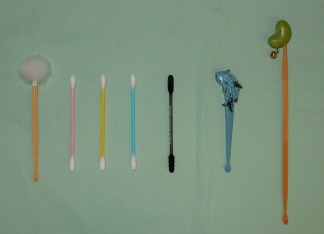
Mechanical stimulations to the EAC, such as ear picking, may plausibly cause EACSCC. In Japan, ear picking, also called "mimikaki," is a popular habit and an established unique culture. Because ear picking requires delicate handling and manipulation, this tends to occur on the same side as the handedness in the Japanese population. This is the first report about the relationship between handedness and carcinogenesis.
N/A.
目的/假设:研究利手与外耳道鳞状细胞癌(EACSCC)发病率之间的关系。
本研究纳入68例EACSCC病例,检查其患侧。还对34例EACSCC病例的利手和掏耳习惯进行了调查。利手根据自我分类判断,并研究利手与患侧之间的关系。
EACSCC患者中,52例发生在右侧,16例发生在左侧。EACSCC的侧别发病率显示出统计学上显著的右侧优势。关于利手,29例为右利手,4例为左利手,1例为双手灵巧。29例右利手病例中的27例和1例双手灵巧病例患右侧癌症,而3例左利手病例患左侧癌症。也就是说,大多数病例的EACSCC发生在与利手同侧,这种趋势显示出统计学上的显著差异。大多数EACSCC患者在患侧有瘙痒和习惯性掏耳。
对外耳道的机械刺激,如掏耳,可能会引发EACSCC。在日本,掏耳,也称为“耳垢清理”,是一种流行的习惯和既定的独特文化。由于掏耳需要精细操作,在日本人群中,这种行为往往发生在与利手同侧。这是关于利手与致癌作用之间关系的首次报告。
无。