Bauer Carol A, Berry Jennifer L, Brozoski Thomas J
Southern Illinois University School of Medicine Springfield Illinois.
Laryngoscope Investig Otolaryngol. 2017 May 28;2(4):166-177. doi: 10.1002/lio2.76. eCollection 2017 Aug.
The goal of this study was to compare treatment outcomes for chronic bothersome tinnitus after Tinnitus Retraining Therapy (TRT) versus standard of care treatment (SC) and to determine the longevity of the effect over an 18-month period.
A randomized controlled trial comparing TRT to SC for chronic tinnitus.
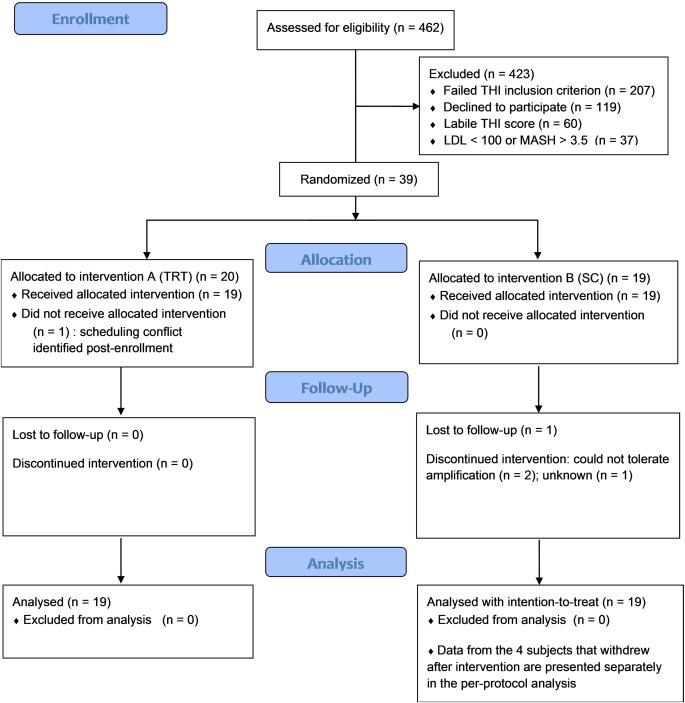
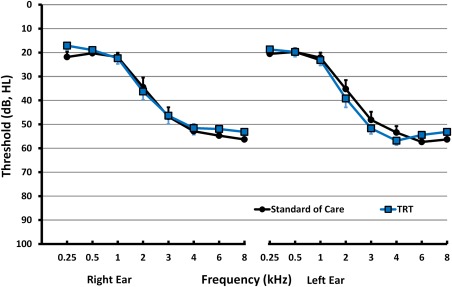
Adults with subjective, stable, bothersome chronic tinnitus associated with hearing loss amenable to aural rehabilitation with hearing aids were recruited. The Tinnitus Handicap Inventory (THI) was the primary outcome measure and the Tinnitus Functional Index (TFI) the secondary outcome measure of tinnitus severity and impact. Data were collected at screening, entry (0 months), and 6, 12, and 18 months after the beginning of treatment, using an integrated digitized suite of evaluation modules. TRT consisted of directive counseling and acoustic enrichment using combination hearing aids and sound generators; SC consisted of general aural rehabilitation counseling and hearing aids.
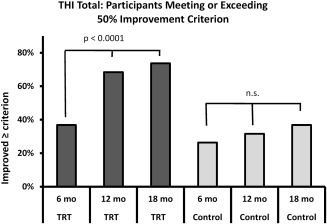
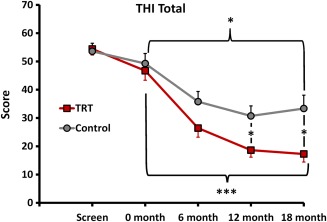
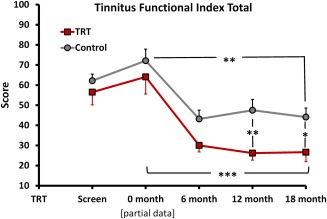
Significant improvement in tinnitus impact occurred after both TRT and SC therapy, with a larger treatment effect obtained in the TRT group. Lasting therapeutic benefit was evident at 18 months in both groups. THI initial scores were unstable in 10% of enrolled participants, showing moderate bidirectional fluctuation between screening and baseline (0 month) assessment.
Adults with moderate to severe tinnitus and hearing loss amenable to amplification, benefit from either TRT or SC treatment when combined with hearing aid use. TRT benefit may exceed that of SC. The global improvement in tinnitus severity that accrued over an 18-month period appeared to be robust and clinically significant.
I.
本研究的目的是比较耳鸣再训练疗法(TRT)与标准护理治疗(SC)治疗慢性困扰性耳鸣的疗效,并确定18个月期间疗效的持久性。
一项比较TRT与SC治疗慢性耳鸣的随机对照试验。
招募患有主观、稳定、困扰性慢性耳鸣且伴有听力损失、适合使用助听器进行听觉康复的成年人。耳鸣残疾评定量表(THI)是耳鸣严重程度和影响的主要结局指标,耳鸣功能指数(TFI)是次要结局指标。使用一套集成的数字化评估模块,在筛查、入组(0个月)以及治疗开始后的6、12和18个月收集数据。TRT包括指导性咨询以及使用组合式助听器和声发生器进行声音强化;SC包括一般的听觉康复咨询和助听器。
TRT和SC治疗后耳鸣影响均有显著改善,TRT组获得了更大的治疗效果。两组在18个月时均有明显的持久治疗益处。10%的入组参与者THI初始评分不稳定,在筛查和基线(0个月)评估之间显示出中度双向波动。
患有中度至重度耳鸣且听力损失适合放大治疗的成年人,在使用助听器的同时,接受TRT或SC治疗均有益处。TRT的益处可能超过SC。在18个月期间耳鸣严重程度的总体改善似乎是显著且具有临床意义的。
I级