Department of Microbiology and Molecular Medicine, University of Geneva, Geneva, Switzerland.
Functional Genomics Center Zurich, ETH Zurich/University of Zurich, Zurich, Switzerland.
Elife. 2017 Sep 12;6:e27480. doi: 10.7554/eLife.27480.
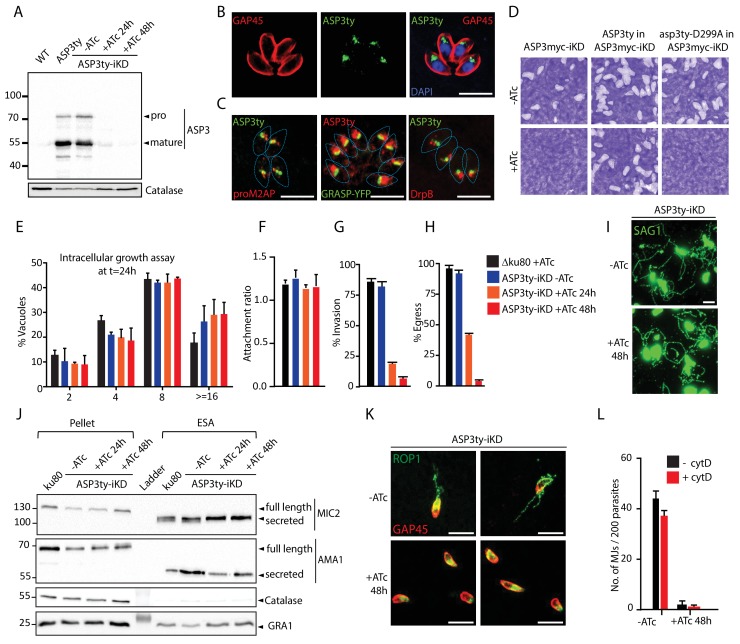
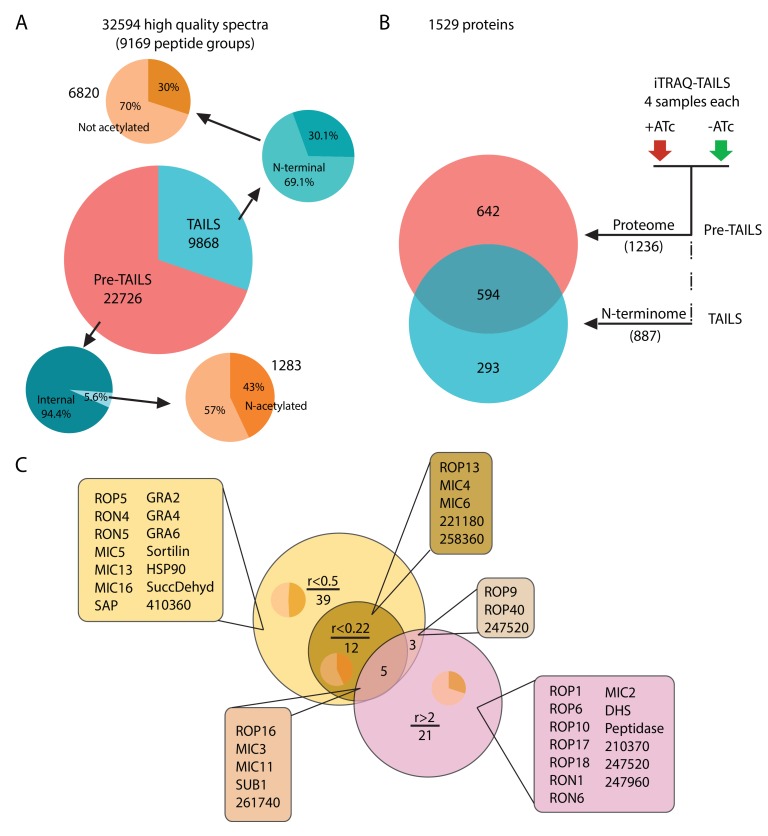
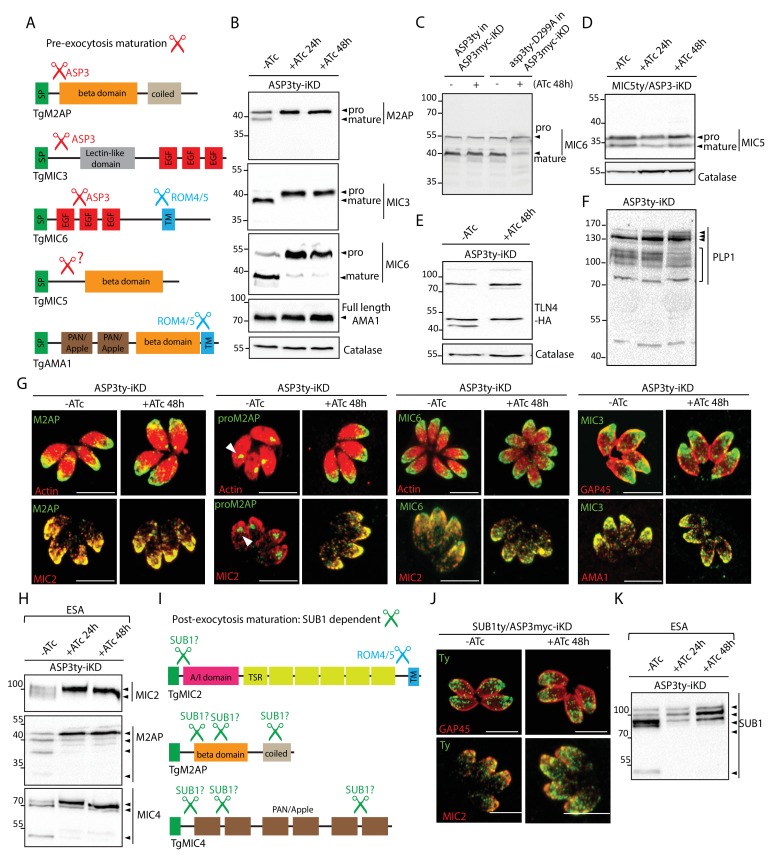
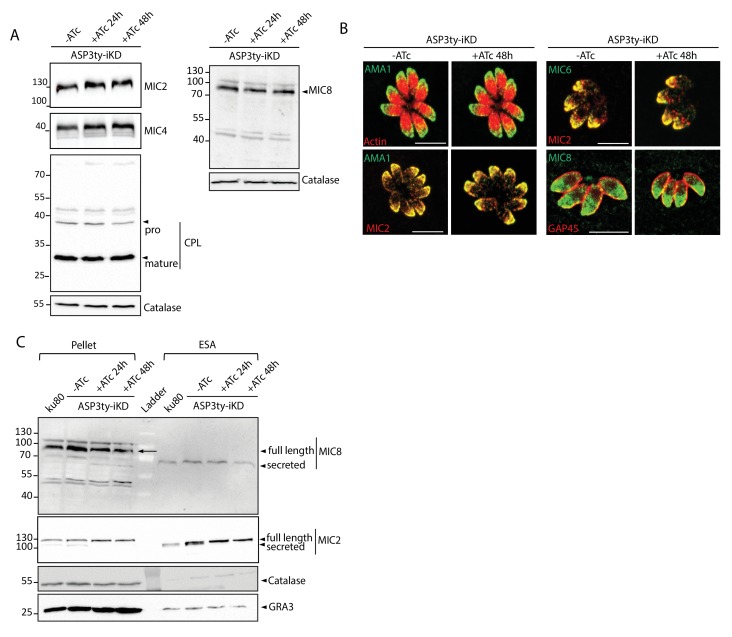
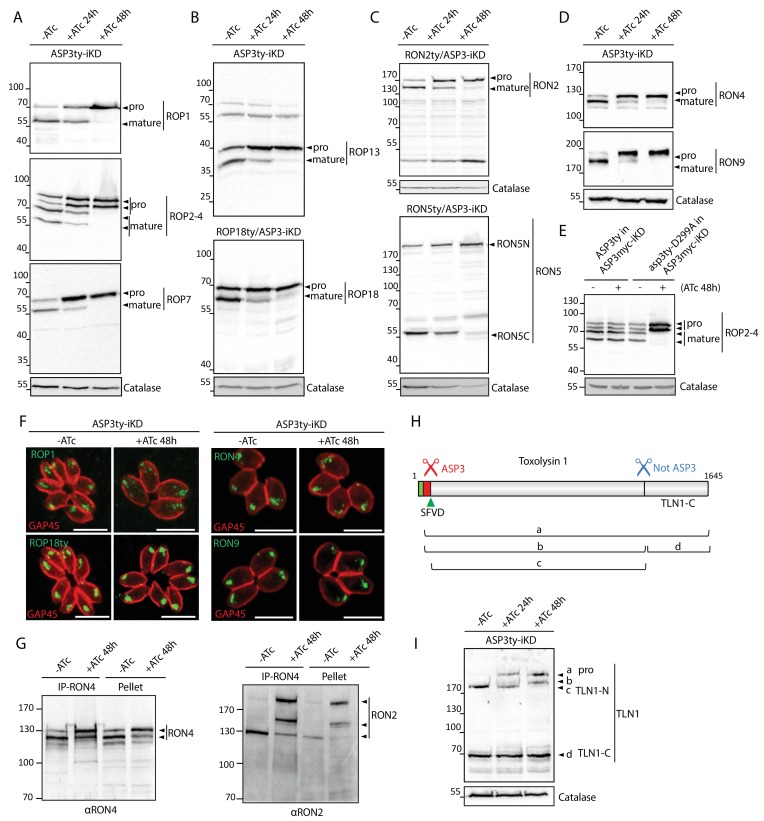
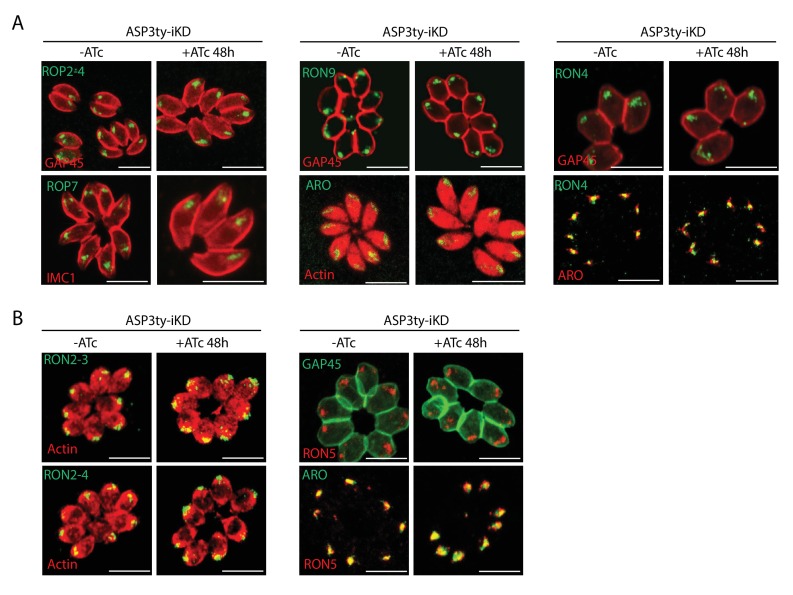
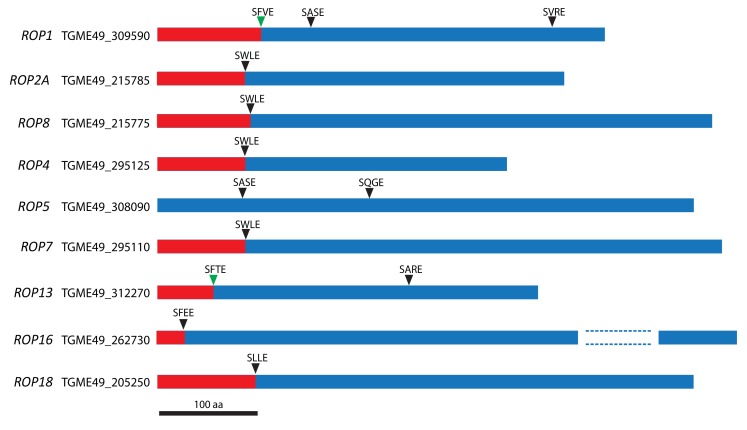
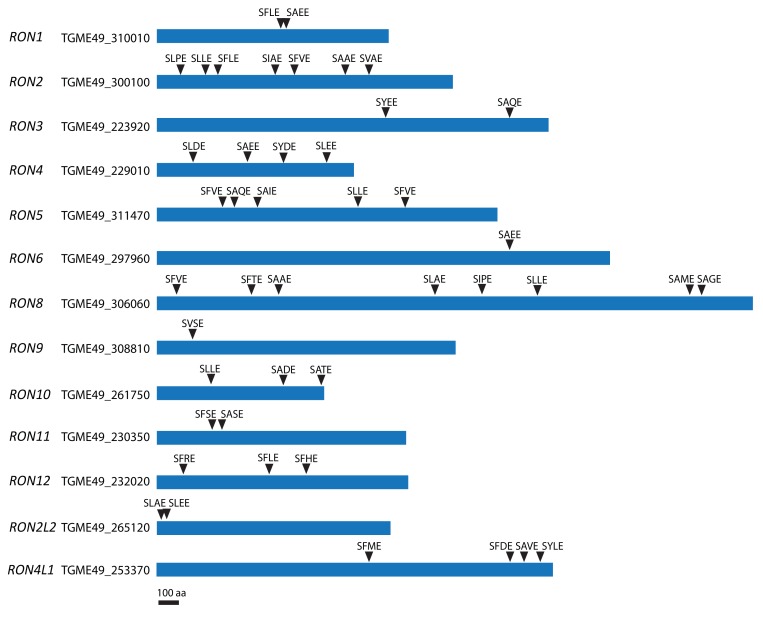
Micronemes and rhoptries are specialized secretory organelles that deploy their contents at the apical tip of apicomplexan parasites in a regulated manner. The secretory proteins participate in motility, invasion, and egress and are subjected to proteolytic maturation prior to organellar storage and discharge. Here we establish that aspartyl protease 3 (ASP3) resides in the endosomal-like compartment and is crucially associated to rhoptry discharge during invasion and to host cell plasma membrane lysis during egress. A comparison of the N-terminome, by terminal amine isotopic labelling of substrates between wild type and ASP3 depleted parasites identified microneme and rhoptry proteins as repertoire of ASP3 substrates. The role of ASP3 as a maturase for previously described and newly identified secretory proteins is confirmed and . An antimalarial compound based on a hydroxyethylamine scaffold interrupts the lytic cycle of at submicromolar concentration by targeting ASP3.
微绒毛和棒状体是一类特化的分泌细胞器,它们以调控的方式将内容物输送到顶复门寄生虫的顶端。分泌蛋白参与运动、入侵和逸出,并在细胞器储存和排出之前经历蛋白水解成熟。在这里,我们发现天冬氨酸蛋白酶 3(ASP3)存在于类内体样隔室中,在入侵过程中与棒状体的排出以及在逸出过程中与宿主细胞膜的裂解密切相关。通过比较野生型和 ASP3 耗尽型寄生虫之间的末端胺同位素标记底物的 N-端组,确定微绒毛和棒状体蛋白是 ASP3 底物的库。ASP3 作为先前描述和新鉴定的分泌蛋白的成熟酶的作用得到了确认。基于羟乙基胺支架的抗疟化合物以亚微摩尔浓度靶向 ASP3,从而中断 的裂解周期。