Ihlen Espen A F, van Schooten Kimberley S, Bruijn Sjoerd M, Pijnappels Mirjam, van Dieën Jaap H
Department of Neuromedicine and Movement Science, Norwegian University of Science and Technology (NTNU)Trondheim, Norway.
Department of Biomedical Kinesiology and Physiology, Simon Fraser UniversityBurnab, BC, Canada.
Front Physiol. 2017 Aug 29;8:516. doi: 10.3389/fphys.2017.00516. eCollection 2017.
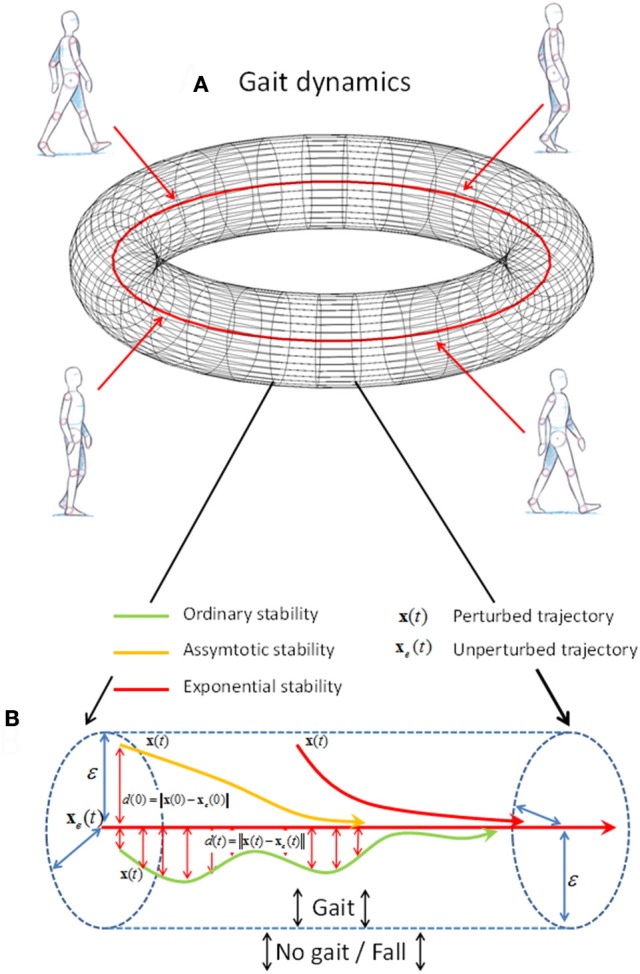
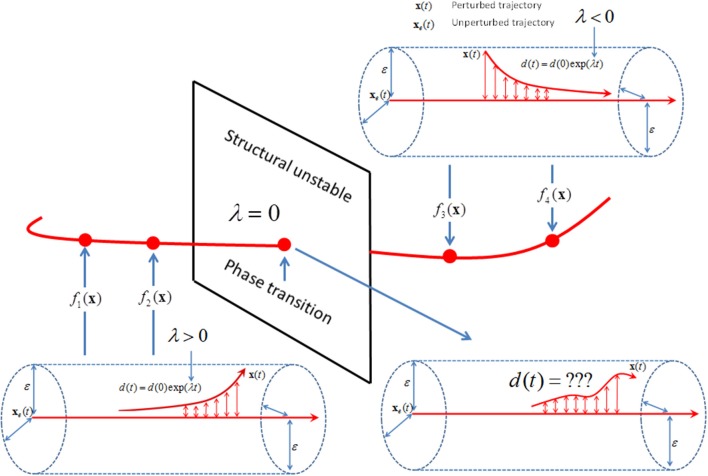
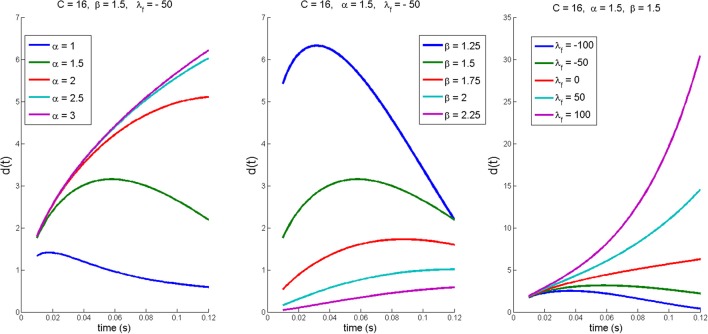
Over the last decades, various measures have been introduced to assess stability during walking. All of these measures assume that gait stability may be equated with exponential stability, where dynamic stability is quantified by a Floquet multiplier or Lyapunov exponent. These specific constructs of dynamic stability assume that the gait dynamics are time independent and without phase transitions. In this case the temporal change in distance, (), between neighboring trajectories in state space is assumed to be an exponential function of time. However, results from walking models and empirical studies show that the assumptions of exponential stability break down in the vicinity of phase transitions that are present in each step cycle. Here we apply a general non-exponential construct of gait stability, called fractional stability, which can define dynamic stability in the presence of phase transitions. Fractional stability employs the fractional indices, α and β, of differential operator which allow modeling of singularities in () that cannot be captured by exponential stability. The fractional stability provided an improved fit of () compared to exponential stability when applied to trunk accelerations during daily-life walking in community-dwelling older adults. Moreover, using multivariate empirical mode decomposition surrogates, we found that the singularities in (), which were well modeled by fractional stability, are created by phase-dependent modulation of gait. The new construct of fractional stability may represent a physiologically more valid concept of stability in vicinity of phase transitions and may thus pave the way for a more unified concept of gait stability.
在过去几十年里,人们引入了各种措施来评估行走过程中的稳定性。所有这些措施都假定步态稳定性可以等同于指数稳定性,其中动态稳定性通过弗洛凯乘数或李雅普诺夫指数来量化。这些动态稳定性的特定结构假定步态动力学与时间无关且没有相变。在这种情况下,状态空间中相邻轨迹之间距离()的时间变化被假定为时间的指数函数。然而,行走模型和实证研究的结果表明,指数稳定性的假设在每个步周期中存在的相变附近不成立。在此,我们应用一种称为分数稳定性的步态稳定性通用非指数结构,它可以在存在相变的情况下定义动态稳定性。分数稳定性采用微分算子的分数指数α和β,这允许对指数稳定性无法捕捉的()中的奇点进行建模。当应用于社区居住的老年人日常生活行走期间的躯干加速度时,与指数稳定性相比,分数稳定性对()的拟合更好。此外,使用多变量经验模态分解替代法,我们发现分数稳定性能很好建模的()中的奇点是由步态的相位依赖性调制产生的。分数稳定性这一新结构可能代表了相变附近生理上更有效的稳定性概念,因此可能为更统一的步态稳定性概念铺平道路。