Paluh Daniel J, Bauer Aaron M
Department of Biology, Villanova University, Villanova, Pennsylvania, United States of America.
PLoS One. 2017 Sep 13;12(9):e0184414. doi: 10.1371/journal.pone.0184414. eCollection 2017.
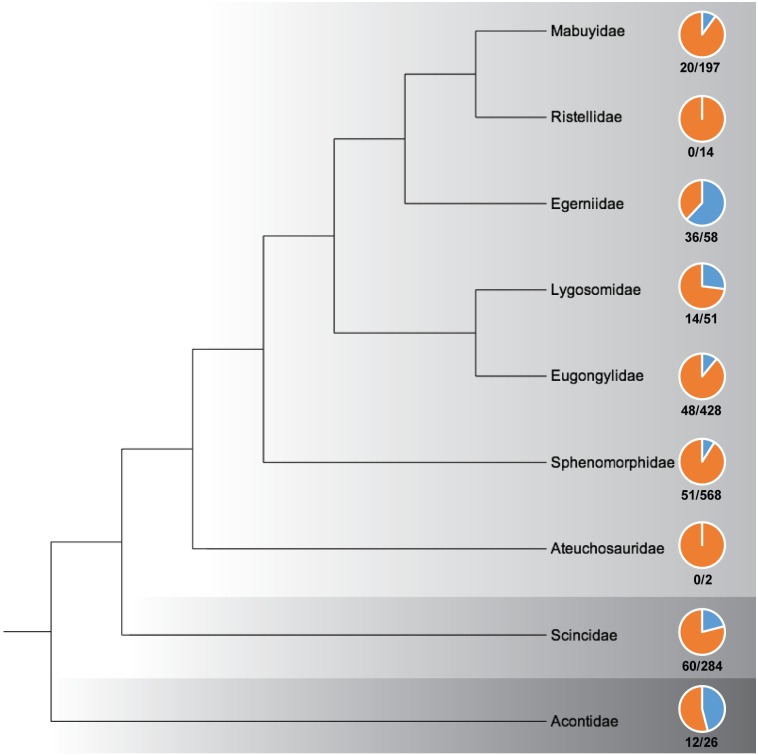
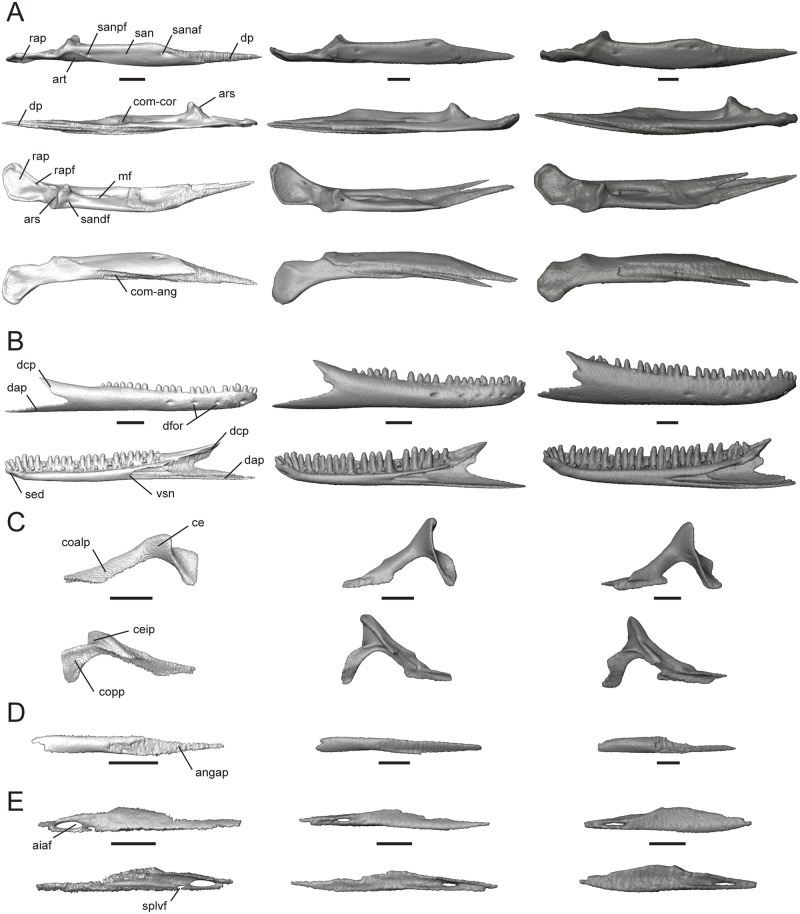
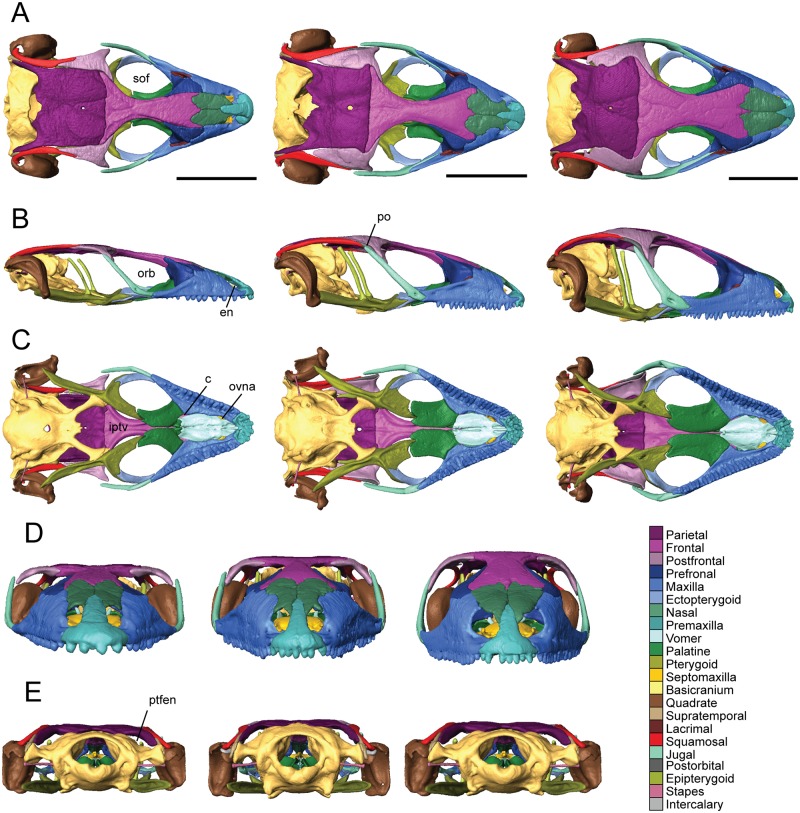
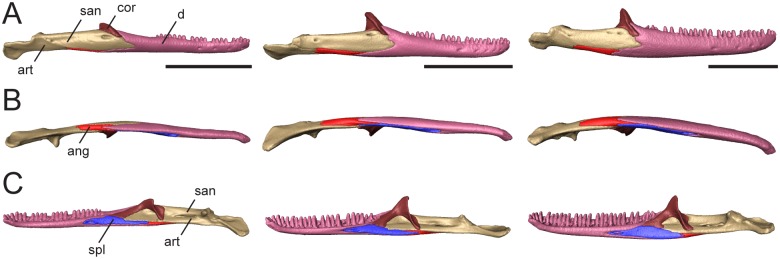
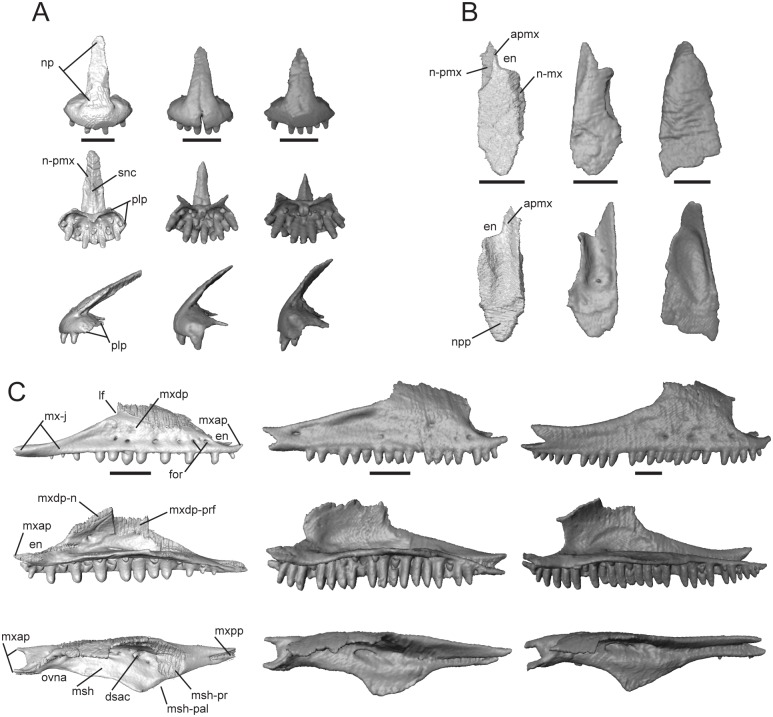
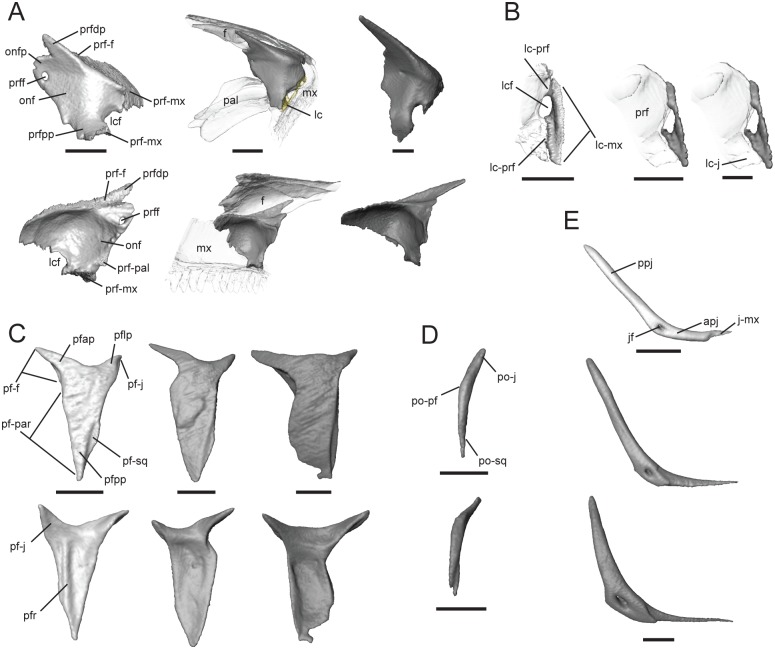
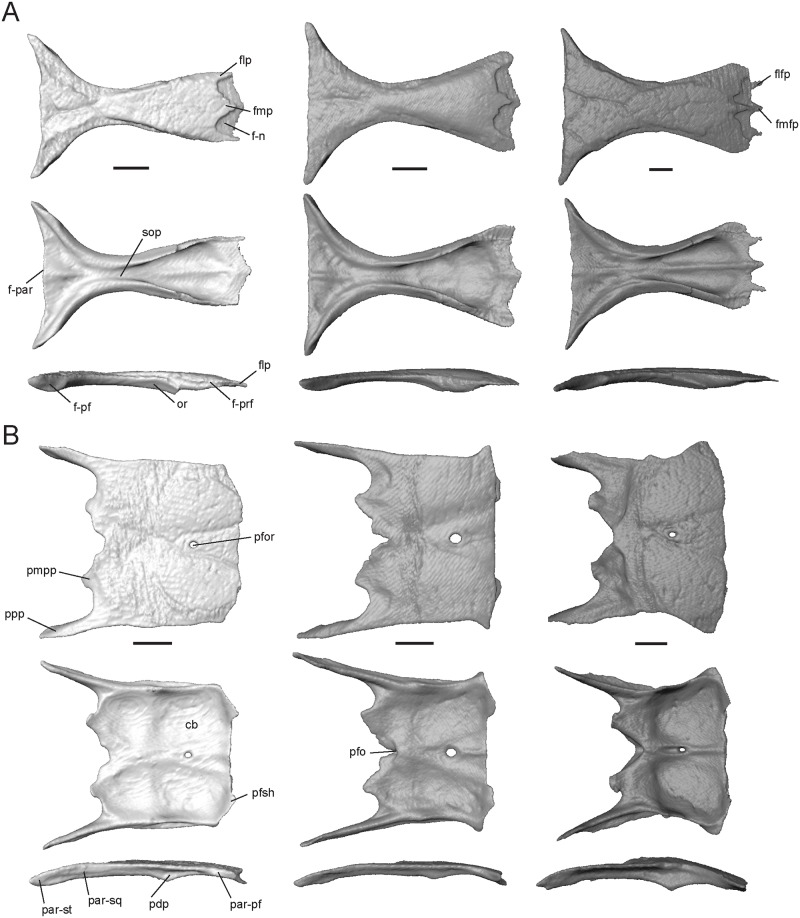
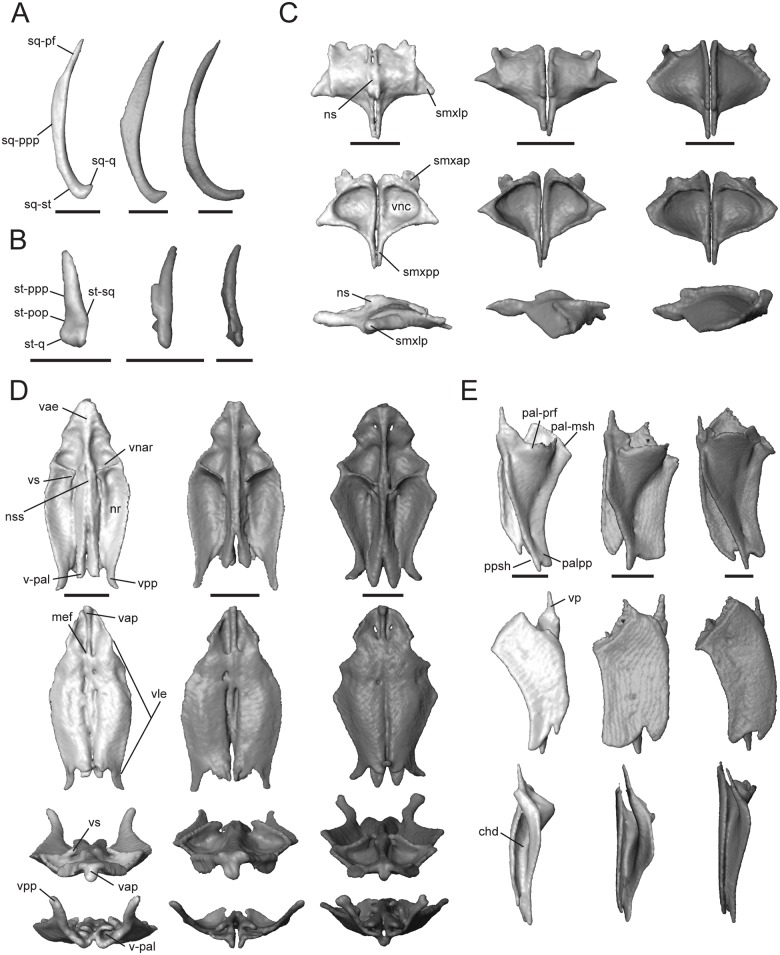
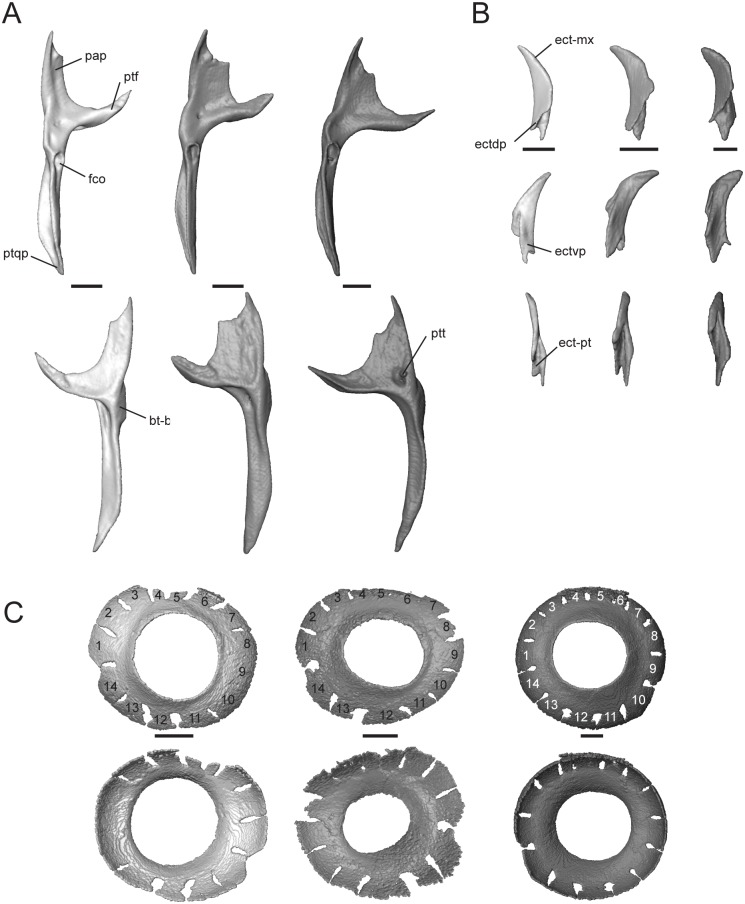
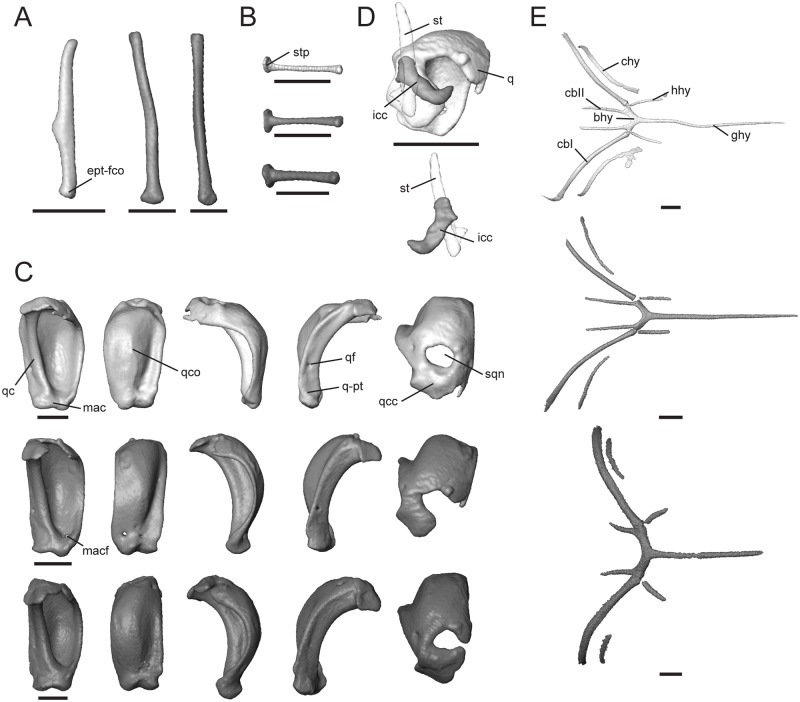
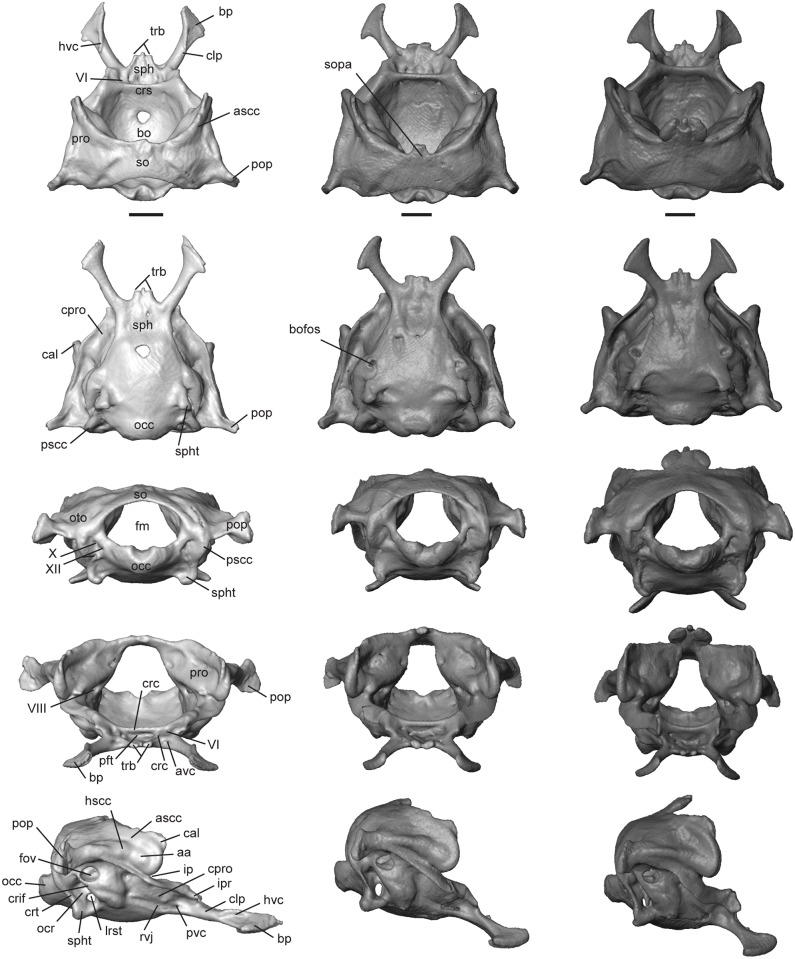
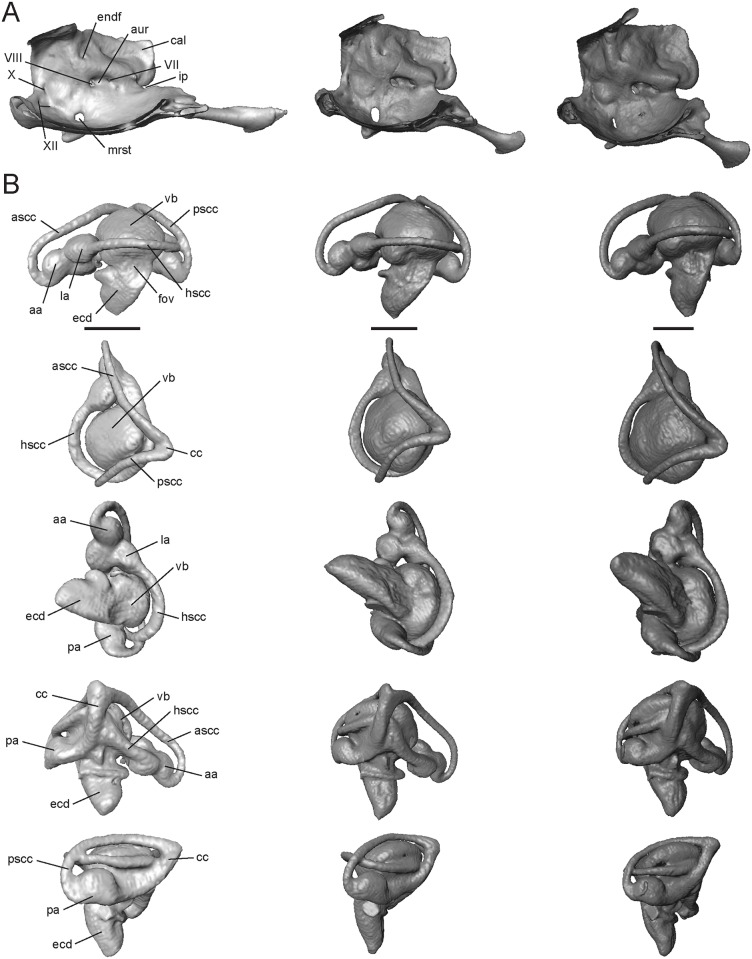
Skinks account for more than 25% of all lizard species; however, representatives of fewer than a quarter of all species have been characterized osteologically. All but a few of the available cranial descriptions concentrate solely on characters that can be seen externally on the intact skull. Mabuyid skinks of the genus Trachylepis are the dominant, fully limbed skinks in Sub-Saharan Africa, and nearly all species have the same generalized body plan. Although a few rock crevice-dwelling species possess slight body depression, extreme dorsoventral depression is observed only in Trachylepis laevis. We investigated the detailed skull anatomy of three Trachylepis skinks (T. laevis, T. sulcata, and T. gonwouoi, a recently described species allied to T. affinis) using high-resolution X-ray micro-computed tomography. Our goals were to review the scincid cranial osteology literature in a phylogenetic context, provide a detailed anatomical atlas for the mabuyid lineage, and investigate the morphological adaptations of the highly modified T. laevis. Our results demonstrate that there is significant morphological variation between these three taxa, including the loss and fusion of structures, as well as changes in the shape, scale, and relationship between individual elements. Trachylepis laevis possesses several osteological modifications that have produced a reducton in head depth that are likely functional consequences of extreme rupicolous habits, including a flat skull roof, many strongly recumbent elements, and a depressed neurocranium.We hypothesize these modifications may correspond to descreased bite force and increased capabilities of cranial kinesis. Our study is the first element-by-element description of a skink using computed tomography technology.
石龙子占所有蜥蜴物种的25%以上;然而,在所有物种中,只有不到四分之一的物种有骨骼学特征描述。除少数情况外,现有的颅骨描述都只集中在完整颅骨外部可见的特征上。Trachylepis属的马布亚石龙子是撒哈拉以南非洲占主导地位的、四肢完整的石龙子,几乎所有物种都有相同的一般身体结构。虽然一些生活在岩石裂缝中的物种身体有轻微凹陷,但只有光滑石龙子(Trachylepis laevis)观察到了极端的背腹凹陷。我们使用高分辨率X射线微计算机断层扫描技术研究了三种Trachylepis石龙子(光滑石龙子、有沟石龙子和贡武伊石龙子,贡武伊石龙子是最近描述的一个与近缘石龙子相关的物种)的详细头骨解剖结构。我们的目标是在系统发育背景下回顾石龙子颅骨骨骼学文献,为马布亚石龙子谱系提供详细的解剖图谱,并研究高度特化的光滑石龙子的形态适应。我们的结果表明,这三个分类单元之间存在显著的形态差异,包括结构的丢失和融合,以及单个元素的形状、大小和关系的变化。光滑石龙子具有几种骨骼学上的改变,这些改变导致头部深度减小,这可能是极端岩栖习性的功能后果,包括扁平的颅顶、许多强烈向后倾斜的元素和凹陷的脑颅。我们假设这些改变可能对应于咬合力的降低和颅骨运动能力的增加。我们的研究是首次使用计算机断层扫描技术对石龙子进行逐个元素的描述。