Wu Hongmei, Bi Jiong, Peng Yan, Huo Lei, Yu Xiaobin, Yang Zhihui, Zhou Yunyun, Qin Li, Xu Yixiang, Liao Lan, Xie Yang, Conneely Orla M, Jonkers Jos, Xu Jianming
Department of Molecular and Cellular Biology, Baylor College of Medicine, Houston, TX 77030, USA.
Current address: College of Life Sciences, Shaanxi Normal University, Xi'an, Shaanxi 710062, China.
Oncotarget. 2017 Apr 29;8(33):54364-54377. doi: 10.18632/oncotarget.17532. eCollection 2017 Aug 15.
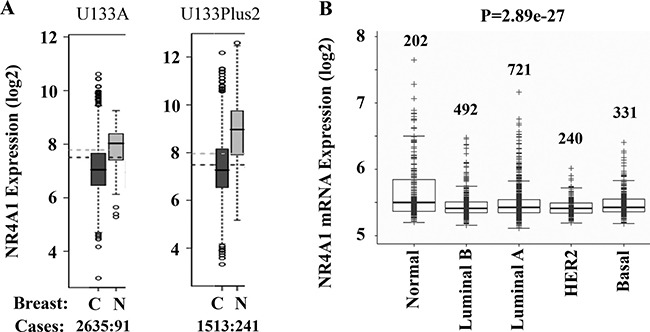
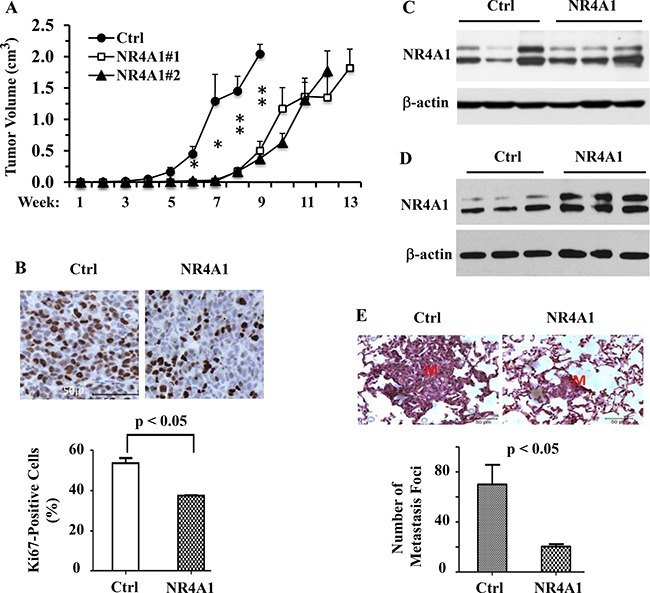
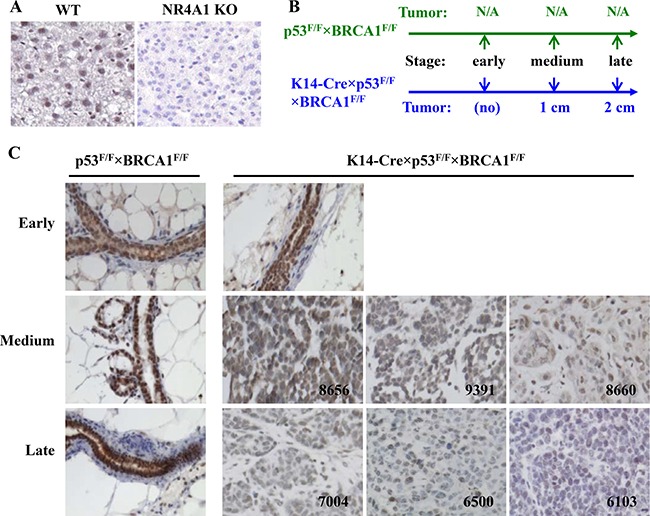
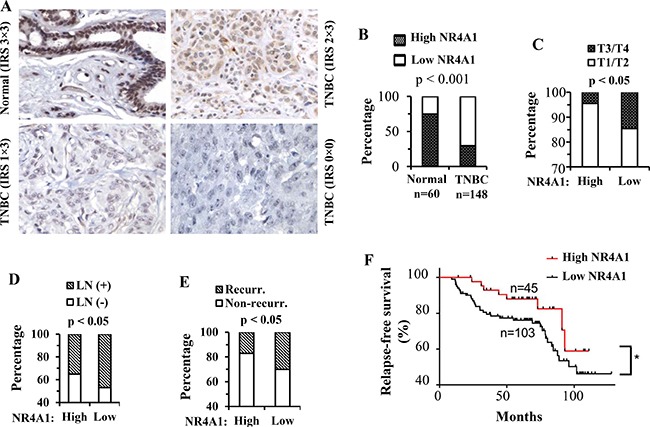
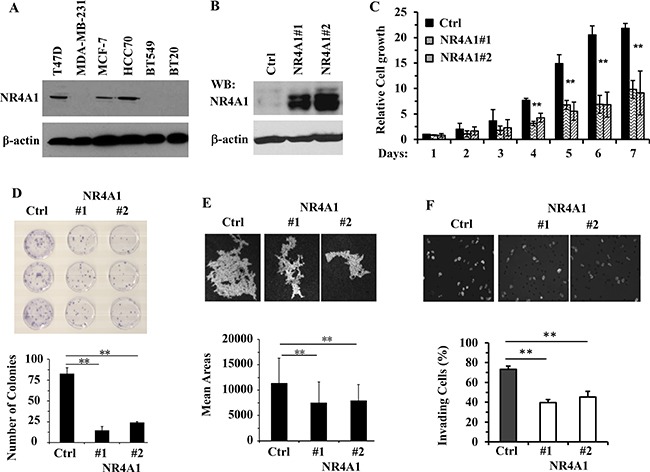
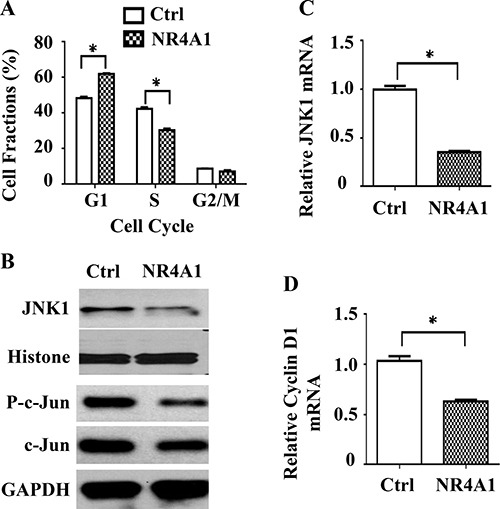
The nuclear receptor (NR) superfamily contains hormone-inducible transcription factors that regulate many physiological and pathological processes through regulating gene expression. NR4A1 is an NR family member that still does not have an identified endogenous ligand, and its role in cancer is also currently unclear and controversial. In this study, we aimed to define the expression profiles and specific role of NR4A1 in the highly malignant triple-negative breast cancer (TNBC), which still lacks available targeted therapies. Bioinformatic analysis revealed a decrease of NR4A1 mRNA expression in human TNBC samples. Semi-quantitative analysis of NR4A1 protein expression by immunohistochemistry also identified a progressive NR4A1 reduction during the development of mouse basal-like mammary tumors and a significant NR4A1 downregulation in human TNBC samples. Furthermore, the expression levels of NR4A1 in human TNBC were negatively associated with tumor stage, lymph node metastasis and disease recurrence. Moreover, ectopic expression of NR4A1 in MDA-MB-231, a TNBC cell line with little endogenous NR4A1, inhibited the proliferation, viability, migration and invasion of these cells, and these inhibitions were associated with an attenuated JNK1-AP-1-cyclin D1 pathway. NR4A1 expression also largely suppressed the growth and metastasis of these cell-derived tumors in mice. These results demonstrate that NR4A1 is downregulated in TNBC and restoration of NR4A1 expression inhibits TNBC growth and metastasis, suggesting that NR4A1 is a tumor suppressor in TNBC.
核受体(NR)超家族包含激素诱导型转录因子,这些因子通过调节基因表达来调控许多生理和病理过程。NR4A1是NR家族的一个成员,其仍然没有已确定的内源性配体,并且它在癌症中的作用目前也尚不清楚且存在争议。在本研究中,我们旨在明确NR4A1在高度恶性的三阴性乳腺癌(TNBC)中的表达谱和具体作用,三阴性乳腺癌目前仍缺乏有效的靶向治疗方法。生物信息学分析显示,人类TNBC样本中NR4A1 mRNA表达降低。通过免疫组织化学对NR4A1蛋白表达进行半定量分析,也确定了在小鼠基底样乳腺肿瘤发生过程中NR4A1逐渐减少,以及在人类TNBC样本中NR4A1显著下调。此外,人类TNBC中NR4A1的表达水平与肿瘤分期、淋巴结转移和疾病复发呈负相关。此外,在几乎没有内源性NR4A1的TNBC细胞系MDA-MB-231中异位表达NR4A1,抑制了这些细胞的增殖、活力、迁移和侵袭,并且这些抑制作用与JNK1-AP-1-细胞周期蛋白D1通路减弱有关。NR4A1表达也在很大程度上抑制了这些细胞衍生肿瘤在小鼠中的生长和转移。这些结果表明,NR4A1在TNBC中表达下调,恢复NR4A1表达可抑制TNBC的生长和转移,提示NR4A1是TNBC中的一种肿瘤抑制因子。