Aydin Suna, Kuloglu Tuncay, Aydin Suleyman, Yardim Meltem, Azboy Davut, Temizturk Zeki, Kalkan Ali Kemal, Eren Mehmet Nesimi
Department of Cardiovascular Surgery, Elazig Education and Research Hospital, Health Science University, Elazig, Turkey; Department of Anatomy, School of Medicine, Firat University, Elazig, Turkey. Email:
Department of Histology and Embryology, School of Medicine, Firat University, Elazig, Turkey.
Cardiovasc J Afr. 2017;28(6):389-396. doi: 10.5830/CVJA-2017-025. Epub 2017 Aug 31.
Insufficient oxygen supply to organs and tissues due to reduced arterial or venous blood flow results in ischaemia, during which, although ATP production stops, AMP and adenosine continue to be produced from ATP. The fate of irisin, which causes the production of heat instead of ATP during ischaemia, is unknown. Iloprost and sildenafil are two pharmaceutical agents that mediate the resumption of reperfusion (blood supply) via vasodilatation during ischaemic conditions. Our study aimed to explore the effects of iloprost and sildenafil on irisin levels in the heart, liver and kidney tissues and whether these pharmaceutical agents had any impact on serum irisin and nitric oxide levels in rats with induced experimental myocardial ischaemia.
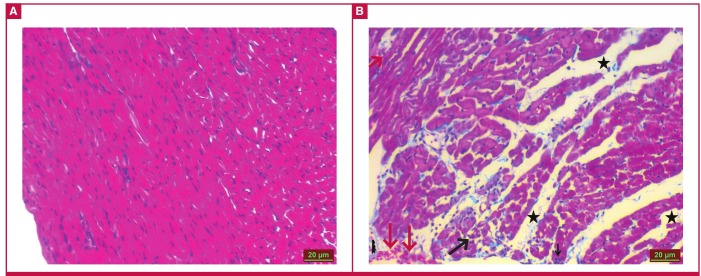
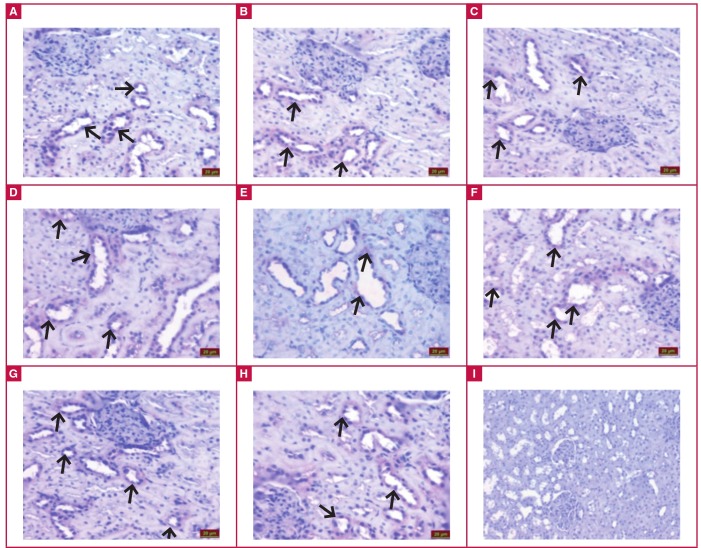
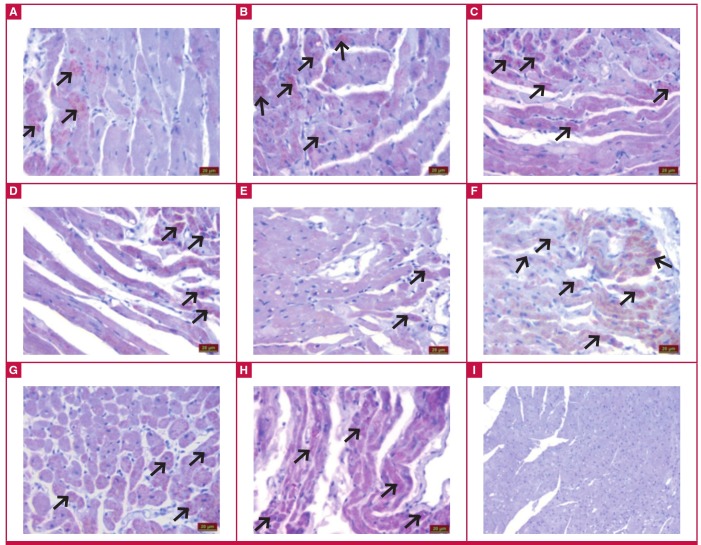
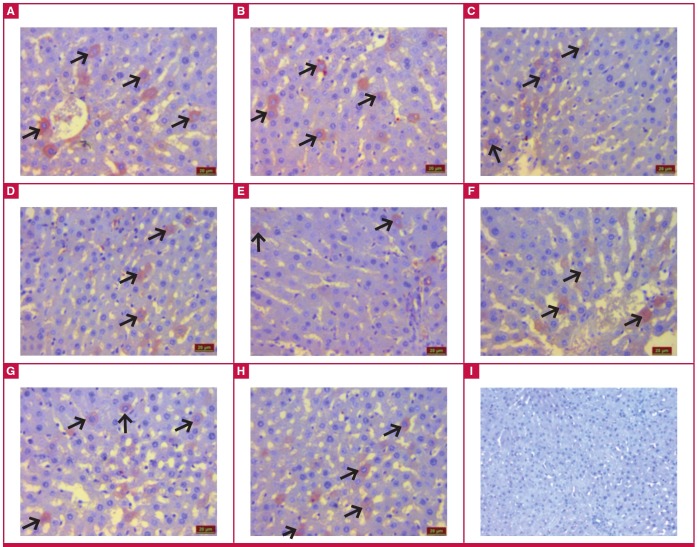
The study included adult male Sprague-Dawley rats aged 10 months and weighing between 250 and 280 g. The animals were randomly allocated to eight groups, with five rats in each group. The groups were: sham (control), iloprost (ILO), sildenafil (SIL), ILO + SIL, myocardial ischaemia (MI), MI + ILO, MI + SIL and MI + ILO + SIL. The treatment protocols were implemented before inducing ischaemia, which was done by occluding the left coronary artery with a plastic ligature for 30 minutes. Following the reperfusion procedure, all rats were sacrificed after 24 hours, and their heart, liver and kidney tissues and blood samples were collected for analyses. An immunohistochemical method was used to measure the change in irisin levels, the ELISA method to quantify blood irisin levels, and Griess' assay to determine nitric oxide (NO) levels in the serum and tissue. Myocardial ischaemia was confirmed based on the results of Masson's trichrome staining, as well as levels of troponin and creatine kinase MB.
Irisin levels in biological tissue and serum dropped statistically significantly in the ischaemic group (MI), but were restored with ILO and SIL administration. Individual SIL administration was more potently restorative than individual ILO administration or the combined administration of the two agents. NO level, on the other hand, showed the opposite tendency, reaching the highest level in the MI group, and falling with the use of pharmaceutical agents.
Individual or combined administration of ILO and SIL reduced myocardial ischaemia and NO levels, and increased irisin levels. Elevated levels of irisin obtained by drug administration could possibly contribute to accelerated wound recovery by local heat production. Sildenafil was more effective than iloprost in eliminating ischaemia and may be the first choice in offsetting the effects of ischaemia in the future.
动脉或静脉血流减少导致器官和组织氧气供应不足会引发局部缺血,在此期间,虽然三磷酸腺苷(ATP)生成停止,但一磷酸腺苷(AMP)和腺苷会继续由ATP产生。在局部缺血期间导致产热而非ATP生成的鸢尾素的去向尚不清楚。伊洛前列素和西地那非是两种药物制剂,它们在局部缺血状态下通过血管舒张介导再灌注(血液供应)的恢复。我们的研究旨在探讨伊洛前列素和西地那非对心脏、肝脏和肾脏组织中鸢尾素水平的影响,以及这些药物制剂对诱导性实验性心肌缺血大鼠血清鸢尾素和一氧化氮水平是否有任何影响。
该研究纳入了10个月大、体重在250至280克之间的成年雄性斯普拉格-道利大鼠。将动物随机分为八组,每组五只大鼠。分组如下:假手术(对照)组、伊洛前列素(ILO)组、西地那非(SIL)组、ILO + SIL组、心肌缺血(MI)组、MI + ILO组、MI + SIL组和MI + ILO + SIL组。在诱导缺血前实施治疗方案,缺血通过用塑料结扎线结扎左冠状动脉30分钟来实现。再灌注程序后,所有大鼠在24小时后处死,并收集它们的心脏、肝脏和肾脏组织以及血液样本进行分析。采用免疫组织化学方法测量鸢尾素水平的变化,采用酶联免疫吸附测定(ELISA)法量化血液中鸢尾素水平,采用格里斯(Griess)测定法测定血清和组织中的一氧化氮(NO)水平。根据Masson三色染色结果以及肌钙蛋白和肌酸激酶同工酶MB水平来确认心肌缺血。
缺血组(MI)生物组织和血清中的鸢尾素水平在统计学上显著下降,但通过给予ILO和SIL得以恢复。单独给予SIL比单独给予ILO或两种药物联合给予的恢复效果更强。另一方面,NO水平呈现相反趋势,在MI组中达到最高水平,并随着药物的使用而下降。
单独或联合给予ILO和SIL可减轻心肌缺血和降低NO水平,并提高鸢尾素水平。通过药物给药获得的升高的鸢尾素水平可能通过局部产热有助于加速伤口恢复。在消除缺血方面,西地那非比伊洛前列素更有效,可能是未来抵消缺血影响的首选药物。