Zieliński Bartosz, Plichta Anna, Misztal Krzysztof, Spurek Przemysław, Brzychczy-Włoch Monika, Ochońska Dorota
Faculty of Mathematics and Computer Science, Jagiellonian University, 6 Łojasiewicza Street, 30-348 Kraków, Poland.
Department of Computer Science, Cracow University of Technology, 24 Warszawska Street, 31-422 Kraków, Poland.
PLoS One. 2017 Sep 14;12(9):e0184554. doi: 10.1371/journal.pone.0184554. eCollection 2017.
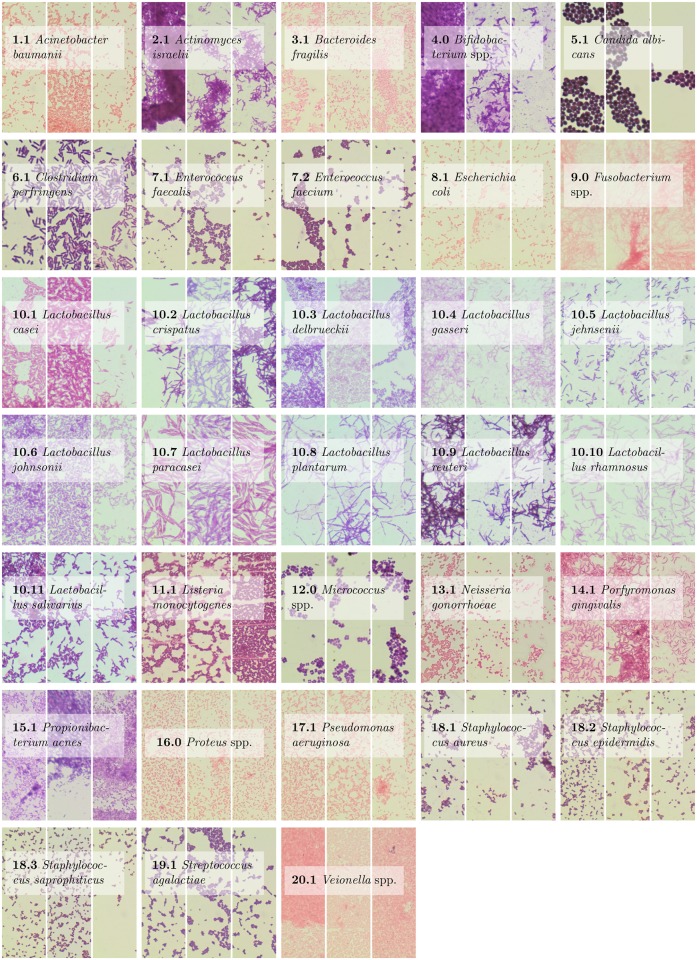
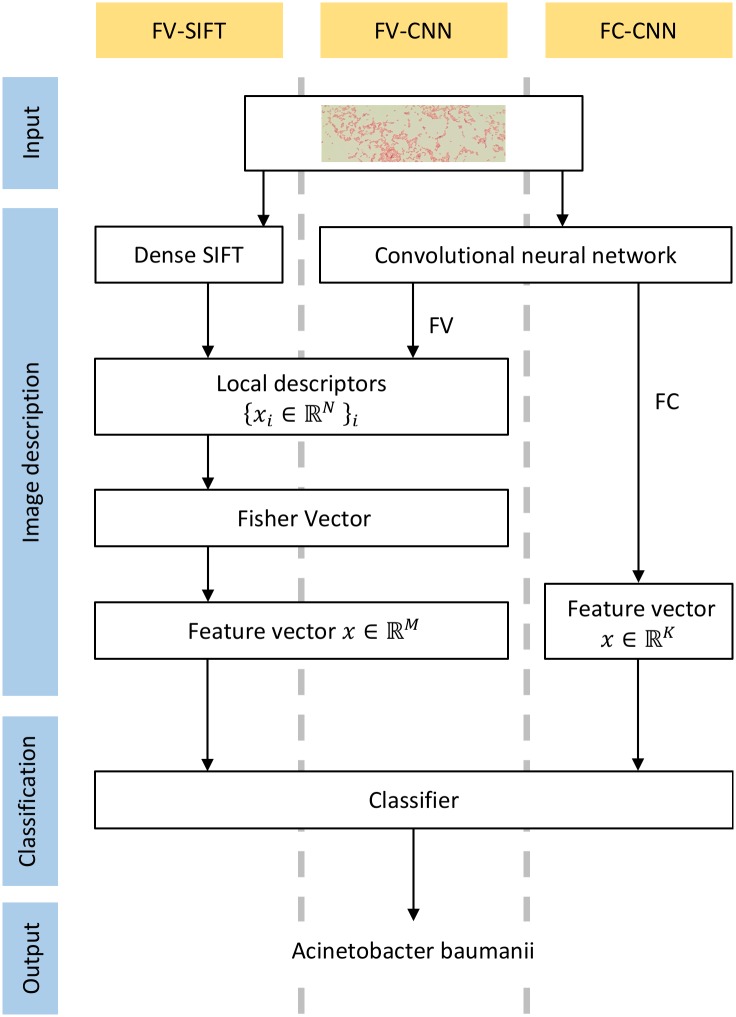
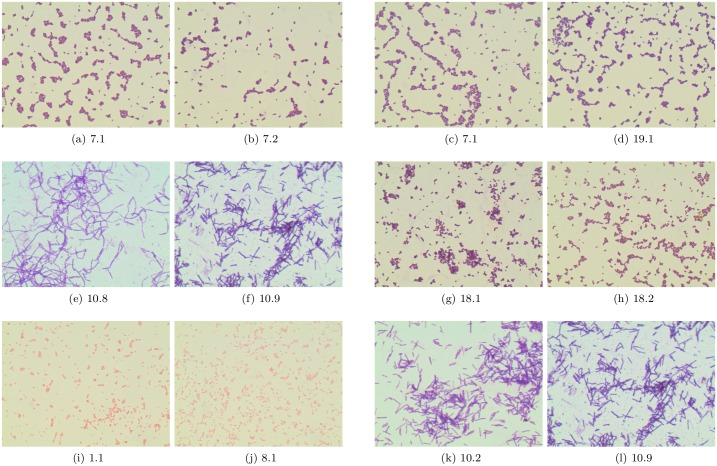
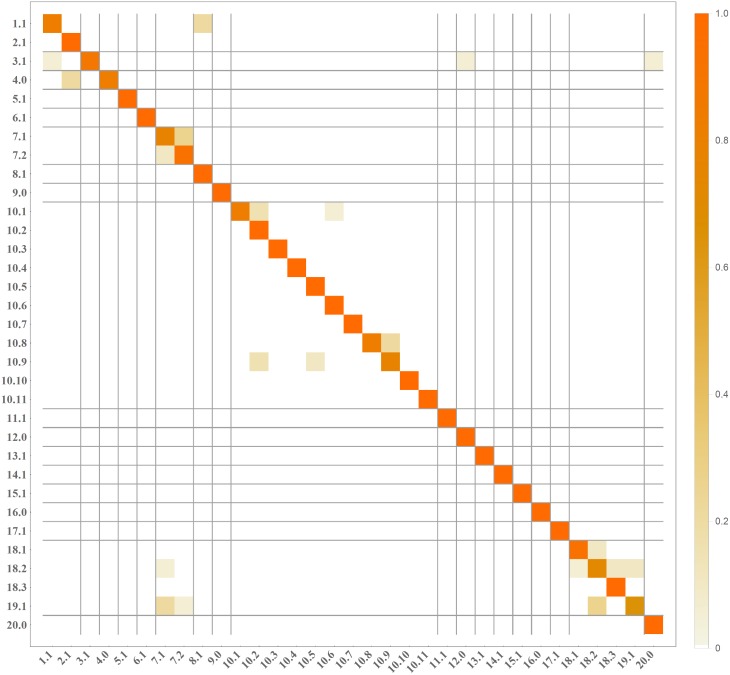
In microbiology it is diagnostically useful to recognize various genera and species of bacteria. It can be achieved using computer-aided methods, which make the recognition processes more automatic and thus significantly reduce the time necessary for the classification. Moreover, in case of diagnostic uncertainty (the misleading similarity in shape or structure of bacterial cells), such methods can minimize the risk of incorrect recognition. In this article, we apply the state of the art method for texture analysis to classify genera and species of bacteria. This method uses deep Convolutional Neural Networks to obtain image descriptors, which are then encoded and classified with Support Vector Machine or Random Forest. To evaluate this approach and to make it comparable with other approaches, we provide a new dataset of images. DIBaS dataset (Digital Image of Bacterial Species) contains 660 images with 33 different genera and species of bacteria.
在微生物学中,识别细菌的各个属和种具有诊断价值。这可以通过计算机辅助方法来实现,这些方法使识别过程更加自动化,从而显著减少分类所需的时间。此外,在诊断存在不确定性的情况下(细菌细胞形状或结构存在误导性的相似性),此类方法可以将错误识别的风险降至最低。在本文中,我们应用最先进的纹理分析方法对细菌的属和种进行分类。该方法使用深度卷积神经网络来获取图像描述符,然后使用支持向量机或随机森林对其进行编码和分类。为了评估这种方法并使其能够与其他方法进行比较,我们提供了一个新的图像数据集。DIBaS数据集(细菌物种数字图像)包含660张图像,涵盖33种不同属和种的细菌。