EuroMov Laboratory, University of Montpellier, 700 Av. du Pic Saint Loup, 34090, Montpellier, France.
NaturalPad, SAS, 700 Av. du Pic Saint Loup, 34090, Montpellier, France.
Sci Rep. 2017 Sep 14;7(1):11550. doi: 10.1038/s41598-017-11295-w.
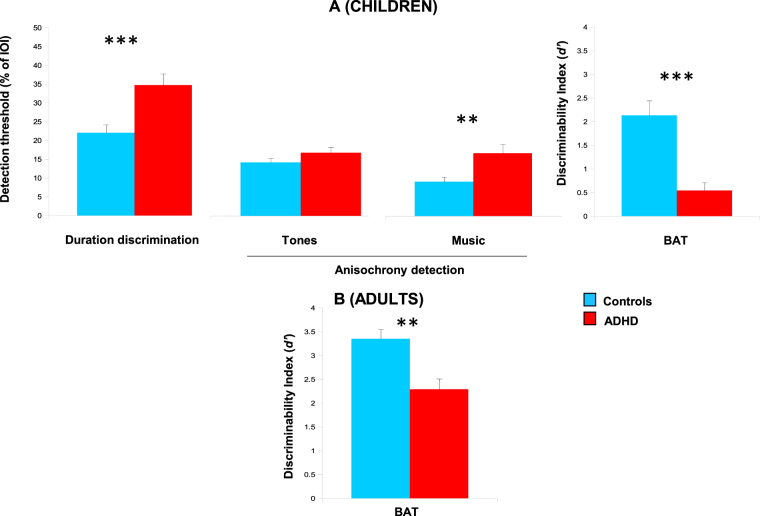
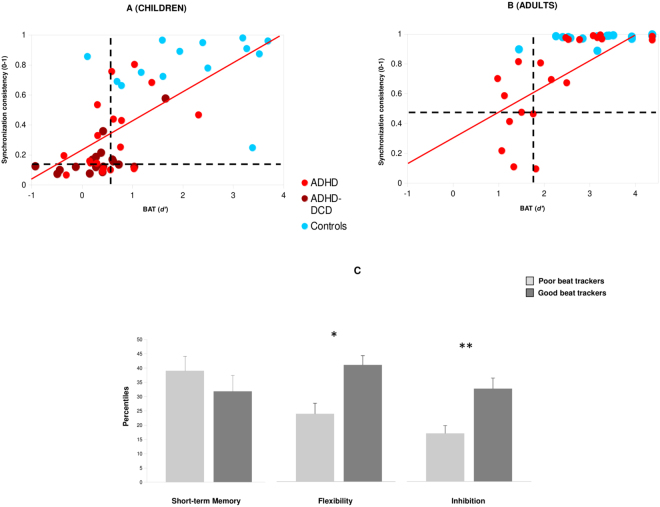
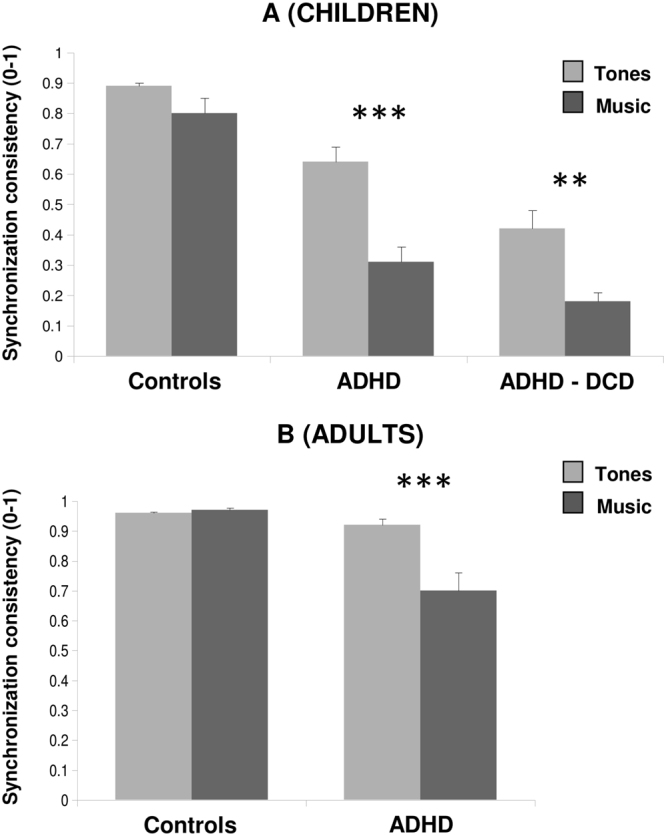
Children and adults with Attention-Deficit Hyperactivity Disorder (ADHD) fail in simple tasks like telling whether two sounds have different durations, or in reproducing single durations. The deficit is linked to poor reading, attention, and language skills. Here we demonstrate that these timing distortions emerge also when tracking the beat of rhythmic sounds in perceptual and sensorimotor tasks. This contrasts with the common observation that durations are better perceived and produced when embedded in rhythmic stimuli. Children and adults with ADHD struggled when moving to the beat of rhythmic sounds, and when detecting deviations from the beat. Our findings point to failure in generating an internal beat in ADHD while listening to rhythmic sounds, a function typically associated with the basal ganglia. Rhythm-based interventions aimed at reinstating or compensating this malfunctioning circuitry may be particularly valuable in ADHD, as already shown for other neurodevelopmental disorders, such as dyslexia and Specific Language Impairment.
患有注意缺陷多动障碍(ADHD)的儿童和成人在简单任务上失败,例如判断两个声音的持续时间是否不同,或者复制单个持续时间。这种缺陷与阅读、注意力和语言技能差有关。在这里,我们证明这些时间扭曲也出现在感知和运动任务中跟踪节奏声音的节拍时。这与常见的观察结果形成对比,即在节奏刺激中嵌入时,持续时间更易被感知和产生。患有 ADHD 的儿童和成人在跟随节奏声音的节拍时以及在检测节拍偏差时会感到困难。我们的发现表明,在听节奏声音时,ADHD 患者无法产生内部节拍,而这种功能通常与基底神经节有关。基于节奏的干预措施旨在恢复或补偿这种功能障碍的电路可能对 ADHD 特别有价值,正如已经在其他神经发育障碍(如阅读障碍和特定语言障碍)中所显示的那样。