Biotteau Maëlle, Chaix Yves, Blais Mélody, Tallet Jessica, Péran Patrice, Albaret Jean-Michel
URI Octogone-Lordat (EA 4156), Université Toulouse II Jean Jaurès , Toulouse , France.
Toulouse NeuroImaging Center, INSERM, University of Toulouse Paul Sabatier, Toulouse, France; Children's Hospital, Toulouse-Purpan University Hospital, Toulouse, France.
Front Neurol. 2016 Dec 16;7:227. doi: 10.3389/fneur.2016.00227. eCollection 2016.
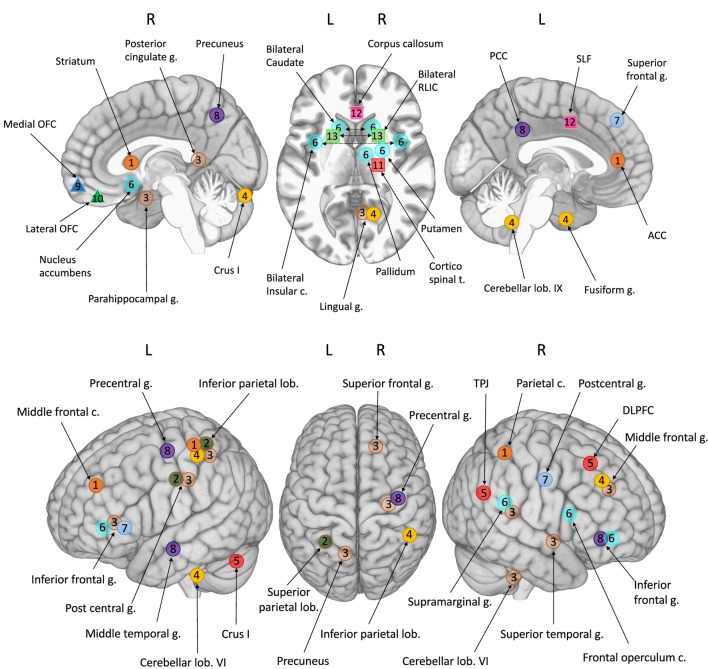
The most common neurodevelopmental disorders (e.g., developmental dyslexia (DD), autism, attention-deficit hyperactivity disorder (ADHD)) have been the subject of numerous neuroimaging studies, leading to certain brain regions being identified as neural correlates of these conditions, referring to a neural signature of disorders. Developmental coordination disorder (DCD), however, remains one of the least understood and studied neurodevelopmental disorders. Given the acknowledged link between motor difficulties and brain features, it is surprising that so few research studies have systematically explored the brains of children with DCD. The aim of the present review was to ascertain whether it is currently possible to identify a neural signature for DCD, based on the 14 magnetic resonance imaging neuroimaging studies that have been conducted in DCD to date. Our results indicate that several brain areas are unquestionably linked to DCD: cerebellum, basal ganglia, parietal lobe, and parts of the frontal lobe (medial orbitofrontal cortex and dorsolateral prefrontal cortex). However, research has been too sparse and studies have suffered from several limitations that constitute a serious obstacle to address the question of a well-established neural signature for DCD.
最常见的神经发育障碍(如发育性阅读障碍(DD)、自闭症、注意力缺陷多动障碍(ADHD))一直是众多神经影像学研究的主题,导致某些脑区被确定为这些病症的神经关联物,即指病症的神经特征。然而,发育性协调障碍(DCD)仍然是最不为人理解和研究最少的神经发育障碍之一。鉴于运动困难与脑特征之间已得到认可的联系,令人惊讶的是,很少有研究系统地探究患有DCD的儿童的大脑。本综述的目的是根据迄今为止在DCD患者中进行的14项磁共振成像神经影像学研究,确定目前是否有可能识别出DCD的神经特征。我们的结果表明,几个脑区无疑与DCD有关:小脑、基底神经节、顶叶以及额叶的部分区域(内侧眶额皮质和背外侧前额叶皮质)。然而,研究过于稀少,且各项研究存在若干局限性,这严重阻碍了探讨DCD是否存在确切神经特征这一问题。