Humanitas University Department of Biomedical Sciences - Humanitas Clinical and Research Center, Milan, Italy.
NABI Laboratory, Rizzoli Orthopaedic Institute, Via Di Barbiano 1/10, 40136, Bologna, Italy.
Knee Surg Sports Traumatol Arthrosc. 2018 Sep;26(9):2704-2715. doi: 10.1007/s00167-017-4707-3. Epub 2017 Sep 14.
The increasing awareness on the role of subchondral bone in the etiopathology of articular surface lesions led to the development of osteochondral scaffolds. While safety and promising results have been suggested, there are no trials proving the real potential of the osteochondral regenerative approach. Aim was to assess the benefit provided by a nanostructured collagen-hydroxyapatite (coll-HA) multilayer scaffold for the treatment of chondral and osteochondral knee lesions.
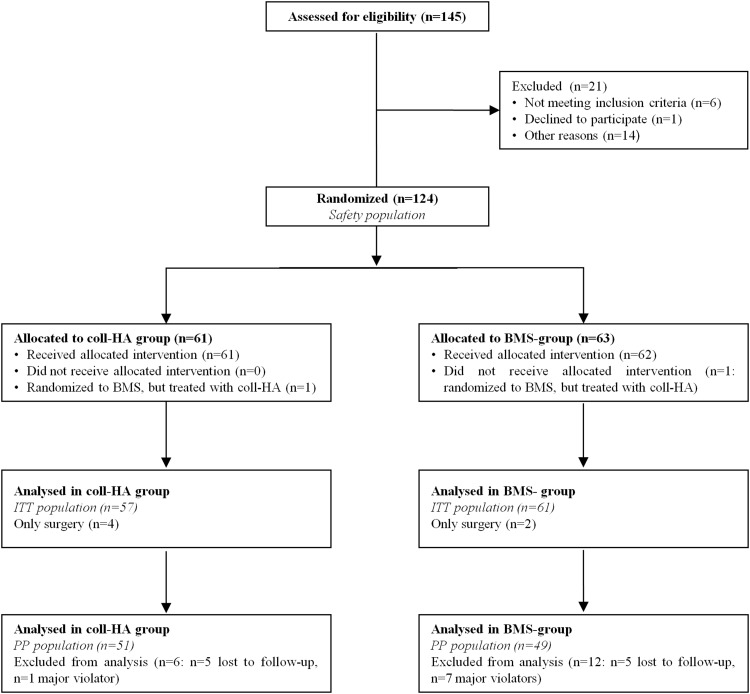
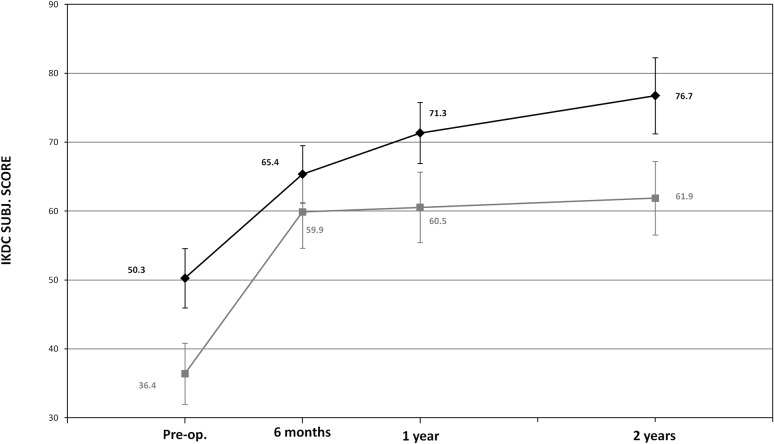
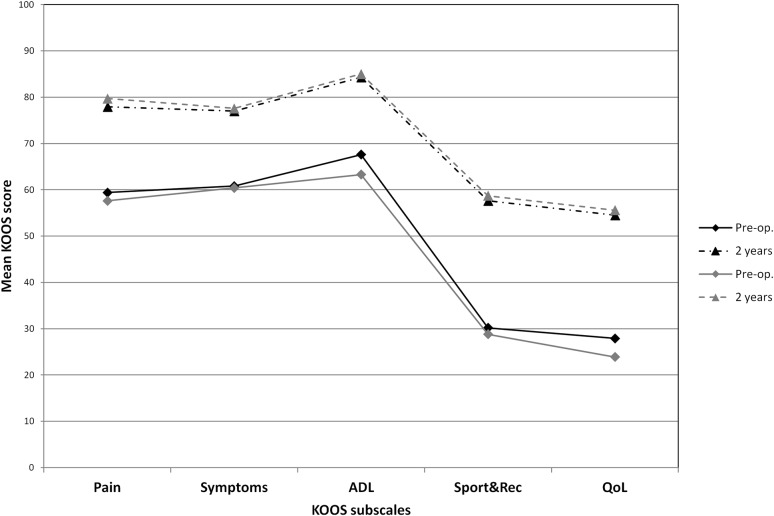
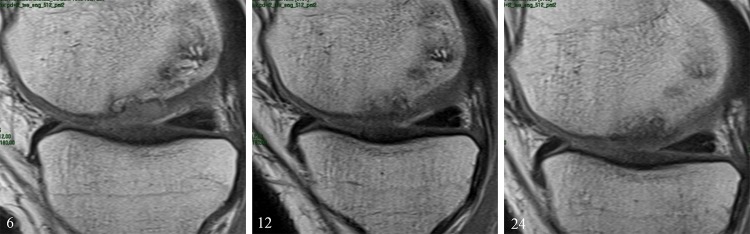
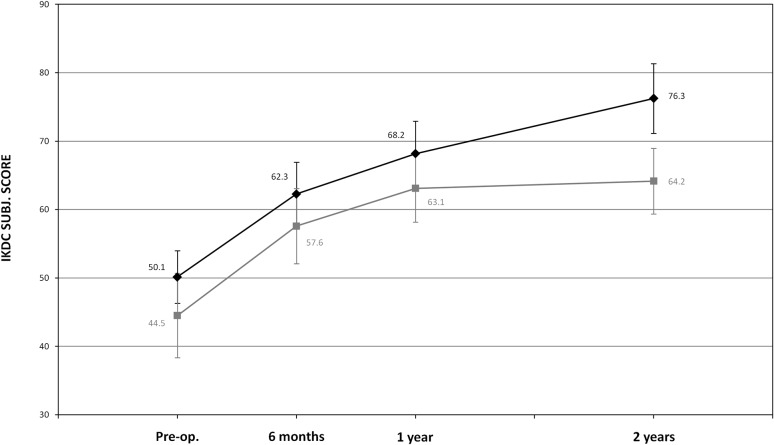
In this multicentre randomized controlled clinical trial, 100 patients affected by symptomatic chondral and osteochondral lesions were treated and evaluated for up to 2 years (51 study group and 49 control group). A biomimetic coll-HA scaffold was studied, and bone marrow stimulation (BMS) was used as reference intervention. Primary efficacy measurement was IKDC subjective score at 2 years. Secondary efficacy measurements were: KOOS, IKDC Knee Examination Form, Tegner and VAS Pain scores evaluated at 6, 12 and 24 months. Tissue regeneration was evaluated with MRI MOCART scoring system at 6, 12 and 24 months. An external independent agency was involved to ensure data correctness and objectiveness.
A statistically significant improvement of all clinical scores was obtained from basal evaluation to 2-year follow-up in both groups, although no overall statistically significant differences were detected between the two treatments. Conversely, the subgroup of patients affected by deep osteochondral lesions (i.e. Outerbridge grade IV and OCD) showed a statistically significant better IKDC subjective outcome (+12.4 points, p = 0.036) in the coll-HA group. Statistically significant better results were also found for another challenging group: sport active patients (+16.0, p = 0.027). Severe adverse events related to treatment were documented only in three patients in the coll-HA group and in one in the BMS group. The MOCART score showed no statistical difference between the two groups.
This study highlighted the safety and potential of a biomimetic implant. While no statistically significant differences were found compared to BMS for chondral lesions, this procedure can be considered a suitable option for the treatment of osteochondral lesions.
I.
对关节表面病变中小梁骨作用的认识不断提高,促使人们开发出了骨软骨支架。虽然已经证实其安全性和良好的效果,但目前还没有临床试验能证明骨软骨再生方法的真正潜力。本研究旨在评估纳米结构胶原-羟磷灰石(coll-HA)多层支架治疗软骨和骨软骨膝关节病变的效果。
这是一项多中心随机对照临床试验,共纳入 100 例有症状的软骨和骨软骨病变患者,治疗后随访 2 年(实验组 51 例,对照组 49 例)。研究采用仿生 coll-HA 支架,骨髓刺激(BMS)作为参考干预。主要疗效测量指标为 2 年时的 IKDC 主观评分。次要疗效测量指标包括:6、12 和 24 个月时的 KOOS、IKDC 膝关节检查表、Tegner 和 VAS 疼痛评分。6、12 和 24 个月时采用 MRI MOCART 评分系统评估组织再生情况。外部独立机构参与以确保数据的正确性和客观性。
两组患者在基础评估至 2 年随访期间,所有临床评分均有显著改善,但两种治疗方法之间未发现总体统计学差异。然而,在外源性骨软骨病变(即 Outerbridge 分级 IV 和 OCD)亚组中,实验组的 IKDC 主观评分有显著改善(+12.4 分,p=0.036)。在另一具有挑战性的运动活跃患者亚组中,实验组也取得了更好的结果(+16.0,p=0.027)。实验组仅 3 例和对照组 1 例患者发生与治疗相关的严重不良事件。两组之间的 MOCART 评分无统计学差异。
本研究强调了仿生植入物的安全性和潜力。虽然与 BMS 相比,实验组在软骨病变方面未显示出统计学差异,但该方法可被视为治疗骨软骨病变的一种合适选择。
I。