a Department of Physical and Rehabilitation Medicine.
b Department of Orthopedics and Traumatology , Turku University Hospital and University of Turku , Turku , Finland.
Acta Orthop. 2018 Feb;89(1):66-70. doi: 10.1080/17453674.2017.1377017. Epub 2017 Sep 15.
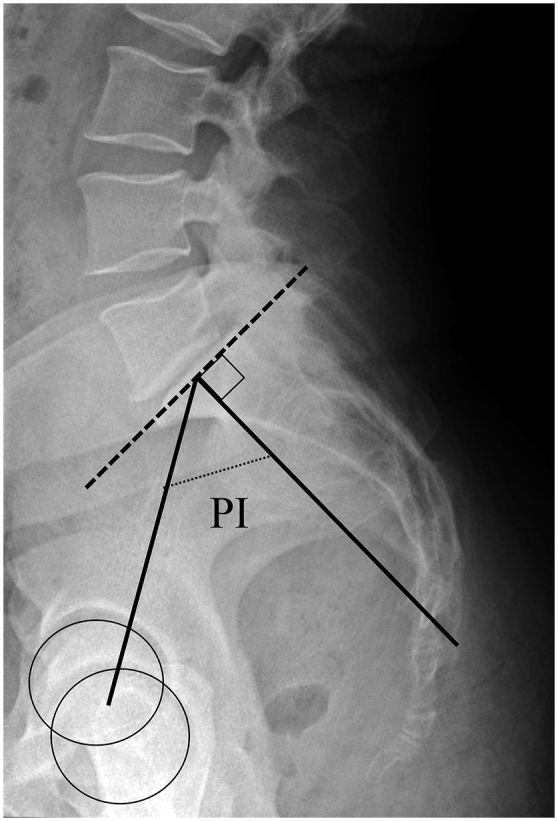
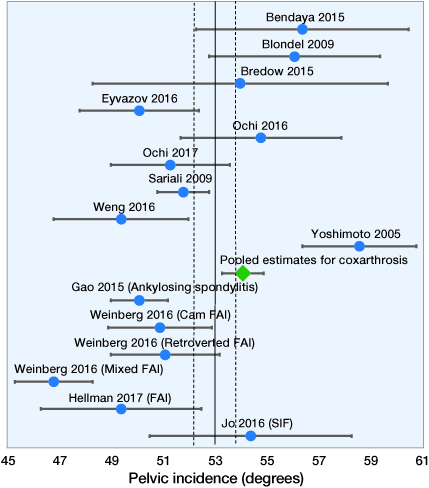
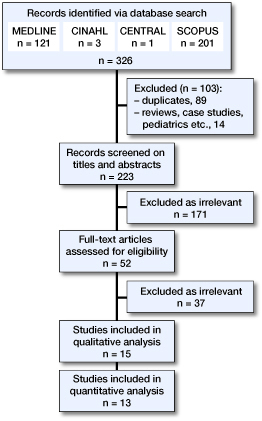
Background and purpose - The role of pelvic incidence in hip disorders is unclear. Therefore, we undertook a literature review to evaluate the evidence on that role. Methods - A search was carried out on MEDLINE, SCOPUS, CENTRAL, and CINAHL databases. Quantitative analysis was based on comparison with a reference population of asymptomatic subjects. Results - The search resulted in 326 records: 15 studies were analyzed qualitatively and 13 quantitatively. The estimates of pelvic incidence varied more than 10 degrees from 47 (SD 3.7) to 59 (SD 14). 2 studies concluded that higher pelvic incidence might contribute to the development of coxarthrosis while 1 study reported the opposite findings. In 2 studies, lower pelvic incidence was associated with a mixed type of femoroacetabular impingement. We formed a reference population from asymptomatic groups used or cited in the selected studies. The reference comprised 777 persons with pooled average pelvic incidence of 53 (SD 10) degrees. The estimate showed a relatively narrow 95% CI of 52 to 54 degrees. The 95% CIs of only 4 studies did not overlap the CIs of reference: 2 studies on coxarthrosis, 1 on mixed femoroacetabular impingement, and 1 on ankylosing spondylitis Interpretation - We found no strong evidence that pelvic incidence plays any substantial role in hip disorders. Lower pelvic incidence may be associated with the mixed type of femoroacetabular impingement and hip problems amongst patients with ankylosing spondylitis. The evidence on association between pelvic incidence and coxarthrosis remained inconclusive.
背景与目的-骨盆入射角在髋关节疾病中的作用尚不清楚。因此,我们进行了文献回顾,以评估其作用的证据。
方法-在 MEDLINE、SCOPUS、CENTRAL 和 CINAHL 数据库中进行了检索。定量分析基于与无症状受试者参考人群的比较。
结果-搜索结果产生了 326 条记录:15 项研究进行了定性分析,13 项进行了定量分析。骨盆入射角的估计值从 47(SD 3.7)到 59(SD 14)相差超过 10 度。2 项研究得出结论,较高的骨盆入射角可能导致髋关节炎的发展,而 1 项研究则报告了相反的发现。在 2 项研究中,较低的骨盆入射角与混合型股骨髋臼撞击症有关。我们从选定研究中使用或引用的无症状组中形成了一个参考人群。参考人群包括 777 人,平均骨盆入射角为 53(SD 10)度。该估计值显示相对较窄的 95%CI 为 52 至 54 度。只有 4 项研究的 95%CI 与参考人群的 CI 不重叠:2 项研究关于髋关节炎,1 项研究关于混合性股骨髋臼撞击症,1 项研究关于强直性脊柱炎。
解释-我们没有发现强有力的证据表明骨盆入射角在髋关节疾病中起任何实质性作用。较低的骨盆入射角可能与混合型股骨髋臼撞击症以及强直性脊柱炎患者的髋关节问题有关。骨盆入射角与髋关节炎之间的关联证据仍不确定。