Yu Hong, Gao Feng, Jiang Liren, Ma Shuoxin
Department of Pathology Center, Shanghai General Hospital, Shanghai Jiao Tong University School of Medicine (originally named "Shanghai First People's Hospital"), Shanghai, China.
TerryDr Info Technology Co., Ltd, Nanjing, Jiangsu, China.
JMIR Mhealth Uhealth. 2017 Sep 15;5(9):e132. doi: 10.2196/mhealth.8242.
The aim was to develop scalable Whole Slide Imaging (sWSI), a WSI system based on mainstream smartphones coupled with regular optical microscopes. This ultra-low-cost solution should offer diagnostic-ready imaging quality on par with standalone scanners, supporting both oil and dry objective lenses of different magnifications, and reasonably high throughput. These performance metrics should be evaluated by expert pathologists and match those of high-end scanners.
The aim was to develop scalable Whole Slide Imaging (sWSI), a whole slide imaging system based on smartphones coupled with optical microscopes. This ultra-low-cost solution should offer diagnostic-ready imaging quality on par with standalone scanners, supporting both oil and dry object lens of different magnification. All performance metrics should be evaluated by expert pathologists and match those of high-end scanners.
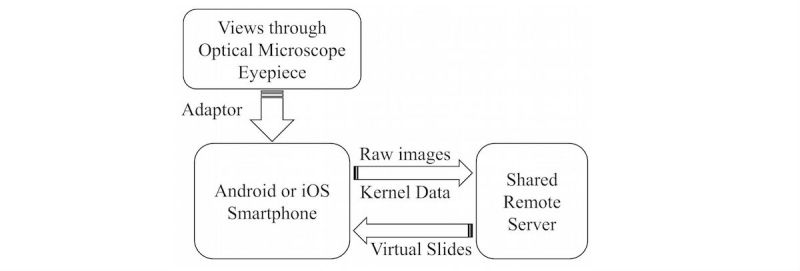
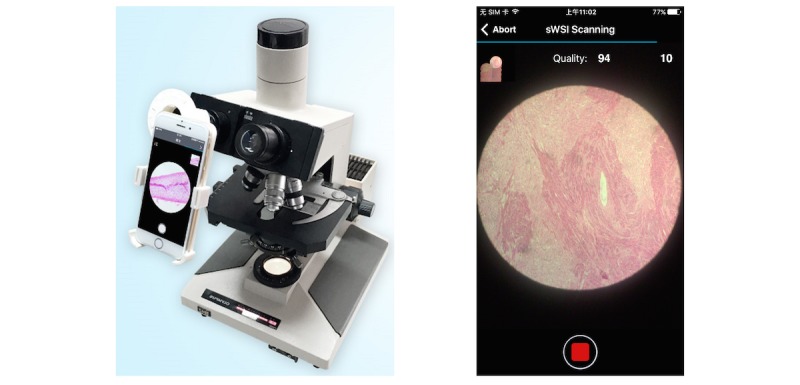
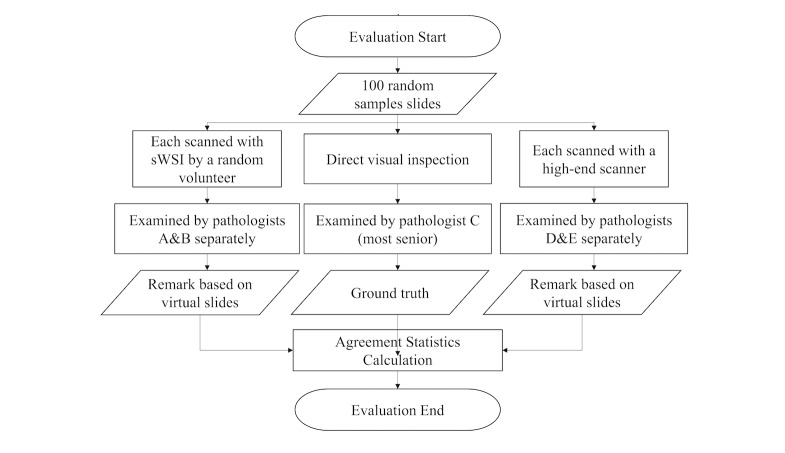
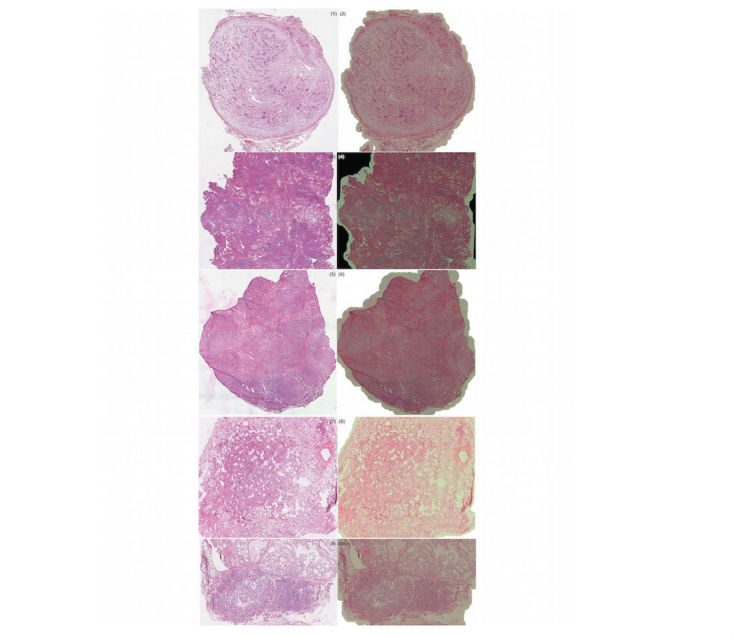
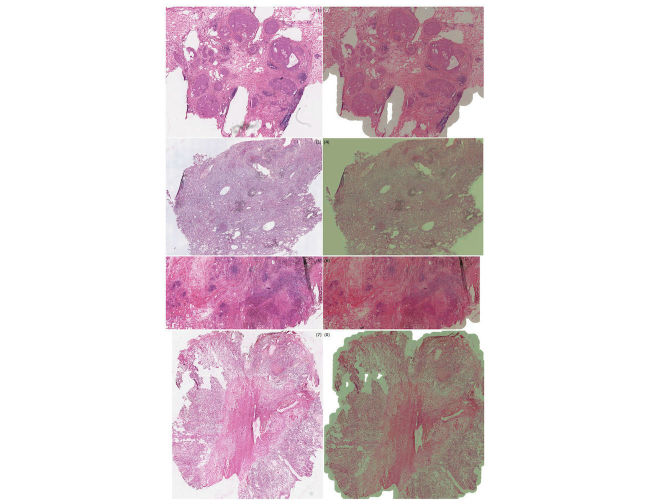
In the sWSI design, the digitization process is split asynchronously between light-weight clients on smartphones and powerful cloud servers. The client apps automatically capture FoVs at up to 12-megapixel resolution and process them in real-time to track the operation of users, then give instant feedback of guidance. The servers first restitch each pair of FoVs, then automatically correct the unknown nonlinear distortion introduced by the lens of the smartphone on the fly, based on pair-wise stitching, before finally combining all FoVs into one gigapixel VS for each scan. These VSs can be viewed using Internet browsers anywhere. In the evaluation experiment, 100 frozen section slides from patients randomly selected among in-patients of the participating hospital were scanned by both a high-end Leica scanner and sWSI. All VSs were examined by senior pathologists whose diagnoses were compared against those made using optical microscopy as ground truth to evaluate the image quality.
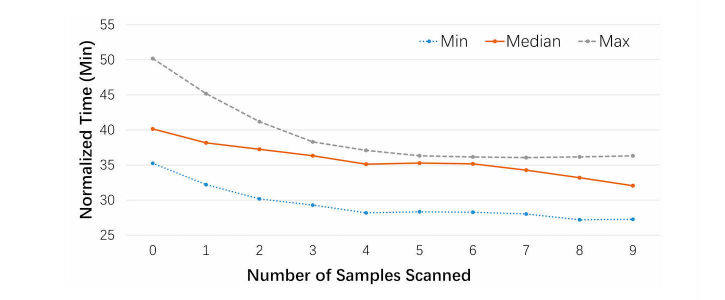
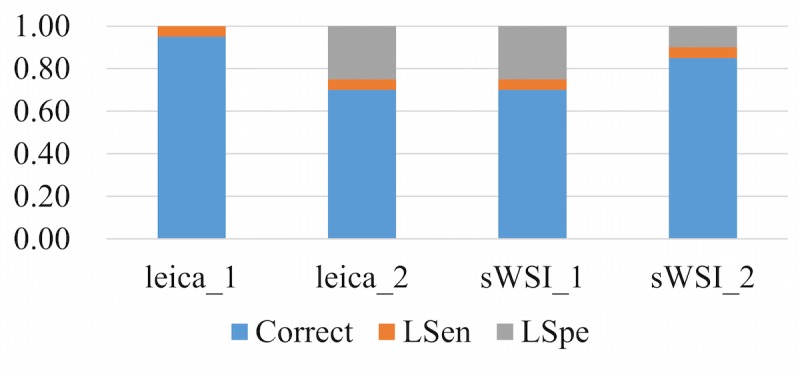
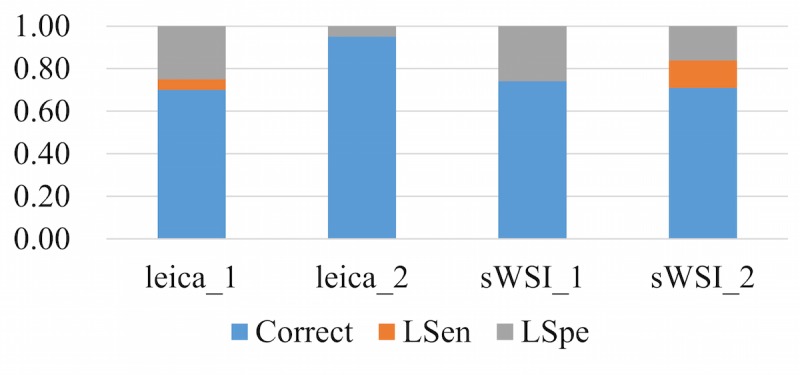
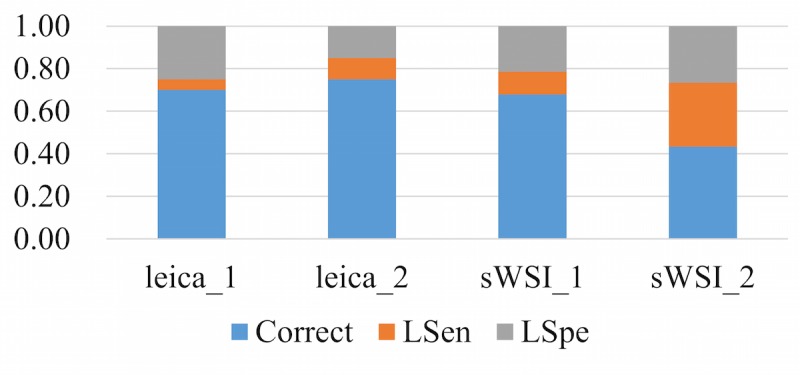
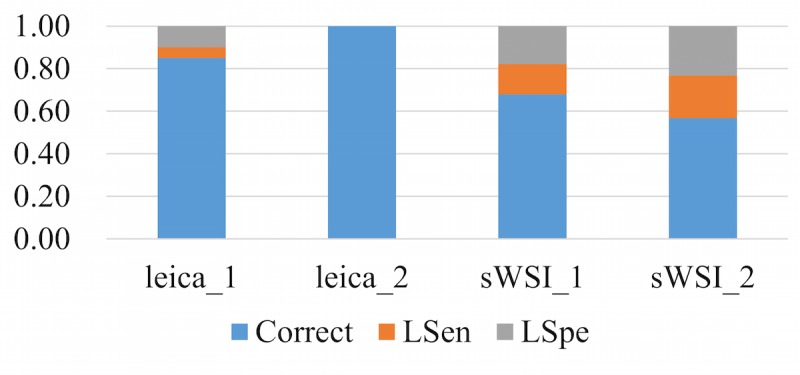
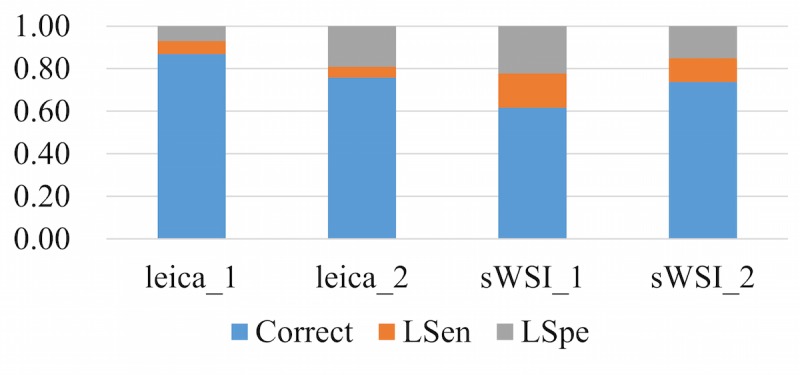
The sWSI system is developed for both Android and iPhone smartphones and is currently being offered to the public. The image quality is reliable and throughput is approximately 1 FoV per second, yielding a 15-by-15 mm slide under 20X object lens in approximately 30-35 minutes, with little training required for the operator. The expected cost for setup is approximately US $100 and scanning each slide costs between US $1 and $10, making sWSI highly cost-effective for infrequent or low-throughput usage. In the clinical evaluation of sample-wise diagnostic reliability, average accuracy scores achieved by sWSI-scan-based diagnoses were as follows: 0.78 for breast, 0.88 for uterine corpus, 0.68 for thyroid, and 0.50 for lung samples. The respective low-sensitivity rates were 0.05, 0.05, 0.13, and 0.25 while the respective low-specificity rates were 0.18, 0.08, 0.20, and 0.25. The participating pathologists agreed that the overall quality of sWSI was generally on par with that produced by high-end scanners, and did not affect diagnosis in most cases. Pathologists confirmed that sWSI is reliable enough for standard diagnoses of most tissue categories, while it can be used for quick screening of difficult cases.
As an ultra-low-cost alternative to whole slide scanners, diagnosis-ready VS quality and robustness for commercial usage is achieved in the sWSI solution. Operated on main-stream smartphones installed on normal optical microscopes, sWSI readily offers affordable and reliable WSI to resource-limited or infrequent clinical users.
目标是开发可扩展的全切片成像(sWSI),这是一种基于主流智能手机与常规光学显微镜相结合的全切片成像系统。这种超低成本的解决方案应能提供与独立扫描仪相当的可供诊断的成像质量,支持不同放大倍数的油镜和干镜,并具有合理的高吞吐量。这些性能指标应由专业病理学家进行评估,并与高端扫描仪的指标相匹配。
目标是开发可扩展的全切片成像(sWSI),一种基于智能手机与光学显微镜相结合的全切片成像系统。这种超低成本的解决方案应能提供与独立扫描仪相当的可供诊断的成像质量,支持不同放大倍数的油镜和干镜。所有性能指标应由专业病理学家进行评估,并与高端扫描仪的指标相匹配。
在sWSI设计中,数字化过程在智能手机上的轻量级客户端和强大的云服务器之间异步进行。客户端应用程序自动以高达1200万像素的分辨率捕获视野(FoV),并实时对其进行处理以跟踪用户操作,然后给出即时指导反馈。服务器首先重新拼接每对视野,然后基于成对拼接实时自动校正智能手机镜头引入的未知非线性失真,最后将所有视野组合成每次扫描的一个十亿像素虚拟切片(VS)。这些虚拟切片可以在任何地方使用互联网浏览器查看。在评估实验中,由高端徕卡扫描仪和sWSI对从参与医院的住院患者中随机选择的100例患者的冰冻切片进行扫描。所有虚拟切片均由资深病理学家检查,将其诊断结果与以光学显微镜检查结果作为金标准进行比较,以评估图像质量。
sWSI系统是为安卓和苹果智能手机开发的,目前已向公众提供。图像质量可靠,吞吐量约为每秒1个视野,在20倍物镜下,15×15毫米的切片大约需要30 - 35分钟,操作人员几乎无需培训。预计设置成本约为100美元,扫描每张切片的成本在1美元至10美元之间,这使得sWSI对于不频繁或低吞吐量使用而言具有很高的成本效益。在按样本的诊断可靠性临床评估中,基于sWSI扫描诊断获得的平均准确率如下:乳腺为0.78,子宫体为0.88,甲状腺为0.68,肺样本为0.50。各自的低灵敏度率分别为0.05、0.05、0.13和0.25,各自的低特异性率分别为0.18、0.08、0.20和0.25。参与的病理学家一致认为,sWSI的总体质量通常与高端扫描仪产生的质量相当,并且在大多数情况下不影响诊断。病理学家确认,sWSI对于大多数组织类别的标准诊断足够可靠,同时可用于疑难病例的快速筛查。
作为全切片扫描仪的超低成本替代方案,sWSI解决方案实现了可供诊断的虚拟切片质量和商业使用的稳健性。sWSI安装在普通光学显微镜上,在主流智能手机上运行,可为资源有限或不常使用的临床用户轻松提供经济实惠且可靠的全切片成像。