Plant BioSystems, Department of Agricultural, Food and Nutritional Science, University of Alberta, Edmonton, Alberta, Canada T6G 2P5.
J Exp Bot. 2017 Jul 10;68(15):4137-4151. doi: 10.1093/jxb/erx217.
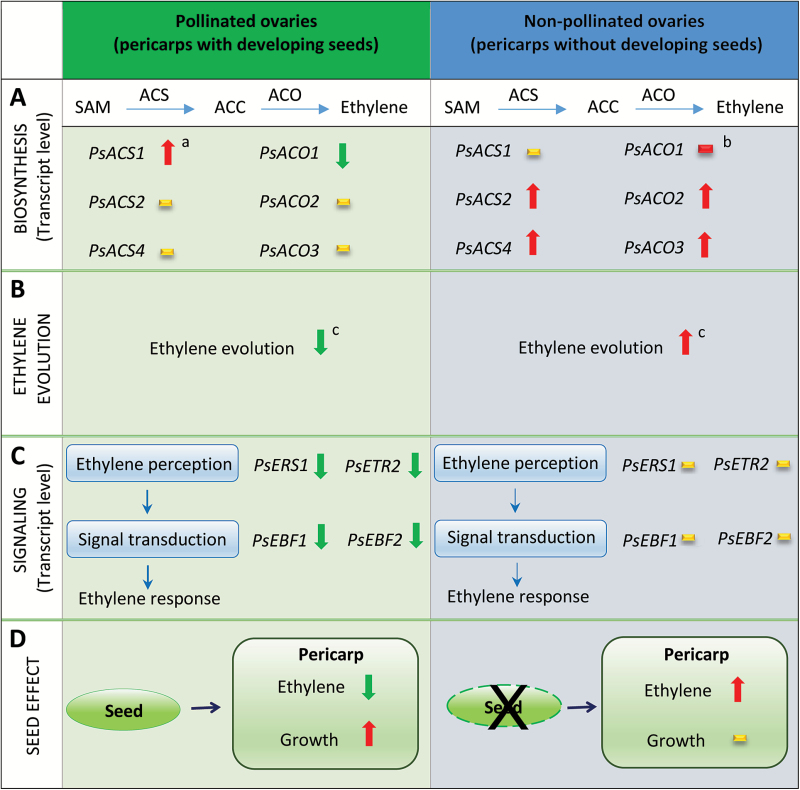
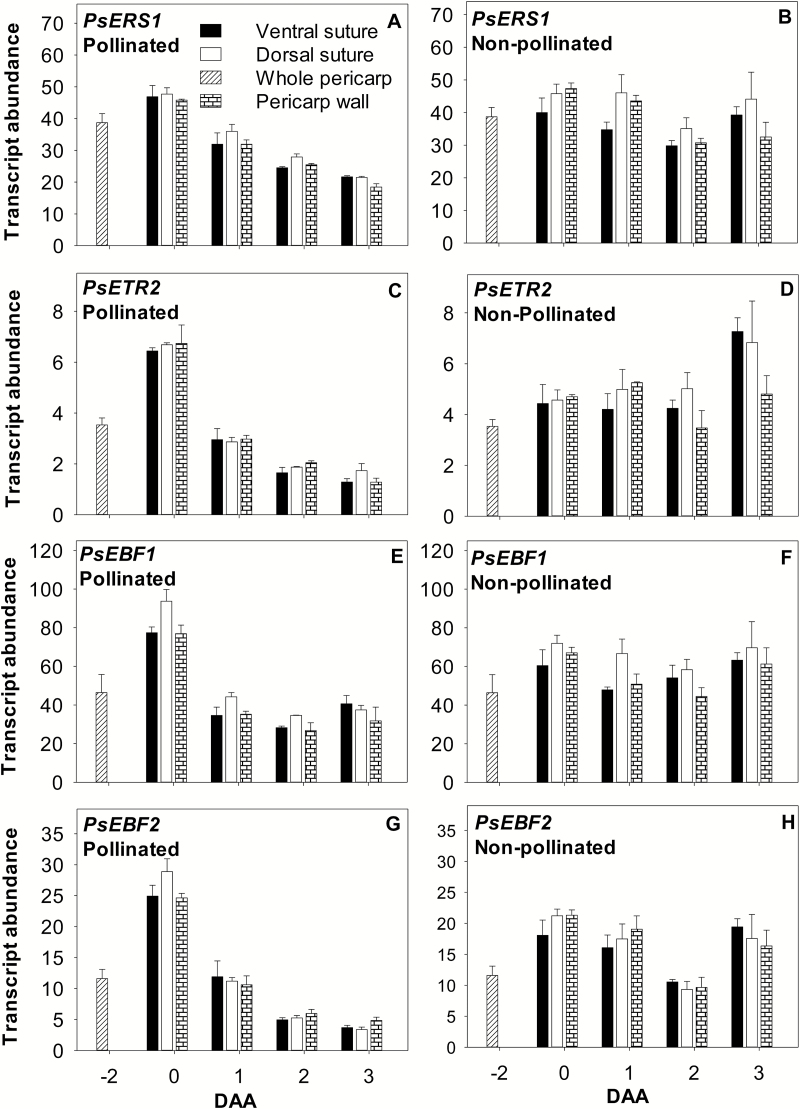
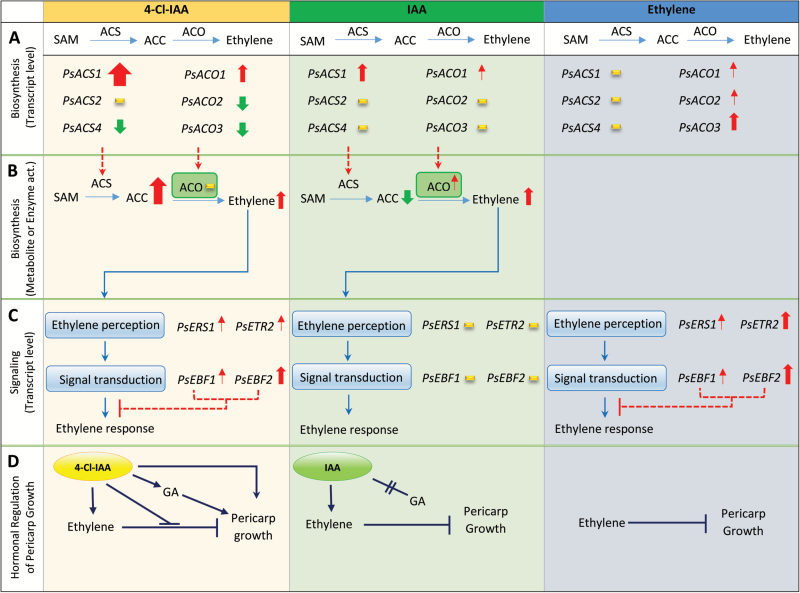
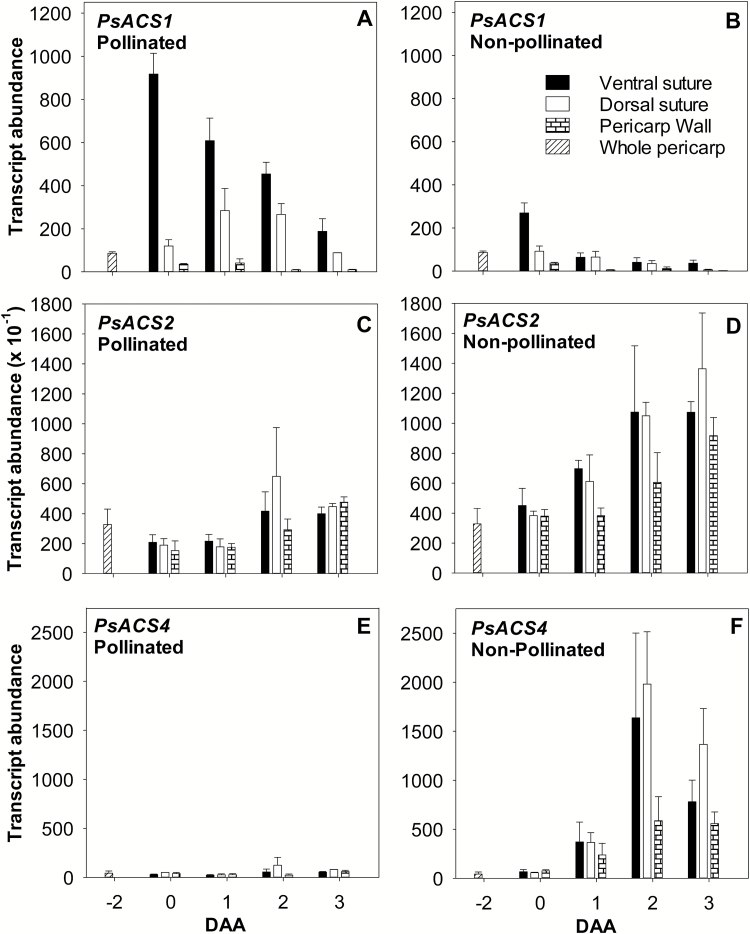
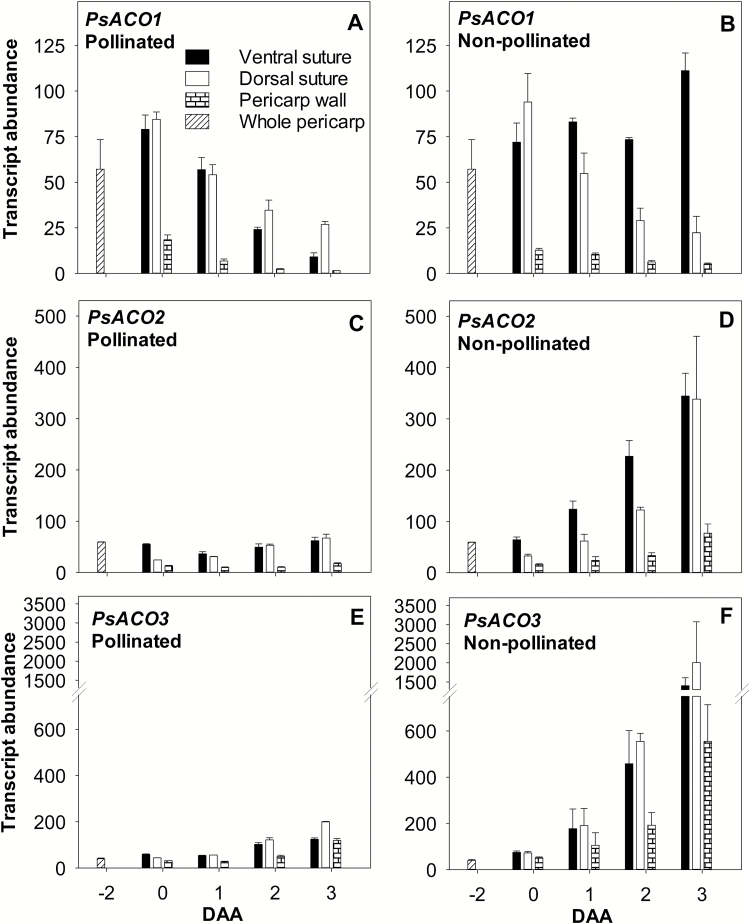
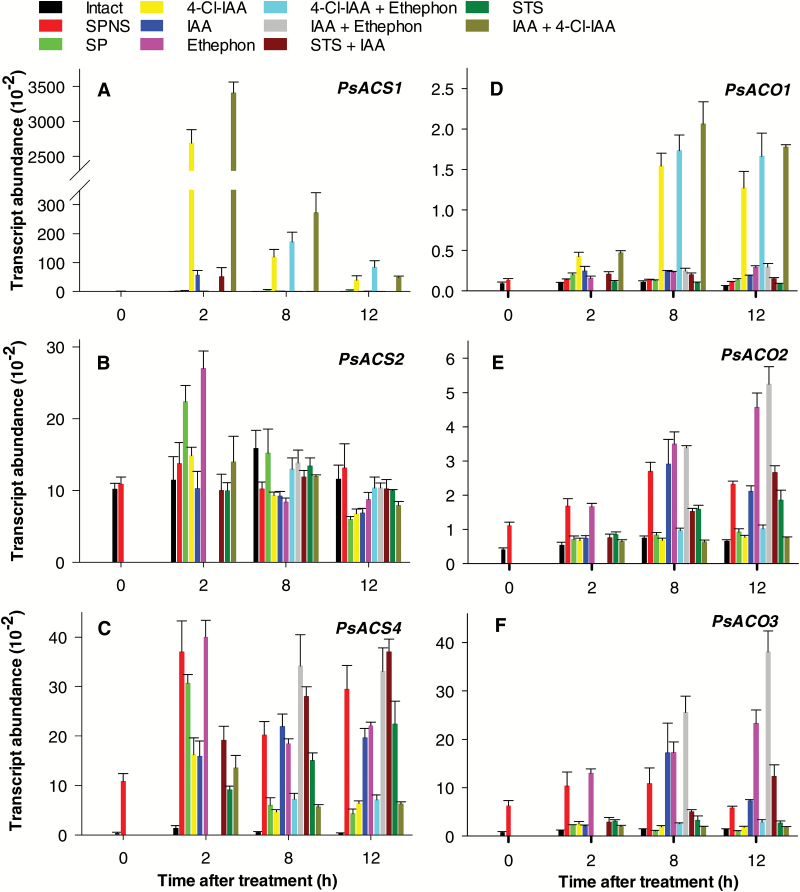
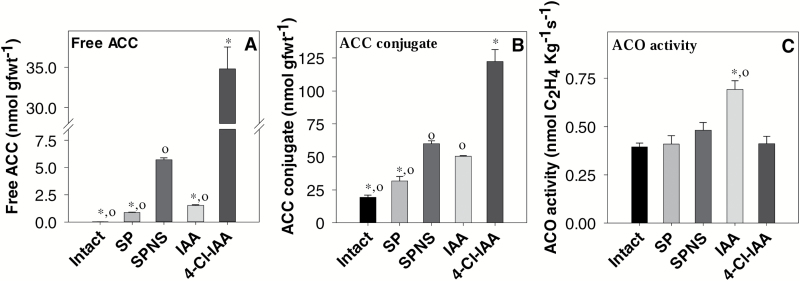
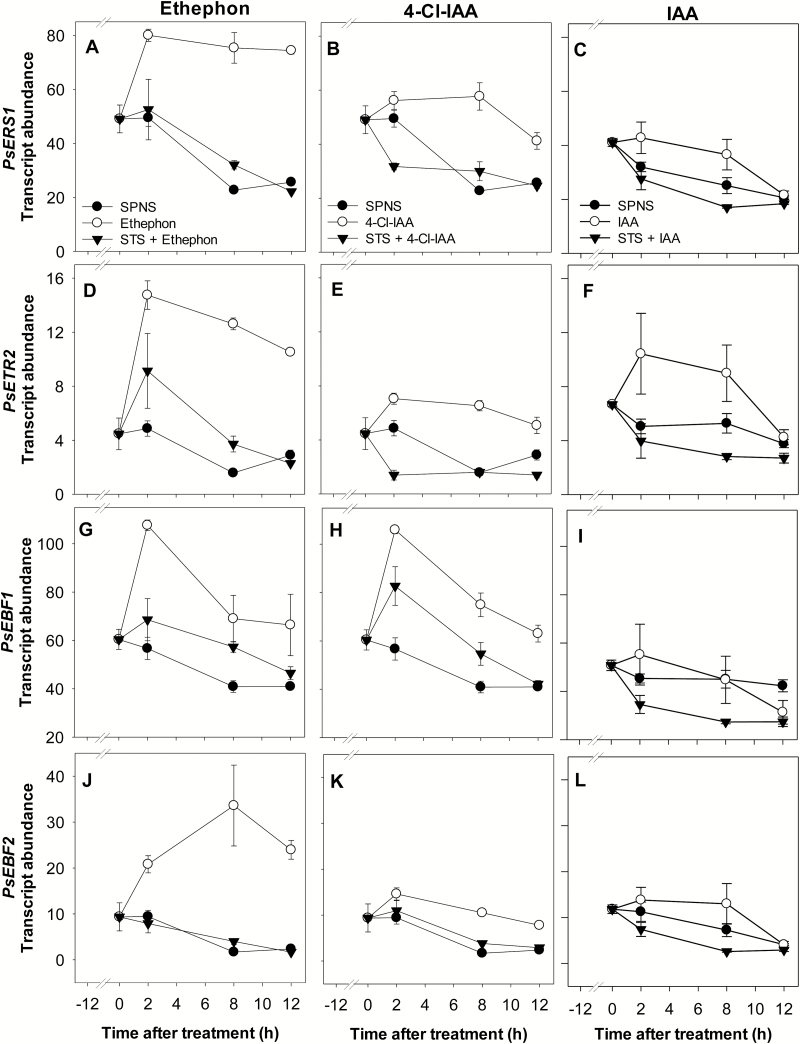
In pea, the auxins 4-chloroindole-3-acetic acid (4-Cl-IAA) and indole-3-acetic acid (IAA) occur naturally; however, only 4-Cl-IAA stimulates pericarp growth and gibberellin (GA) biosynthesis, and inhibits the ethylene response in deseeded ovaries (pericarps), mimicking the presence of seeds. Expression of ovary ethylene biosynthesis genes was regulated similarly in most cases by the presence of 4-Cl-IAA or seeds. PsACS1 [which encodes an enzyme that synthesizes 1-aminocyclopropane-1-carboxylic acid (ACC)] transcript abundance was high in pericarp tissue adjacent to developing seeds following pollination. ACC accumulation in 4-Cl-IAA-treated deseeded pericarps was driven by high PsASC1 expression (1800-fold). 4-Cl-IAA, but not IAA, also suppressed the pericarp transcript levels of PsACS4. 4-Cl-IAA increased PsACO1 and decreased PsACO2 and PsACO3 expression (enzymes that convert ACC to ethylene) but did not change ACO enzyme activity. Increased ethylene was countered by a 4-Cl-IAA-specific decrease in ethylene responsiveness potentially via modulation of pericarp ethylene receptor and signaling gene expression. This pattern did not occur in IAA-treated pericarps. Overall, the effect of 4-Cl-IAA and IAA on ethylene biosynthesis gene expression generally explains the ethylene evolution patterns, and their effects on GA biosynthesis and ethylene signaling gene expression explain the tissue response patterns in young pea ovaries.
在豌豆中,天然存在两种生长素:4-氯吲哚-3-乙酸(4-Cl-IAA)和吲哚-3-乙酸(IAA);然而,只有 4-Cl-IAA 能刺激种皮生长和赤霉素(GA)生物合成,并抑制去种皮子房(种皮)中的乙烯反应,模拟种子的存在。在大多数情况下,4-Cl-IAA 或种子的存在同样调控子房乙烯生物合成基因的表达。授粉后,临近发育中种子的种皮组织中 PsACS1(编码合成 1-氨基环丙烷-1-羧酸(ACC)的酶)转录物丰度较高。在 4-Cl-IAA 处理的去种皮种皮中,ACC 的积累是由高 PsASC1 表达(1800 倍)驱动的。4-Cl-IAA 但不是 IAA,也能抑制 PsACS4 的种皮转录水平。4-Cl-IAA 增加了 PsACO1 的表达,降低了 PsACO2 和 PsACO3 的表达(将 ACC 转化为乙烯的酶),但不改变 ACO 酶活性。增加的乙烯通过 4-Cl-IAA 特异性降低乙烯反应性来抵消,这可能是通过调节种皮乙烯受体和信号转导基因的表达。在 IAA 处理的种皮中未发生这种情况。总的来说,4-Cl-IAA 和 IAA 对乙烯生物合成基因表达的影响通常可以解释乙烯进化模式,而它们对 GA 生物合成和乙烯信号转导基因表达的影响解释了年轻豌豆子房的组织反应模式。