Xiao Shiyun, Shterev Ivo D, Zhang Wen, Young Lauren, Shieh Jae-Hung, Moore Malcolm, van den Brink Marcel, Sempowski Gregory D, Manley Nancy R
Department of Genetics, Paul D. Coverdell Center, University of Georgia, Athens, GA 30602;
Duke Human Vaccine Institute, Duke University School of Medicine, Durham, NC 27710.
J Immunol. 2017 Oct 15;199(8):2701-2712. doi: 10.4049/jimmunol.1600934. Epub 2017 Sep 20.
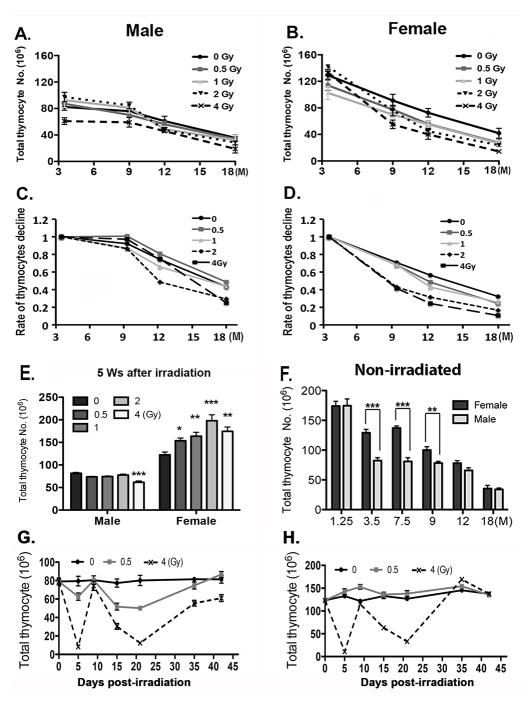
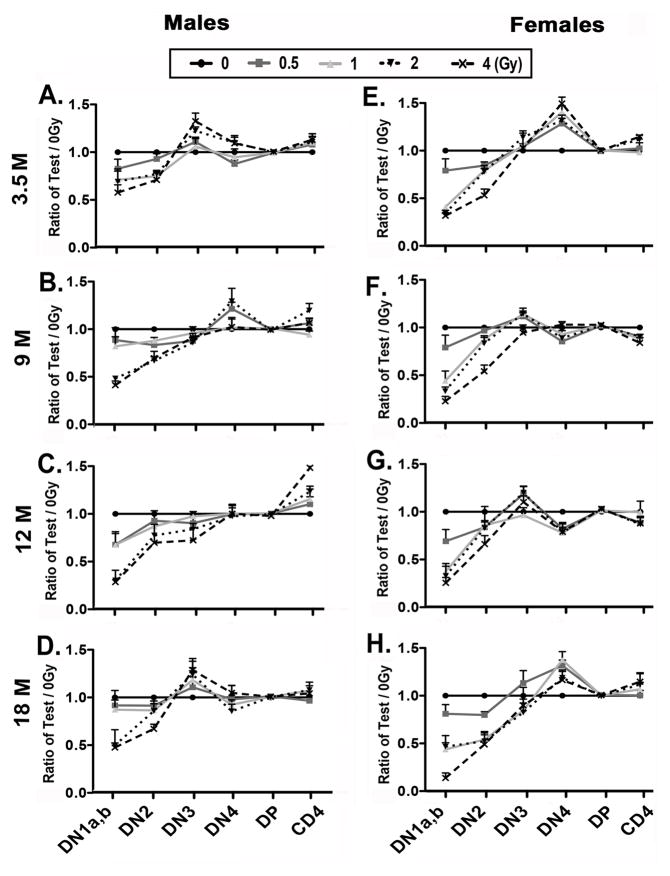
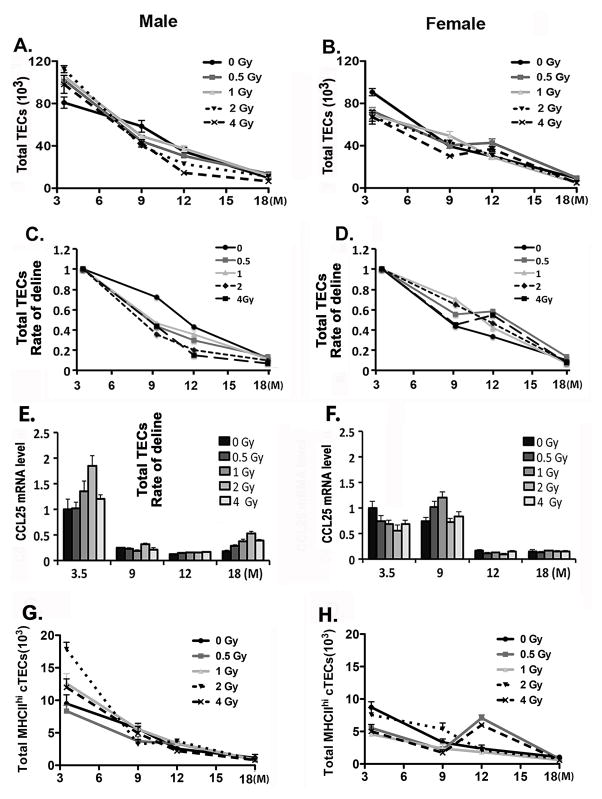
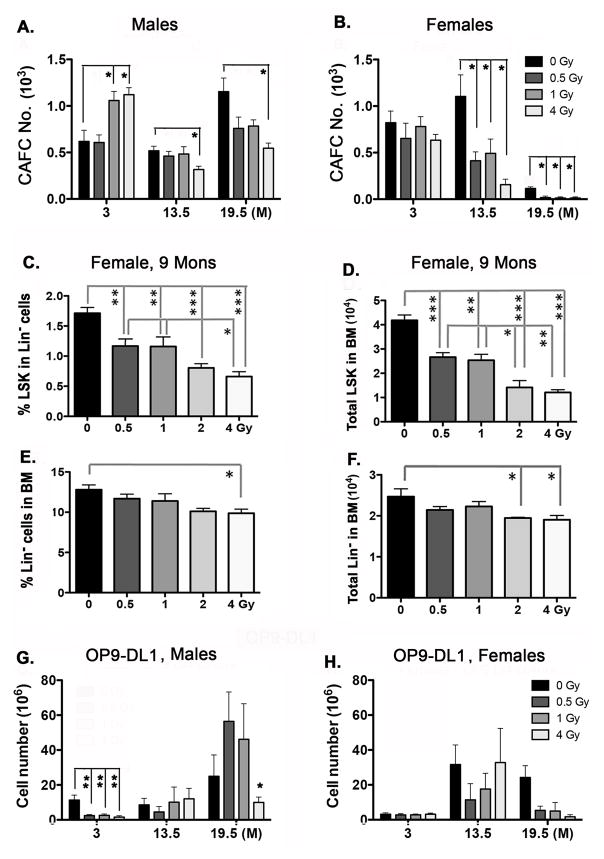
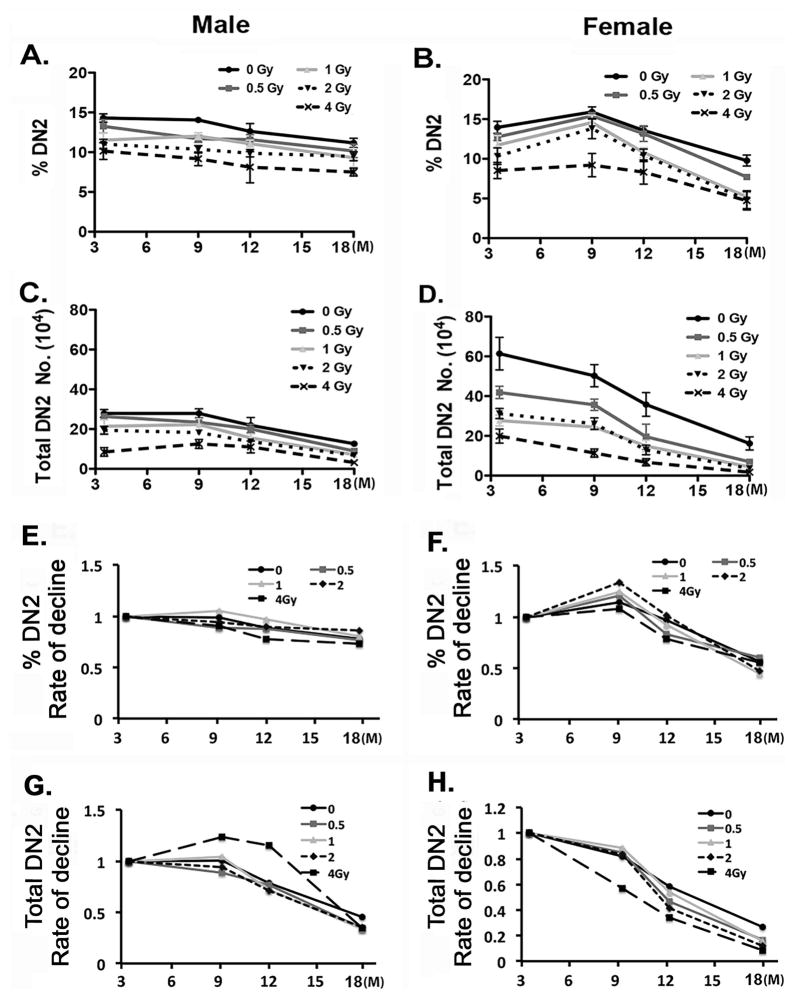
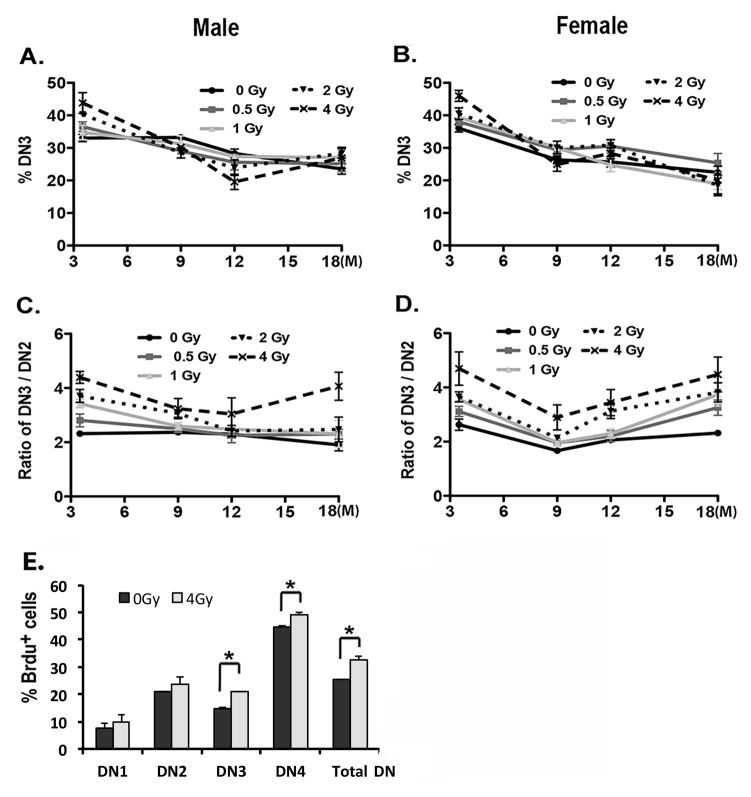
Total body irradiation (TBI) damages hematopoietic cells in the bone marrow and thymus; however, the long-term effects of irradiation with aging remain unclear. In this study, we found that the impact of radiation on thymopoiesis in mice varied by sex and dose but, overall, thymopoiesis remained suppressed for ≥12 mo after a single exposure. Male and female mice showed a long-term dose-dependent reduction in thymic cKit lymphoid progenitors that was maintained throughout life. Damage to hematopoietic stem cells (HSCs) in the bone marrow was dose dependent, with as little as 0.5 Gy causing a significant long-term reduction. In addition, the potential for T lineage commitment was radiation sensitive with aging. Overall, the impact of irradiation on the hematopoietic lineage was more severe in females. In contrast, the rate of decline in thymic epithelial cell numbers with age was radiation-sensitive only in males, and other characteristics including transcription were unaffected. Taken together, these data suggest that long-term suppression of thymopoiesis after sublethal irradiation was primarily due to fewer progenitors in the BM combined with reduced potential for T lineage commitment. A single irradiation dose also caused synchronization of thymopoiesis, with a periodic thymocyte differentiation profile persisting for at least 12 mo postirradiation. This study suggests that the number and capability of HSCs for T cell production can be dramatically and permanently damaged after a single relatively low TBI dose, accelerating aging-associated thymic involution. Our findings may impact evaluation and therapeutic intervention of human TBI events.
全身照射(TBI)会损伤骨髓和胸腺中的造血细胞;然而,随着年龄增长,辐射的长期影响仍不清楚。在本研究中,我们发现辐射对小鼠胸腺生成的影响因性别和剂量而异,但总体而言,单次照射后胸腺生成在≥12个月内仍受到抑制。雄性和雌性小鼠胸腺cKit淋巴祖细胞均呈现长期剂量依赖性减少,并在整个生命过程中持续存在。骨髓中造血干细胞(HSC)的损伤具有剂量依赖性,低至0.5 Gy即可导致显著的长期减少。此外,随着年龄增长,T细胞系定向分化的潜能对辐射敏感。总体而言,辐射对造血系的影响在雌性中更为严重。相比之下,胸腺上皮细胞数量随年龄下降的速率仅在雄性中对辐射敏感,包括转录在内的其他特征则不受影响。综上所述,这些数据表明,亚致死性照射后胸腺生成的长期抑制主要是由于骨髓中祖细胞减少以及T细胞系定向分化潜能降低。单次照射剂量还会导致胸腺生成同步化,周期性的胸腺细胞分化模式在照射后至少持续12个月。本研究表明,单次相对低剂量的TBI后,HSC产生T细胞的数量和能力可能会受到显著且永久性的损害,加速与衰老相关的胸腺退化。我们的发现可能会影响对人类TBI事件的评估和治疗干预。