Chang Jianhui, Feng Wei, Wang Yingying, Luo Yi, Allen Antiño R, Koturbash Igor, Turner Jennifer, Stewart Blair, Raber Jacob, Hauer-Jensen Martin, Zhou Daohong, Shao Lijian
a Division of Radiation Health.
Radiat Res. 2015 Feb;183(2):240-8. doi: 10.1667/RR13887.1. Epub 2015 Jan 30.
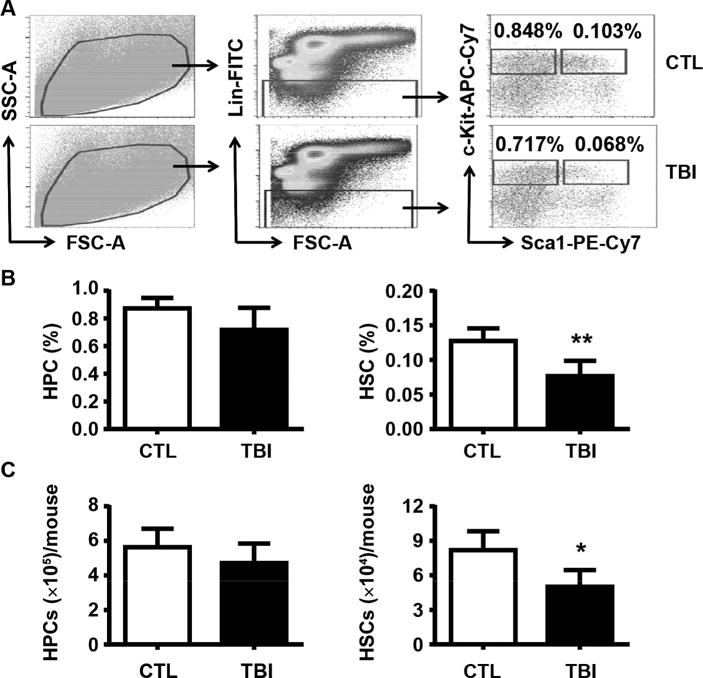
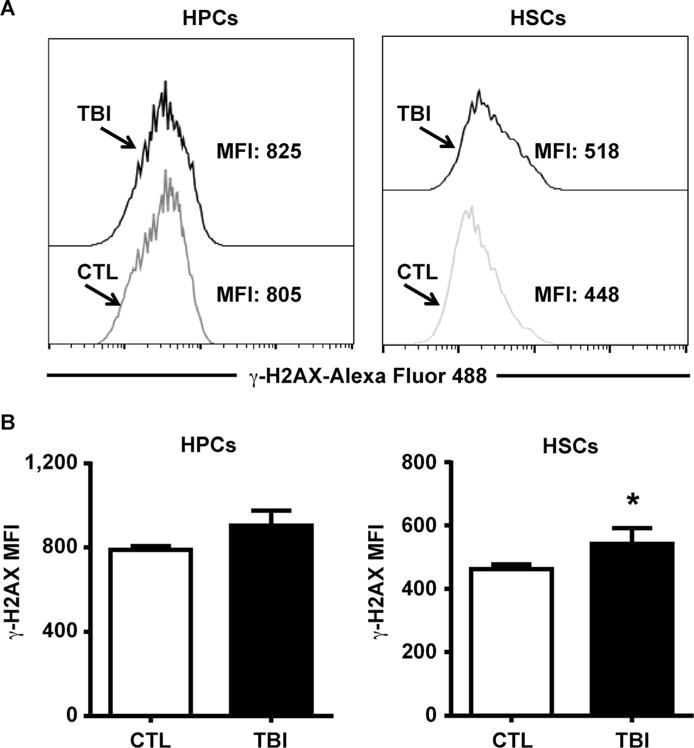
Space flight poses certain health risks to astronauts, including exposure to space radiation, with protons accounting for more than 80% of deep-space radiation. Proton radiation is also now being used with increasing frequency in the clinical setting to treat cancer. For these reasons, there is an urgent need to better understand the biological effects of proton radiation on the body. Such improved understanding could also lead to more accurate assessment of the potential health risks of proton radiation, as well as the development of improved strategies to prevent and mitigate its adverse effects. Previous studies have shown that exposure to low doses of protons is detrimental to mature leukocyte populations in peripheral blood, however, the underlying mechanisms are not known. Some of these detriments may be attributable to damage to hematopoietic stem cells (HSCs) that have the ability to self-renew, proliferate and differentiate into different lineages of blood cells through hematopoietic progenitor cells (HPCs). The goal of this study was to investigate the long-term effects of low-dose proton irradiation on HSCs. We exposed C57BL/6J mice to 1.0 Gy whole-body proton irradiation (150 MeV) and then studied the effects of proton radiation on HSCs and HPCs in the bone marrow (BM) 22 weeks after the exposure. The results showed that mice exposed to 1.0 Gy whole-body proton irradiation had a significant and persistent reduction of BM HSCs compared to unirradiated controls. In contrast, no significant changes were observed in BM HPCs after proton irradiation. Furthermore, irradiated HSCs and their progeny exhibited a significant impairment in clonogenic function, as revealed by the cobblestone area-forming cell (CAFC) and colony-forming cell assays, respectively. These long-term effects of proton irradiation on HSCs may be attributable to the induction of chronic oxidative stress in HSCs, because HSCs from irradiated mice exhibited a significant increase in NADPH oxidase 4 (NOX4) mRNA expression and reactive oxygen species (ROS) production. In addition, the increased production of ROS in HSCs was associated with a significant reduction in HSC quiescence and an increase in DNA damage. These findings indicate that exposure to proton radiation can lead to long-term HSC injury, probably in part by radiation-induced oxidative stress.
太空飞行给宇航员带来了一定的健康风险,包括暴露于太空辐射,其中质子占深空辐射的80%以上。目前,质子辐射在临床治疗癌症中的应用频率也越来越高。基于这些原因,迫切需要更好地了解质子辐射对人体的生物学效应。这种更深入的了解还可以更准确地评估质子辐射的潜在健康风险,并制定更好的策略来预防和减轻其不良影响。先前的研究表明,低剂量质子暴露对外周血中的成熟白细胞群体有害,然而,其潜在机制尚不清楚。其中一些损害可能归因于对造血干细胞(HSC)的损伤,造血干细胞具有自我更新、增殖并通过造血祖细胞(HPC)分化为不同血细胞谱系的能力。本研究的目的是调查低剂量质子照射对造血干细胞的长期影响。我们将C57BL/6J小鼠暴露于1.0 Gy全身质子照射(150 MeV),然后在照射后22周研究质子辐射对骨髓(BM)中造血干细胞和造血祖细胞的影响。结果表明,与未照射的对照组相比,暴露于1.0 Gy全身质子照射的小鼠骨髓造血干细胞显著且持续减少。相比之下,质子照射后骨髓造血祖细胞未观察到显著变化。此外,分别通过鹅卵石区域形成细胞(CAFC)和集落形成细胞试验表明,照射后的造血干细胞及其后代在克隆形成功能上表现出显著受损。质子照射对造血干细胞的这些长期影响可能归因于造血干细胞中慢性氧化应激的诱导,因为来自照射小鼠的造血干细胞中NADPH氧化酶4(NOX4)mRNA表达和活性氧(ROS)产生显著增加。此外,造血干细胞中ROS产生的增加与造血干细胞静止的显著降低和DNA损伤的增加有关。这些发现表明,暴露于质子辐射可导致长期的造血干细胞损伤,可能部分是由辐射诱导的氧化应激所致。