Institute for Lung Research, Universities of Giessen and Marburg Lung Center, Philipps-University Marburg, Member of the German Center for Lung Research (DZL), Marburg, Germany.
Laboratory of Systems Tumor Immunology, Department of Dermatology, Friedrich-Alexander-University of Erlangen-Nürnberg (FAU) and Universitätsklinikum Erlangen, Erlangen, Germany.
Sci Rep. 2017 Sep 20;7(1):11988. doi: 10.1038/s41598-017-12154-4.
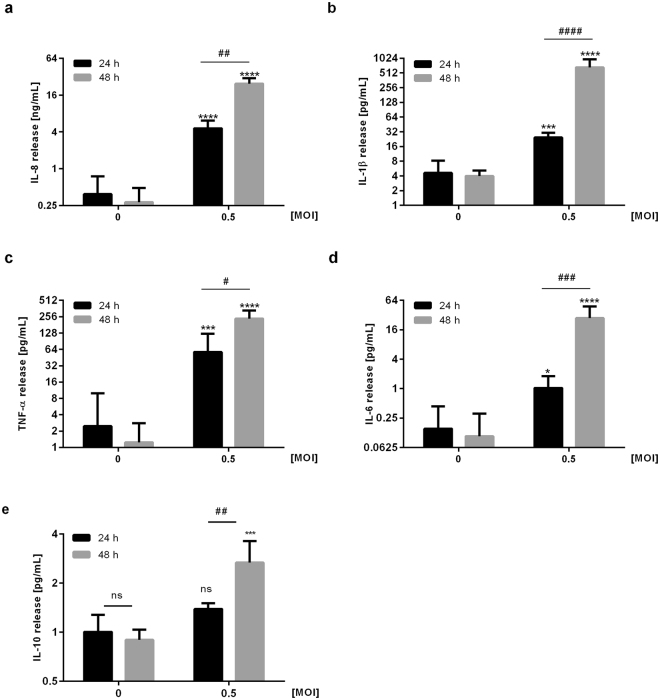
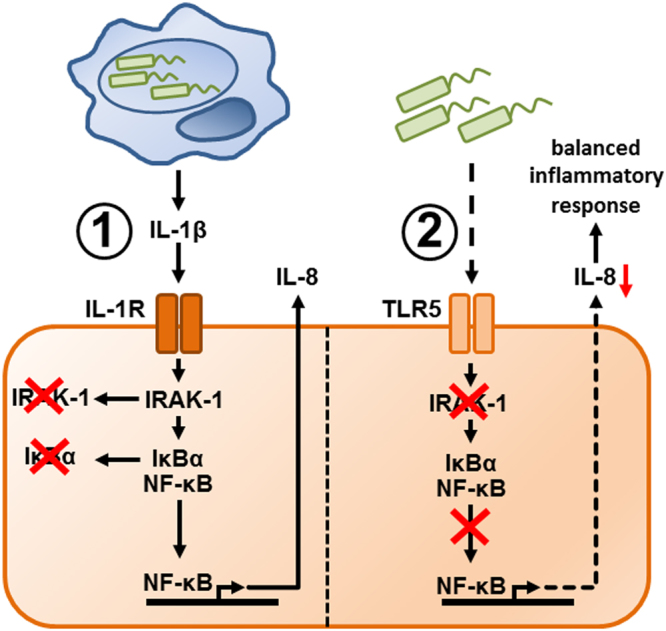
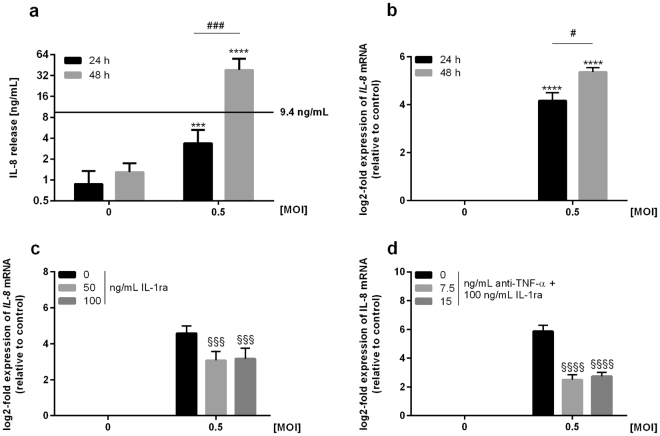
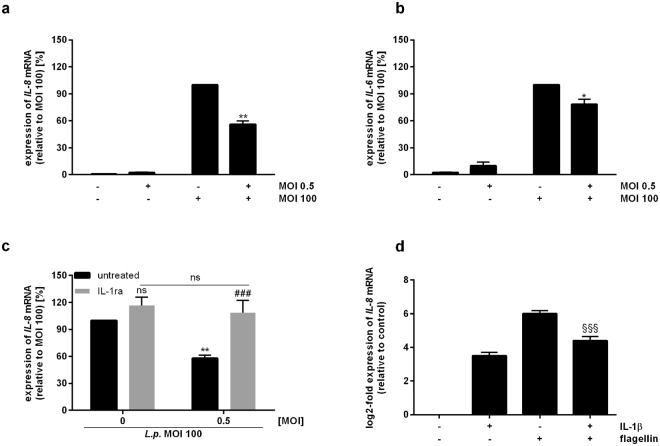
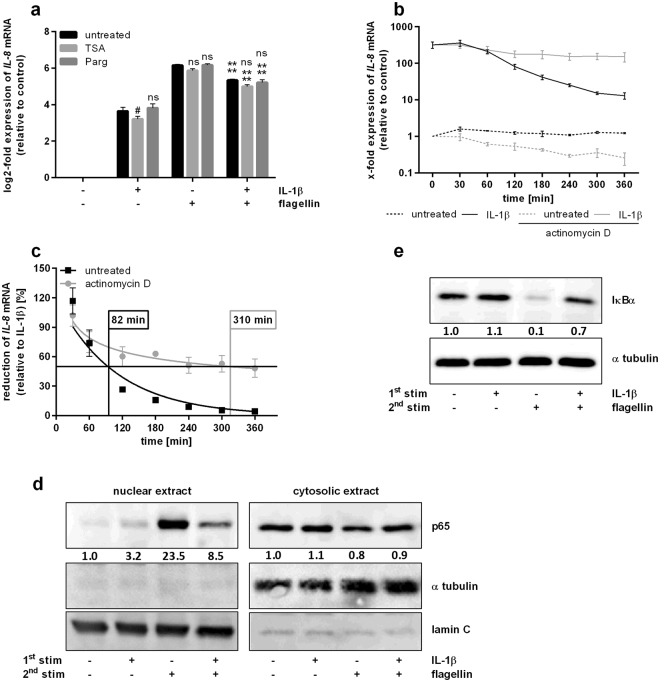
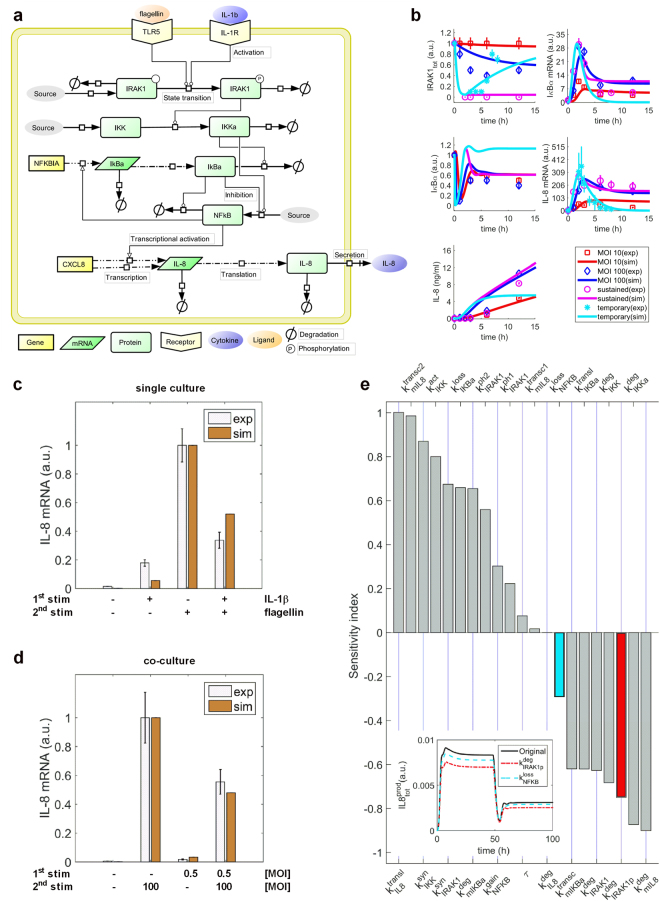
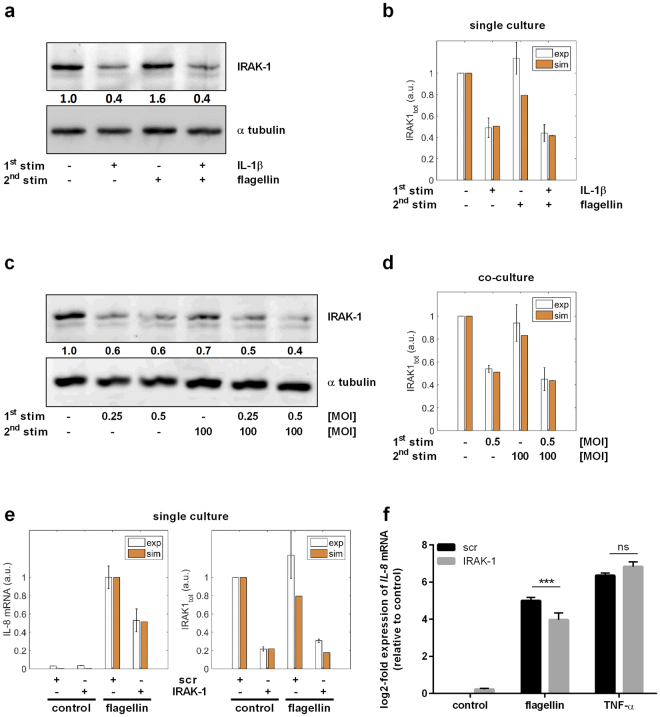
Immune response in the lung has to protect the huge alveolar surface against pathogens while securing the delicate lung structure. Macrophages and alveolar epithelial cells constitute the first line of defense and together orchestrate the initial steps of host defense. In this study, we analysed the influence of macrophages on type II alveolar epithelial cells during Legionella pneumophila-infection by a systems biology approach combining experimental work and mathematical modelling. We found that L. pneumophila-infected THP-1-derived macrophages provoke a pro-inflammatory activation of neighboring lung epithelial cells, but in addition render them hypo-responsive to direct infection with the same pathogen. We generated a kinetic mathematical model of macrophage activation and identified a paracrine mechanism of macrophage-secreted IL-1β inducing a prolonged IRAK-1 degradation in lung epithelial cells. This intercellular crosstalk may help to avoid an overwhelming inflammatory response by preventing excessive local secretion of pro-inflammatory cytokines and thereby negatively regulating the recruitment of immune cells to the site of infection. This suggests an important but ambivalent immunomodulatory role of macrophages in lung infection.
肺部的免疫反应必须在保护巨大的肺泡表面免受病原体侵害的同时,保护肺部脆弱的结构。巨噬细胞和肺泡上皮细胞构成了第一道防线,共同协调宿主防御的初始步骤。在这项研究中,我们通过结合实验工作和数学建模的系统生物学方法,分析了巨噬细胞在肺炎支原体感染过程中对 II 型肺泡上皮细胞的影响。我们发现,肺炎支原体感染的 THP-1 衍生巨噬细胞会引发邻近肺上皮细胞的促炎激活,但除此之外,还会使它们对同一病原体的直接感染反应迟钝。我们生成了一个巨噬细胞激活的动力学数学模型,并确定了一种旁分泌机制,即巨噬细胞分泌的白细胞介素 1β(IL-1β)诱导肺上皮细胞中 IRAK-1 的持续降解。这种细胞间的串扰可能有助于通过防止过度局部分泌促炎细胞因子来避免过度炎症反应,从而负调控免疫细胞向感染部位的募集。这表明巨噬细胞在肺部感染中具有重要但矛盾的免疫调节作用。