Wang Xiuzhen, Zhang Qing, Lv Lingyan, Fu Junjie, Jiang Yan, Xin Hongliang, Yao Qizheng
a Department of Medicinal Chemistry, School of Pharmacy , China Pharmaceutical University , Nanjing , China.
b School of Pharmacy , Nanjing Medical University , Nanjing , China.
Drug Deliv. 2017 Nov;24(1):1401-1409. doi: 10.1080/10717544.2017.1378940.
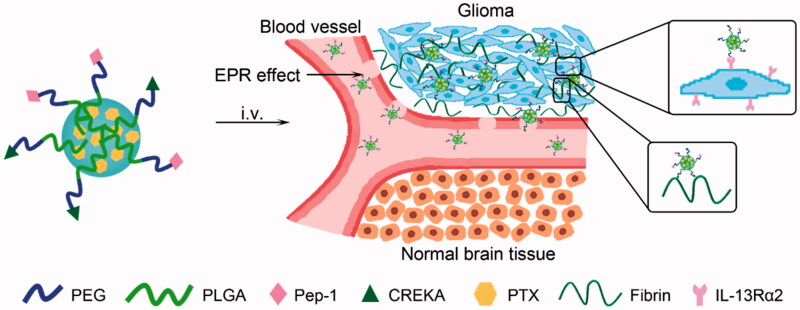
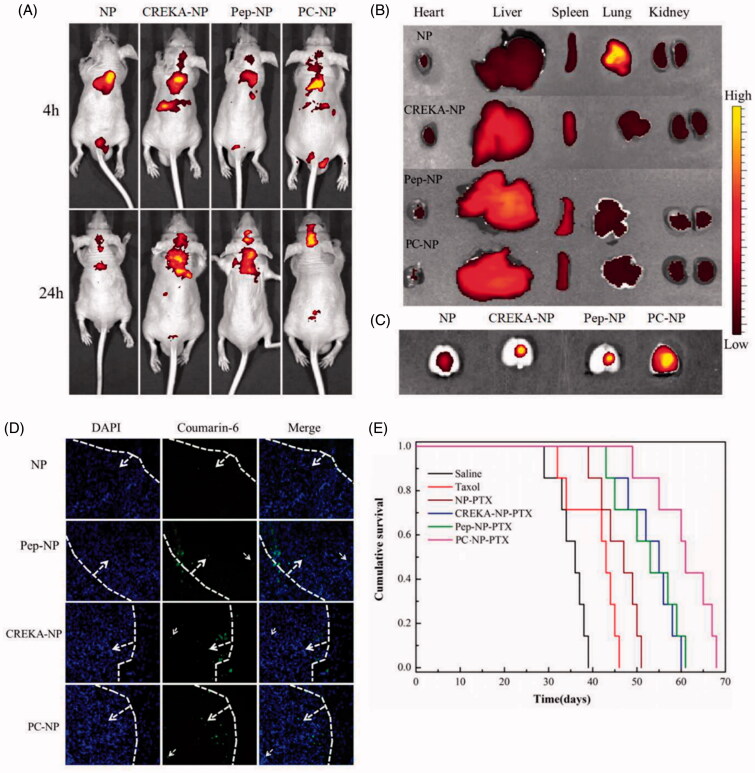
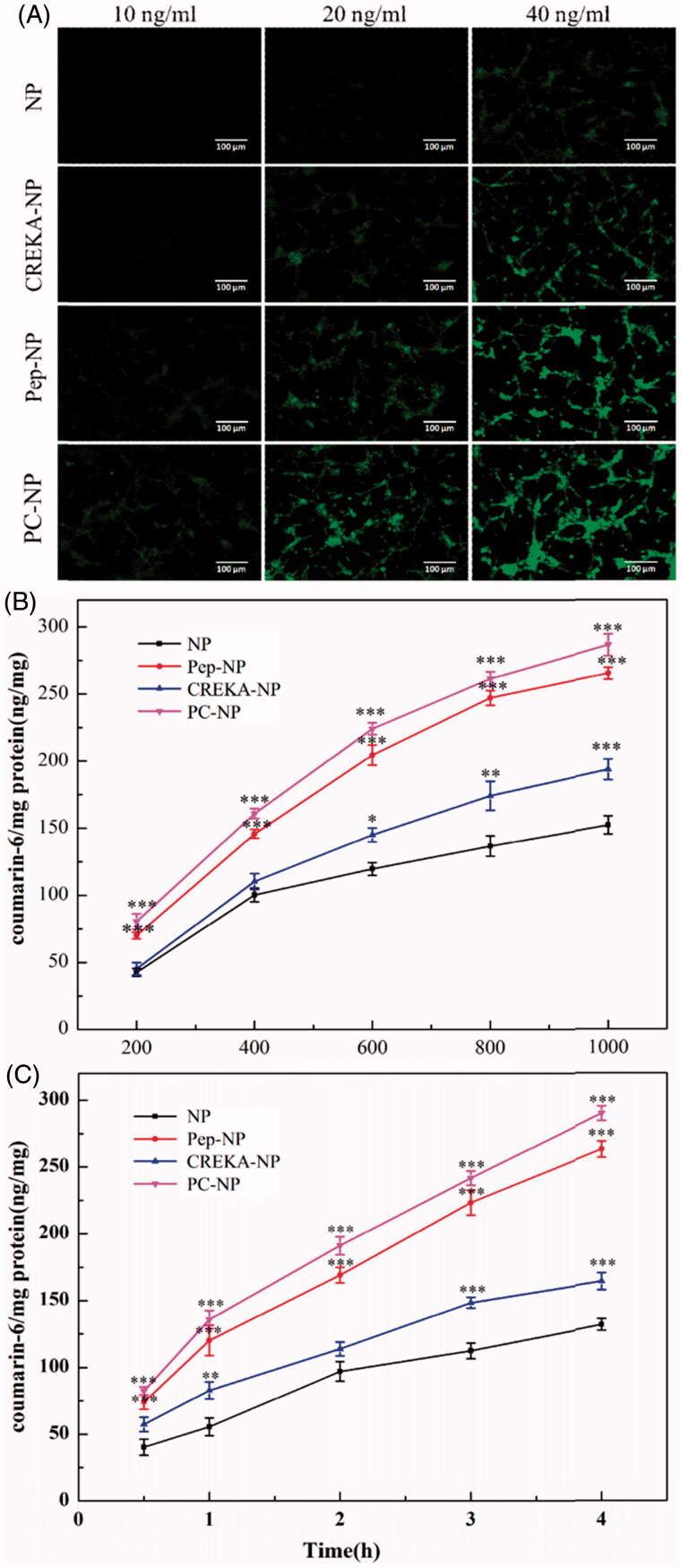
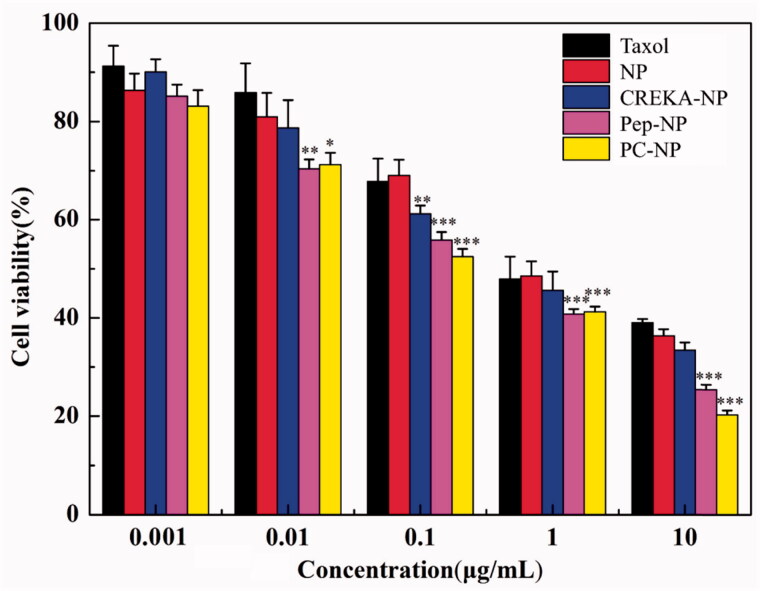
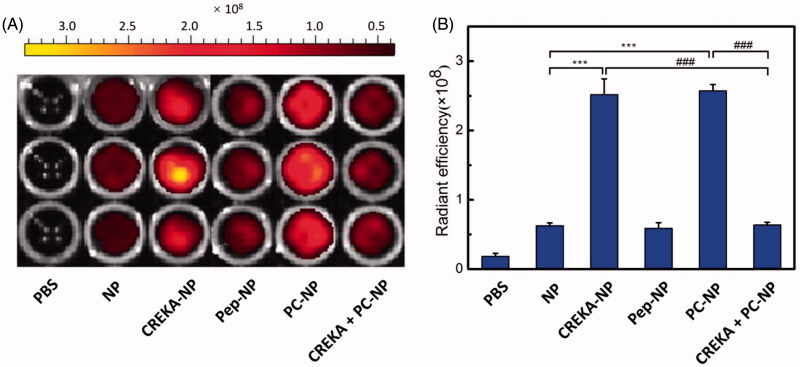
Drug delivery systems based on nanoparticles (nano-DDS) have aroused attentions for the treatment of glioblastoma (GBM), the most malignant brain cancer with a dismal prognosis. However, there are still numerous unmet challenges for traditional nano-DDS, such as the poor nanoparticle penetration, short retention in the GBM parenchyma and low glioma targeting ability. Herein, we used Pep-1 and CREKA peptides to construct a novel multifunctional GBM targeting nano-DDS (PC-NP). Pep-1 was used to overcome the blood-brain tumor barrier (BBTB) and home to glioma cells via interleukin-13 receptor-α2-mediated endocytosis, and CREKA was used to bind to fibrin-fibronectin complexes abundantly expressed in tumor microenvironment for enhanced retention in the GBM. Biological studies showed that the cellular uptake of PC-NP by U87MG cells was significantly enhanced compared with the non-targeting NP. Furthermore, CREKA modification increased the binding capacity of PC-NP to fibrin-fibronectin complexes as confirmed by the competition experiment. In accordance with the increased cellular uptake, PC-NP remarkably increased the cytotoxicity of its payload paclitaxel (PTX) against U87MG cells with an IC of 0.176 μg/mL. In vivo fluorescence imaging and antiglioma efficacy evaluation further confirmed that PC-NP accumulated effectively and penetrated deeply into GBM tissue. PC-NP-PTX exhibited a median survival time as long as 61 days in intracranial GBM-bearing mice. In conclusion, our findings indicated PC-NP as a promising nano-DDS for GBM targeting delivery of anticancer drugs.
基于纳米颗粒的药物递送系统(纳米药物递送系统)已引起人们对治疗胶质母细胞瘤(GBM)的关注,胶质母细胞瘤是最恶性的脑癌,预后很差。然而,传统的纳米药物递送系统仍存在许多未解决的挑战,例如纳米颗粒穿透性差、在GBM实质中的保留时间短以及胶质瘤靶向能力低。在此,我们使用Pep-1和CREKA肽构建了一种新型的多功能GBM靶向纳米药物递送系统(PC-NP)。Pep-1用于克服血脑肿瘤屏障(BBTB),并通过白细胞介素-13受体-α2介导的内吞作用归巢至胶质瘤细胞,而CREKA用于结合肿瘤微环境中大量表达的纤维蛋白-纤连蛋白复合物,以增强在GBM中的保留。生物学研究表明,与非靶向纳米颗粒相比,U87MG细胞对PC-NP的细胞摄取显著增强。此外,竞争实验证实,CREKA修饰增加了PC-NP与纤维蛋白-纤连蛋白复合物的结合能力。随着细胞摄取的增加,PC-NP显著提高了其负载的紫杉醇(PTX)对U87MG细胞的细胞毒性,IC50为0.176μg/mL。体内荧光成像和抗胶质瘤疗效评估进一步证实,PC-NP有效积累并深入渗透到GBM组织中。PC-NP-PTX在颅内接种GBM的小鼠中表现出长达61天的中位生存时间。总之,我们的研究结果表明PC-NP是一种有前景的纳米药物递送系统,可用于GBM的抗癌药物靶向递送。